How the Meta–FTC Antitrust Decision Went Viral: A Case Study Through the Lens of Orbit

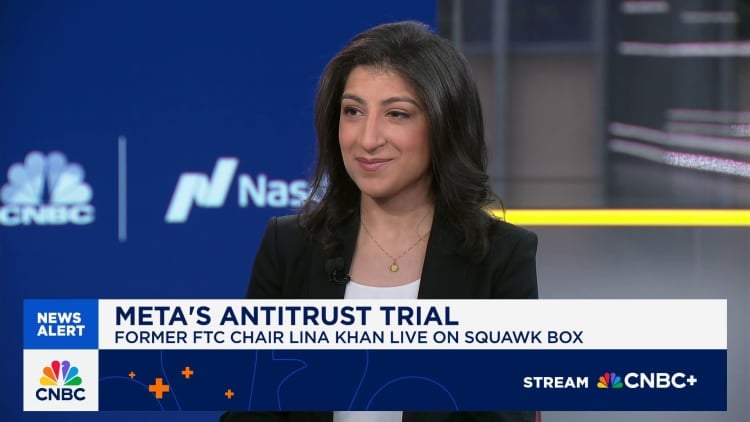
The federal government spent five years trying to unwind Meta’s acquisitions of Instagram and WhatsApp. Last week, that effort collapsed. A U.S. District Court ruled that the Federal Trade Commission failed to prove Meta maintains monopoly power in the social networking market — a decision that immediately ricocheted across social platforms, creator commentary, political discourse, and privacy-focused communities.
To understand how this ruling spread, what narratives took off, and where audiences focused their attention, we ran an Orbit search tuned to the week’s short-form content cycle. What emerged was a clear pattern: legal and regulatory news no longer “travels” like traditional policy stories. It spreads through creators, outrage cycles, and platform-specific behavior that reveals far more about how people interpret Big Tech power than the court filings themselves.
This article breaks down the Meta–FTC antitrust ruling as a virality event — not a legal one.
The Ruling That Broke a Five-Year Standoff
U.S. District Judge James Boasberg ruled that the FTC could not prove its central claim: that Meta still holds monopoly power in a market defined by “personal social networking.” TikTok and YouTube, Boasberg wrote, are not peripheral entertainment platforms but direct competitors for attention, time, and ad dollars.
That point — the idea that a case filed in 2020 no longer matches the reality of social media in 2025 — became the centerpiece of short-form commentary.
Creators framed it in two primary ways:
“The FTC is fighting a market that doesn’t exist anymore.”
“TikTok and YouTube killed the monopoly argument.”
Those narratives drove most high-engagement coverage.
What People Actually Talked About Online
Orbit surfaced a striking pattern: despite the ruling’s significance, the legal reasoning was not what spread. The viral energy clustered around four themes:
1. Competition Is Bigger Than Social Networking
Creators repeatedly fixated on the ruling’s most viral-friendly point — that Meta competes directly with TikTok and YouTube. This resonated because it validates what users already feel: social platforms are interchangeable attention machines.
Short-form content reframed the lawsuit as outdated bureaucracy, a storyline the internet naturally gravitates toward.
2. Zuckerberg’s Relationship With Trump Became a Narrative Driver
The Bloomberg report highlighted Zuckerberg’s strategic courtship of the Trump administration. Orbit showed this was one of the strongest cross-platform conversation threads.
Creators anchored the ruling to:
political favoritism
regulatory unpredictability
“Big Tech playing both sides"
This angle produced the most debate-heavy comments, indicating political framing generated more engagement than legal framing.
3. The ‘Market Reality’ Argument Went Viral
Boasberg’s point that Meta’s share of attention may now be below 50% (exact numbers redacted) became the core datapoint shared in explainer videos.
Creators used it to make broader claims about:
declining Facebook relevance
TikTok’s cultural dominance
Instagram’s fight to remain competitive
This was one of the few high-retention metrics in the dataset: audiences shared and bookmarked posts that quantified the attention economy.
4. Legal Fatigue and Antitrust Skepticism
Orbit surfaced a familiar trend across legal content: users gravitate toward:
quick takeaways
results over reasoning
emotional stakes over institutional nuance
The ruling fed into an existing skepticism toward antitrust cases that take years to resolve but rarely produce a visible outcome for users. This is consistent with past privacy and legal-cycle analyses: audiences respond to clarity and consequence, not procedure.
Platform Behavior: Where the Story Traveled Fastest
Orbit’s scrape across TikTok, YouTube Shorts, and Instagram revealed clear differences in how the story spread:
TikTok
Dominated volume
Leaned heavily into political angles
High comment activity around Trump/Zuckerberg dynamics
Legal explainers had strong retention but weaker share rates
TikTok was the primary “debate” platform for the ruling.
Fewer posts, but higher average reach
Memes about the FTC loss outperformed legal breakdowns
Carousels explaining the decision’s impact on creators performed best
Instagram treated the story more as news, less as discourse.
YouTube Shorts
Lowest share of total uploads
Highest professionalism: lawyers, analysts, policy creators
Strong performance on videos discussing antitrust precedent and future cases
YouTube leaned educational, not emotional — the opposite of TikTok.
Narrative Patterns That Repeated Across Creators
The ruling sparked three recurring narrative arcs that surfaced across dozens of creators:
1. “The FTC was fighting the wrong battle.”
This was the dominant framing. Creators emphasized how fast platform behavior has changed since 2020, making the lawsuit appear misaligned with the present-day social environment.
2. “This sets the tone for future Big Tech cases.”
Orbit surfaced cross-references to:
Amazon’s pending case
Apple’s ongoing litigation
Google’s dual monopoly rulings
Creators positioned the Meta decision as part of a broader governmental losing streak.
3. “Short-form video reshaped the antitrust landscape.”
One of the most interesting findings from Orbit:
Creators used the case to argue that TikTok’s rise altered the attention economy so dramatically that even federal lawsuits can’t keep up.
This narrative performed above expectations across micro-creators, especially legal educators and tech policy accounts.
The Missing Narrative: Consumer Impact
One notable insight: content creators rarely engaged with the question of how this ruling affects users. There was minimal discussion about:
data privacy
ad-market consolidation
platform control
creator economic consequences
Instead, virality clustered almost entirely around politics, platform competition, and regulatory failure — not consumer outcomes.
This is a consistent trend in Orbit’s legal-cycle research: audiences respond most strongly to stories where there is conflict, not policy.
What Brands and Analysts Should Learn
The Meta ruling revealed how legal news behaves in the short-form ecosystem:
1. Virality follows narrative tension, not institutional importance.
The magnitude of the case does not dictate spread — the clarity of the narrative does.
2. The public interprets Big Tech through the lens of competition, not law.
People understand platform power by comparing apps, not by understanding antitrust standards.
3. Political framing drives far more engagement than legal framing.
Any legal issue intersecting with national politics will dominate the conversation cycle.
4. Short-form creators are now the primary interpreters of regulatory outcomes.
Traditional analysis is downstream of TikTok explainers.
5. The attention economy is reshaping how antitrust itself is understood.
Boasberg’s reasoning — that TikTok and YouTube prevent Meta from being a monopoly — is rooted in the very dynamics short-form content reveals.
Conclusion
The Meta–FTC antitrust decision didn’t just settle a legal question — it revealed how the public now digests corporate power, platform competition, and regulatory outcomes. Through Orbit, it’s clear the ruling became a social-media event shaped by creators, political narratives, and platform-specific behavior rather than by legal interpretation.
This is why Orbit matters: it shows not just what happened, but how the world talked about it.
See What's Trending Right Now
- Social listening for TikTok, Reels & Shorts
- Spot viral trends before they peak
- Turn insights into ads, scripts & briefs
The Signal Newsletter
Weekly trend breakdowns, creator insights, and social listening tips — straight to your inbox.
Subscribe FreeSee Virlo in action
See What's Trending Right Now
- Social listening for TikTok, Reels & Shorts
- Spot viral trends before they peak
- Turn insights into ads, scripts & briefs
The Signal Newsletter
Weekly trend breakdowns, creator insights, and social listening tips — straight to your inbox.
Subscribe FreeRelated Articles

Instagram SEO - The Ultimate Guide to Ranking on Instagram Search
Instagram is a discovery algorithm with a lesser known search engine. Learn how Instagram SEO works in 2026: the ranking signals, keyword research, and how to optimize every post and Reel.
Case Study: How Orbit Turns Narrative Into Measurable Insight
This post showcases a real experiment using Virlo’s Content Studio to demonstrate the impact of Orbit data on content creation. The same blog prompt was run twice to show the difference in data between the two, and the impact it can have.

Mapping “Earn Money Online” Demand Through Social Signals
Virlo AI’s Orbit data shows that modern viral moments form as sharp, isolated explosions of attention, driven by platform-specific algorithms, creator trust, and rapid audience feedback loops. Instead of slow, multi-platform growth, trends now peak fast, expire quickly, and reward creators who move first and not those who scale widest.
Put this into practice with Virlo
Turn what you just read into real research. These are the tools creators, agencies, and brands use to find what's working on short-form video.
Content Research Agent
Run your short-form research on autopilot — outliers, creators, and sounds across TikTok, Reels, and Shorts.
Tracking Center
Monitor breakout creators, videos, and competitors with daily snapshots and deep AI analysis.
Free Data
Explore free viral hooks, trending niches, breakout products, and more — no account required.
Get The Signal
Join creators, marketers, and agencies getting weekly trend breakdowns and social listening insights delivered free.
Subscribe to the Newsletter
Stop Guessing. Start Knowing.
Join thousands of digital entrepreneurs using data to take the guesswork out of capitalizing on trends.