Your Guide to Using a TikTok Shadow Ban Checker
Think you're shadowbanned? Our TikTok shadow ban checker guide helps you spot the signs, test your account, and restore your reach with proven steps.

Himanshu Bisht
Professional Blog Writer
Himanshu Bisht is a digital community and content expert. With the strategies he shares, companies and creators have generated over 10 million dollars in combined sales. His views have been featured in the magazines like Forbes and Authority Magazine. Himanshu writes expert articles for creators on Virlo AI.

So, you're wondering if a TikTok shadow ban checker can solve the mystery of your tanking views. The truth is, a real shadow ban isn't revealed by a tool but by the data: a sudden and severe drop in views, especially from the 'For You' page, across several of your newest videos.
How to Spot a TikTok Shadow Ban
That sudden silence after you post can be seriously unnerving. It's one thing for a single video to flop—that happens to everyone. But when multiple new videos flatline right out of the gate, it's natural to suspect something is up.
The trick is learning to tell the difference between a temporary dip in the algorithm's favor and a genuine restriction on your account's visibility. You're looking for a consistent pattern, not just one disappointing post.
This decision tree gives you a great visual starting point for diagnosing what's going on.
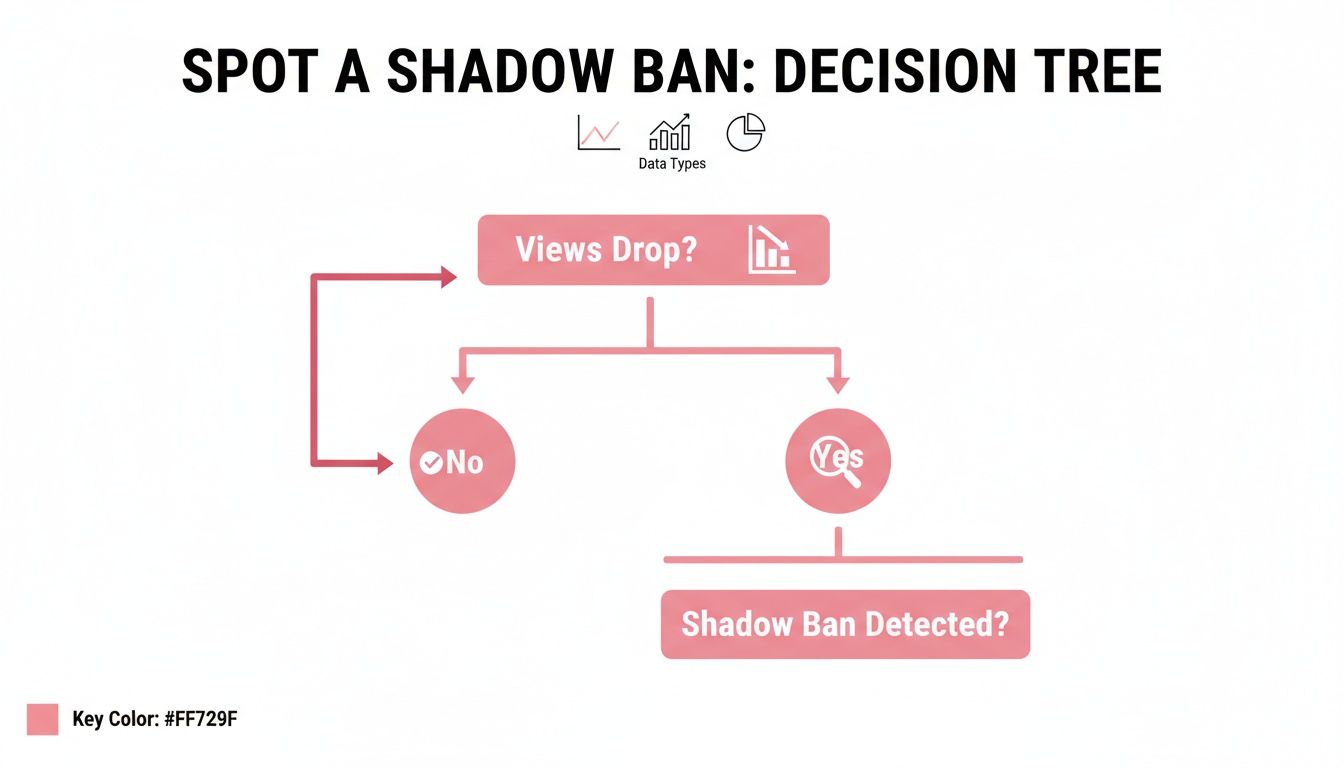
It helps you answer that first crucial question: is this a one-off issue, or is it happening to every new video you post? If it's the latter, it's time to dig a little deeper.
Digging Into Your Analytics for Clues
Your first port of call should always be your own analytics. This is where the real story is told, showing you who is—and more importantly, who isn't—seeing your content. Don't just glance at the total view count; you need to get into the traffic source details for your latest videos.
'For You' Page Traffic: For any healthy video, a big chunk of its views should come from the FYP. If you're seeing 0% or just single-digit percentages from this source on your new stuff, that’s a massive red flag.
Follower vs. Non-Follower Reach: Is your content only being shown to people who already follow you? A shadow ban effectively cuts you off from reaching new audiences, which will be obvious here.
Video Completion Rate: This isn't a direct sign, but if you see completion rates nosedive across all new videos, it could mean they aren't being pushed to the right audiences who would normally stick around.
A major performance drop is often the first clue. Knowing how to calculate your TikTok engagement rate is a fantastic way to get a hard number on whether your account is truly underperforming.
Before jumping to conclusions, it helps to see the signs side-by-side. Is it a shadow ban, or just a bad content day?
Shadow Ban Symptoms vs Normal Performance Fluctuations
Symptom | Potential Shadow Ban Indicator | Likely Normal Fluctuation |
|---|---|---|
View Count | A sudden, dramatic drop (50-90% or more) across all new videos. | One or two videos underperform, but others do okay. |
FYP Traffic | Consistently at or near 0% for multiple new posts. | FYP traffic is lower than usual but still present (10-30%). |
Hashtag Visibility | Your video doesn't appear under a unique hashtag you used. | Your video appears but is buried under more popular content. |
Engagement | Likes, comments, and shares have fallen off a cliff. | Engagement is a bit lower, maybe tied to a less-engaging topic. |
Timeline | The issue persists for over a week across all new content. | Performance bounces back after a few days or a couple of posts. |
This table should help you quickly assess whether the patterns you're seeing are genuinely alarming or just part of the normal TikTok grind.
Identifying Broader Performance Issues
Looking beyond your analytics dashboard can give you even more confirmation. When a shadow ban hits, the symptoms usually show up in a few different places at once.
Industry data confirms that a shadow ban typically triggers an immediate and steep decline in engagement—we're talking 50% to 90% fewer views and interactions. For example, a creator who reliably hits 10,000 views per video might suddenly struggle to break 1,000–2,500. This kind of drastic change is what signals a potential restriction.
There's also a classic manual test you can run with hashtags. Post a video using a completely unique, low-competition hashtag that nobody else is using. Then, grab a different device or ask a friend to search for that exact hashtag. If your video is nowhere to be found after a decent amount of time, it’s a strong sign its distribution is being throttled.
Getting comfortable with these numbers is key. To really become an expert at spotting issues, it's worth taking the time to learn how to check TikTok analytics like a pro.
Confirming a Shadow Ban Without Any Tools
Before you start hunting for a "TikTok shadow ban checker" online, remember that the most reliable detective is you. Third-party tools are often just making educated guesses based on public data, but you can run a few simple, hands-on tests to get some real answers.
These manual checks are your first and most trustworthy line of defense. They give you a solid baseline before you explore other options, and they don’t rely on sketchy algorithms or risky third-party logins—just good old-fashioned observation.
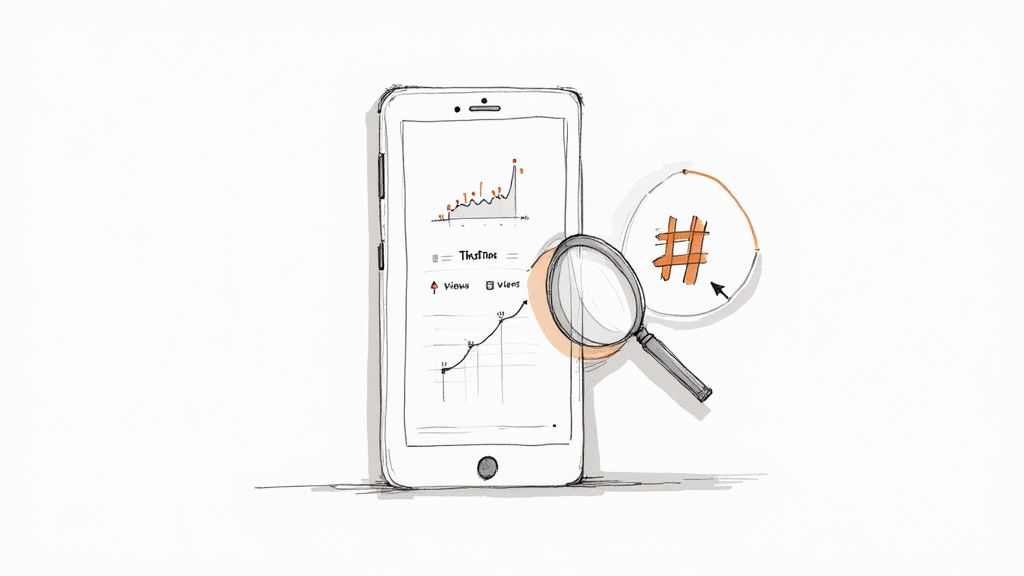
The Definitive Hashtag Test
This is one of the most effective ways to see if TikTok is actively hiding your content. The idea is simple: post a video using a hashtag so unique that your video is the only one that should appear under it. This completely removes the chance of getting lost in a sea of more popular content.
Here’s exactly how to pull it off:
Invent a Unique Hashtag: Come up with something totally original that has zero posts. Think along the lines of
#MyBrandVideoTest789—random, specific, and impossible to mistake.Post Your Video: Upload a new video and use only that unique hashtag in the caption. Don't throw in any other popular tags, as that will mess up the test.
Search from a Different Source: This is the most important part. You need to log out of your account, use an incognito browser, or—even better—ask a friend to search for that exact hashtag on their own device.
If your video doesn't show up in the search results after a reasonable amount of time (give it at least an hour), that’s a pretty big red flag that its distribution is being restricted. A healthy video should always be discoverable through its tags.
The Follower Feed Check
Another powerful manual test involves your own audience. A shadow ban primarily nukes your reach on the For You page, but it can also prevent your content from showing up for the very people who chose to follow you.
The easiest way to check? Just ask them.
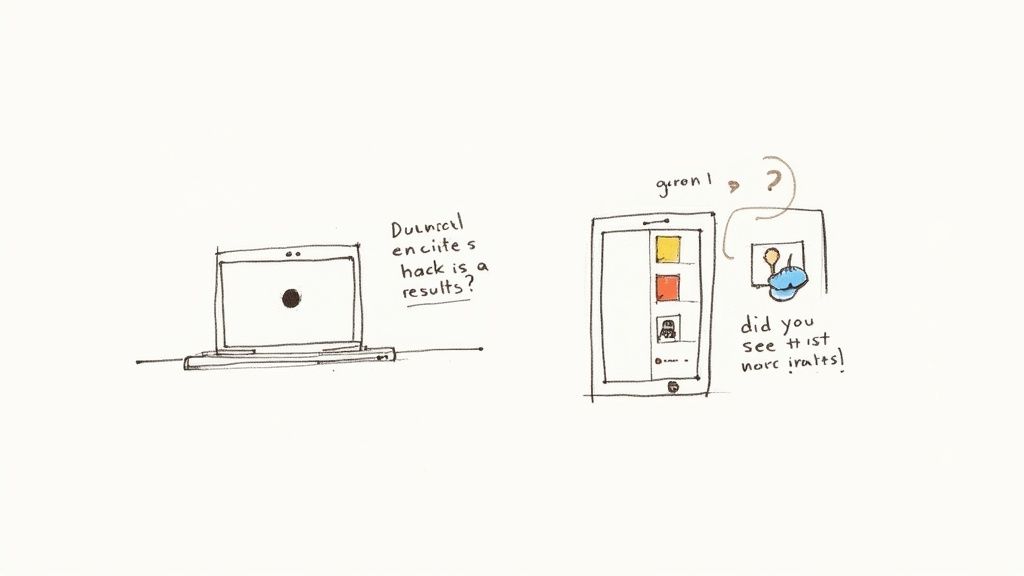
Pro Tip: Don't just post a generic story asking, "Can you guys see my videos?" Instead, reach out directly to a few trusted followers or friends right after you post something new. A specific question like, "Hey, did my latest video about [topic] pop up on your 'Following' feed or FYP?" will get you much clearer answers.
This kind of direct feedback cuts right through the noise. If several followers confirm they haven't seen your latest content organically, it backs up what your analytics might be telling you: your videos just aren't being distributed like they should be.
These two tests—the hashtag search and the follower feed check—are the bedrock of any self-diagnosis. They provide real-world evidence that complements the hard data from your analytics. When both point to a problem, you can be much more confident that you're dealing with a genuine shadow ban and not just a random dip in performance. From there, you can build a clear recovery plan instead of just guessing what's gone wrong.
Using a TikTok Shadow Ban Checker The Right Way
When your own tests are pointing to a shadow ban, it’s tempting to search for a “TikTok shadow ban checker” and hope for a quick, easy answer. I get it. But you need to approach these third-party sites with a massive dose of skepticism.
Most of these tools are just data scrapers. They pull your public information—like view counts and engagement rates—and then make an educated guess. They have zero access to TikTok’s internal systems or some magic button that confirms a ban. Think of them as a second opinion, not a final verdict.
Separating Safe Tools from Scams
Here’s the real danger: the biggest risk isn't getting a wrong answer, it's your account's security. Scammers love to set up fake checker tools designed for one purpose—stealing your login information.
Never, ever use a service that asks for your TikTok password or requires you to authorize an unknown app.
A legitimate analysis tool only needs your public username to work. If it asks for anything more, close the tab and run. Handing over your login info not only puts you at risk of being hacked, but it could also get you flagged by TikTok for bot-like activity, digging you into an even deeper hole.
Key Takeaway: No external tool can "fix" a shadow ban for you. Their purpose is diagnostic at best. Any service promising to restore your reach in exchange for your password or a payment is almost certainly a scam.
For a safer, more reliable look at what’s really going on with your account, you’re much better off with dedicated analytics software. A proper TikTok Profile Analyzer, for example, can track your metrics over time to spot significant drops and patterns without ever asking for your password.
How to Use Checker Results Wisely
If you still decide to use a public data scraper, treat its findings as just one small piece of a much larger puzzle. Use the information to guide your own investigation, not replace it.
Here’s how to do that:
Compare with Your Analytics: Does the tool’s report line up with the nosedive in "For You" page traffic you’re already seeing in your native TikTok analytics?
Look for Corroboration: Maybe the checker flags a specific video for unusually low engagement. Great. Now go run the manual hashtag test on that exact video to see if it’s showing up.
Ignore the "Verdict": Pay less attention to a simple "Yes/No" shadow ban result and more to the raw data it shows. Is there a clear, sustained drop across your 5-10 most recent videos? That’s the real signal.
At the end of the day, a checker might give you a quick data snapshot, but it's nothing more than that. Your own analytics and manual tests are always going to be the most reliable sources for figuring out what’s actually happening with your visibility.
A Practical Plan to Get Your Account Back on Track
Finding out you’re shadow banned is a tough pill to swallow, but it’s definitely not a life sentence for your account. The good news is you can shift from diagnosing the issue to actively fixing it. Getting back in good standing requires a little clean-up, a dose of patience, and a smart return to posting killer content that the algorithm can't possibly misinterpret.
Think of this whole process as a reset button for your account’s relationship with TikTok. The mission is to remove any red flags you might have accidentally raised and prove you're a creator who adds value while playing by the rules. It’s a methodical game, not an overnight fix.
Conduct a Thorough Content Audit
First things first: you need to play detective on your own profile. Scroll through your recent videos, especially the ones you posted just before your views took a nosedive. Be brutally honest with yourself. You're hunting for anything that might have tiptoed over the line of TikTok's Community Guidelines.
Look for content with:
Borderline themes: Anything that could be mistaken for mature, dangerous, or hateful content, even if that wasn't your intention.
Copyrighted material: This is a huge one. Using popular sounds or movie clips you don't have the rights to is a classic trigger for the algorithm.
Spammy hashtags: Overloading your captions with generic tags like
#fypor using hashtags known to be flagged can seriously backfire.
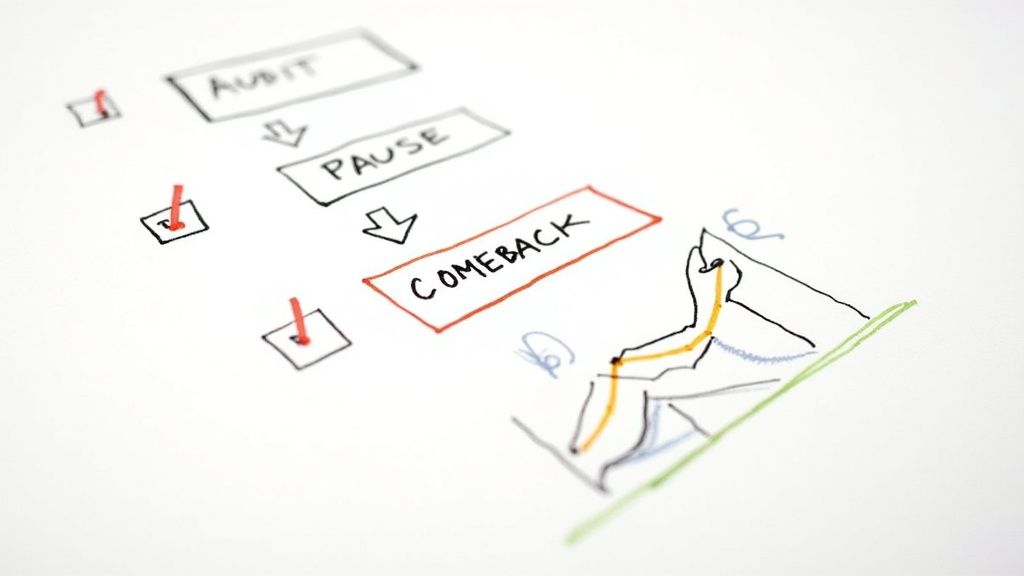
If you find any videos that feel even a little questionable, delete them. Don't just set them to private—remove them completely. This sends a loud and clear message to the algorithm that you're cleaning up your act.
Take a Strategic Posting Break
Once you've done your content sweep, the best move you can make is... nothing. Seriously. Fight the urge to immediately post a new video to check if the ban is lifted. Instead, take a deliberate break from uploading for at least 48 to 72 hours.
This pause works in two ways. First, it gives the algorithm time to crawl your account again and register the changes you've made (like deleting those risky videos). Second, it helps break any negative momentum your account might be stuck in, giving you a clean slate when you return. While you're at it, clear your app cache in your phone's settings—it’s a small step that can sometimes fix weird glitches.
The exact duration of a shadow ban isn't something TikTok advertises, but we can learn a lot from what other creators have experienced. For minor slip-ups, many report restrictions lasting 3-5 days. More moderate violations might see you benched for 7-14 days. For severe or repeat offenses, you could be looking at 14-30 days or even longer.
Plan Your Comeback Content
When you're ready to start posting again, those first few videos are make-or-break. Your goal is to create content that is undeniably high-quality and 100% safe for the platform. Stick to engaging, original ideas that are squarely within TikTok's guidelines. Now is not the time for edgy humor, controversial topics, or any audio that might be flagged.
Your comeback video should be a guaranteed hit with your core audience. This will help you rack up positive signals—likes, comments, shares, and most importantly, watch time. These metrics show the algorithm that your account provides value. If you're dealing with issues on other platforms and want to learn more about algorithm recovery, understanding how to fix automated behavior flags on Instagram can offer some really helpful and transferable strategies.
How to Avoid Future TikTok Shadow Bans
Getting your account’s visibility back is a huge win, but the real victory is learning how to stay off the algorithm's radar for good. Preventing another shadow ban isn't about finding hacks or loopholes; it's about building sustainable habits that put long-term account health ahead of short-term viral gambles.
Ultimately, this comes down to deeply understanding and respecting TikTok’s Community Guidelines. These aren’t just loose suggestions—they're the rules of the road that the algorithm enforces, often automatically. Most of the time, suppressed reach comes directly from violations, even the ones you didn't mean to make.
Master the Community Guidelines
You don't need to memorize the entire document word-for-word, but you should know the main pillars so well that they become an internal filter for your content ideas. The most common violations that trip creators up are usually subtle missteps, not malicious posts.
Here are the key areas to watch like a hawk:
Copyrighted Material: This is a big one. Using audio from a movie or a popular TV show without permission is a massive red flag. Play it safe and stick to the sounds available in TikTok’s official commercial library.
Borderline Content: This gray area is where so many accounts get into trouble. A joke that could be interpreted as bullying, a prank that looks a little too dangerous, or content that touches on sensitive topics without proper context can all trigger automated flags.
Spammy Hashtags: While TikTok doesn’t publish an official "banned" list, certain hashtags are consistently linked to content that violates the guidelines. Using one, even on a perfectly innocent video, can get your content flagged just by association.
Adopt Proactive Content Habits
Beyond just dodging negative triggers, you can actively build positive momentum with the algorithm. When you show consistent, healthy account behavior, you're signaling to TikTok that you're a valuable creator who adds to the platform.
Being proactive means you're deliberate about your entire posting strategy. The goal is to avoid any behavior that an automated system might see as inauthentic or spammy. This applies to both your content and how you engage with others.
Staying ahead of algorithm changes is crucial. Consistently monitoring your performance with the best TikTok analytics tools can help you spot subtle shifts in reach before they become major problems, giving you a chance to adjust your strategy proactively.
Here are a few habits to weave into your workflow:
Diversify Your Content Pillars: Don't put all your eggs in one basket, especially if that basket is filled with edgy or trend-chasing content. By creating videos across a few different topics, you reduce the risk of one flagged video tanking your entire account. If a post in one pillar gets suppressed, your other content can keep your account in good standing.
Engage Authentically: Ditch any rapid, bot-like behaviors. We're talking about mass-following sprees, liking hundreds of videos in a few minutes, or dropping a dozen videos in an hour. These actions look exactly like spam bots to the algorithm and are easily flagged. Pace your activity to look human.
Perform Regular Health Checks: Don't wait for your views to plummet before you audit your profile. Once a month, just take a quick scroll through your recent posts with a critical eye. Does anything feel a little risky in hindsight? It’s far better to remove a borderline video yourself than to wait for the algorithm to penalize you for it. This simple practice keeps your profile clean and minimizes your risk over time.
Common Questions About TikTok Shadow Bans
Even with a solid game plan, the whole shadow ban thing can be pretty stressful. Let's tackle some of the most common questions creators have so you can stop guessing and start moving forward.
How Long Does a TikTok Shadow Ban Usually Last?
TikTok doesn't send you a notification with an end date, but experienced creators have noticed some clear patterns. How long your reach stays suppressed really depends on what caused the problem in the first place.
A small slip-up, like accidentally using a single banned hashtag, might only put you in the penalty box for 3-5 days. For bigger issues that force you to really clean up your content, you could be looking at a 7-14 day restriction. If you've made some serious or repeated mistakes, that shadow ban could stick around for a month or even longer. The faster you find and delete the problem videos, the faster you'll recover.
Key Insight: Think of it like a trust score with the algorithm. A minor mistake is a small ding. Repeatedly breaking the rules means you'll have to put in a lot more work with compliant, high-quality content to earn that trust back.
Can a TikTok Shadow Ban Checker Tool Actually Fix The Ban?
This is a huge one, so let’s be crystal clear: no, these tools are for diagnosis only. A legit shadow ban checker is just a diagnostic tool. It looks at your public data to help confirm what you already suspect—that your reach has tanked across the board. They absolutely cannot lift the ban.
These tools don't have a secret back-channel to TikTok. The only person who can fix a shadow ban is you. It comes down to auditing your account, deleting anything that violates the rules, and getting your content strategy back in line with TikTok's Community Guidelines.
Be extremely skeptical of any service that claims it can "fix" a ban for you, especially if they ask for money or your password. They're almost always a scam.
If I Delete a Bad Video Will the Shadow Ban End Immediately?
Deleting the video that got you in trouble is the essential first step, but it’s not a magic wand. Pulling the content tells the algorithm you're taking corrective action, but it still takes a bit for your account's reputation to bounce back.
After you've removed any potential violations, a lot of creators find it helpful to just take a break from posting for about 24-72 hours. This little pause gives the system time to recalibrate your account's standing. When you come back, make sure you're posting high-quality, engaging, and totally safe content to start rebuilding that positive momentum.
Is Every Sudden Drop in Views a Shadow Ban?
Definitely not, and this is a critical distinction to make. Having a video flop is just part of being a creator. An algorithm changes, your audience's interests shift, or maybe that one idea just didn't hit the mark. It happens.
A real shadow ban is a much bigger, more consistent problem. We're talking about a massive and sustained drop in views across several new videos in a row. It's when your 'For You' page traffic nearly vanishes from your analytics and your videos are nowhere to be found in hashtag searches. You have to see that consistent pattern of suppression before jumping to the shadow ban conclusion.
Stop guessing what’s wrong with your reach and start making data-driven decisions. Virlo analyzes millions of posts daily, helping you spot performance drops and identify winning content patterns so you can avoid algorithmic penalties and grow faster. Discover what's working on TikTok right now.
See What's Trending Right Now
- Social listening for TikTok, Reels & Shorts
- Spot viral trends before they peak
- Turn insights into ads, scripts & briefs
The Signal Newsletter
Weekly trend breakdowns, creator insights, and social listening tips — straight to your inbox.
Subscribe FreeSee Virlo in action
See What's Trending Right Now
- Social listening for TikTok, Reels & Shorts
- Spot viral trends before they peak
- Turn insights into ads, scripts & briefs
The Signal Newsletter
Weekly trend breakdowns, creator insights, and social listening tips — straight to your inbox.
Subscribe FreePut this into practice with Virlo
Turn what you just read into real research. These are the tools creators, agencies, and brands use to find what's working on short-form video.
Content Research Agent
Run your short-form research on autopilot — outliers, creators, and sounds across TikTok, Reels, and Shorts.
Tracking Center
Monitor breakout creators, videos, and competitors with daily snapshots and deep AI analysis.
Free Data
Explore free viral hooks, trending niches, breakout products, and more — no account required.
Get The Signal
Join creators, marketers, and agencies getting weekly trend breakdowns and social listening insights delivered free.
Subscribe to the Newsletter
Stop Guessing. Start Knowing.
Join thousands of digital entrepreneurs using data to take the guesswork out of capitalizing on trends.