Why is My Tiktok Shop Not Showing and How To Fix It
Why is My Tiktok Shop Not Showing? Virlo shows practical fixes for verification, toggles, and connection errors to restore shop visibility fast.

Virlo Team
Virlo Marketing Team
A well-organized TikTok Shop should seamlessly connect buyers with products, yet account issues or technical glitches can limit visibility. Many wonder, "why is my TikTok shop not showing?" Problems such as verification gaps, pending approvals, and inventory sync errors may cause listings to disappear from search or shop tabs. Addressing these Tiktok Shop Marketing issues promptly is crucial for maintaining a healthy sales channel.
Resolving these challenges often involves reviewing account settings, ensuring compliance with guidelines, and remedying technical errors. Monitoring performance and customer engagement provides insight into the shop's operational health. A clear understanding of these factors can help optimize results, and Virlo’s Virality Analysis Tool can reveal trending content and refine marketing strategies.
Table of Contents
Summary
Verification and policy holds are the single most significant source of vanished shops, with community reports indicating about 80% of TikTok Shop issues trace back to account verification or moderation steps, and most fixes are administrative rather than algorithmic.
TikTok Shop already reaches over 1 billion users monthly, and industry projections expect the channel to double by the end of 2025, signaling rapidly expanding discovery and transactional scale for sellers.
Platform attention moves extremely fast, with user engagement on the channel reported to be up 150% since launch, which means a single well-timed clip can produce a measurable sales spike.
Operational processes that work at low volume break down under scale; for example, manual flows that handle 10 orders per day often fail at 100, and catalog feed errors like mismatched SKUs or broken images routinely trigger listing suppression.
Content production and commerce economics are real constraints, given that live selling requires 1,000 followers to unlock, and platform referral fees commonly range from 2% to 8%, both of which affect where teams must allocate time and margin.
When catalogs, creator workflows, and metadata are aligned, merchants see tangible uplift: over 70% of TikTok Shop users report increased sales after integration, demonstrating that configuration and creative alignment drive real revenue.
This is where Virlo's virality analysis tool fits in; it maps trending hooks to SKU-level test briefs and optimal posting windows so teams can prioritize the catalog, compliance, and creative fixes that most affect shop visibility.
Key Features of TikTok Shop
TikTok Shop combines product discovery, checkout, and creator-driven selling all within the app. This lets merchants and creators sell without sending buyers away from TikTok. The reach is already massive, with over 1 billion users engaging with TikTok Shop each month as of 2023, underscoring how effective this channel is for finding products and driving sales.
1. Native product tagging and checkout.
Product links and shoppable tags connect directly to videos and LIVE broadcasts. Viewers can tap to view product pages and complete payments without leaving TikTok, making the process easier. This speeds up the buying process and keeps all conversion data in one place. As a result, having accurate catalogs and mapping SKUs is more important than having a lot of followers just to be seen.
2. Live shopping and commerce-first streams.
Live selling brings together inventory, on-screen product cards, and time-limited deals during live broadcasts. This turns viewer engagement into instant purchases. Higher conversion rates are likely when hosts provide exact SKUs, promo codes, and shipping timelines as clear calls to action on the screen.
3. In-feed shoppable content.
Short videos can include multiple product links and a storefront card. This setup allows organic clips, paid Spark ads, and creator content to act as entry points for checkout. Optimizing creative content in this way means focusing on clear product images, a single, conversion-focused message, and precise product details.
4. Product showcase tab and storefront pages.
Each shop has a permanent product tab on the profile, making it easy to have a storefront for curated collections, popular items, and category filters. Merchandising controls are critical here; correct pricing, linked variants, and proper titles are essential for competing with Amazon-style search results within TikTok. Our Virality Analysis Tool can help you analyze which products are gaining traction and optimize your listings.
5. Catalog management and feed integrations.
Sellers can sync product feeds via CSV or API connections, map attributes such as size and color, and manage inventory levels. Feed errors can create visibility problems; mismatched SKUs, broken image links, or missing HS codes can cause issues that lead to automated suppression.
6. Compliance, moderation, and policy tooling.
Built-in checks identify restricted categories, prohibited claims, and misleading advertising. When shops go unnoticed, it usually happens because a policy trigger has paused their visibility, not because a confusing algorithm is punishing them. Solutions are generally straightforward: fix the content, resolve the issue, and resubmit with proof.
7. What about the creator marketplace?
The Creator Marketplace connects brands with creators for partnerships. It makes finding, negotiating, and tracking deliverables easier. Because of this, brands can create native-looking content without having to make every single creative asset themselves. This is important because having a big following does not automatically mean that a product will be placed effectively in the shop.
8. How does TikTok support creative production?
Creative Exchange connects brands with vetted creative professionals who can produce videos aligned with TikTok's style and technical specifications. This collaboration speeds up the transition from an idea to a publishable, shoppable creative. The difference between a basic idea and something that can be sold often comes down to one great clip that effectively links product promotion, calls to action, and the checkout process.
9. What educational resources are available?
Educational programs: Follow TikTok Shop Academy. TikTok offers structured learning opportunities. The multi-channel Follow Me program specifically targets small and medium sellers. Additionally, the free TikTok Shop Academy courses cover policies, setup, and growth tactics. These valuable resources significantly shorten the learning curve and help reduce common setup errors that can delay approvals.
10. How can sellers maximize promotions and commissions?
Sellers can use promotions, affiliate mechanics, and creator commissions effectively. Some strategies include running coupon drops, offering limited-time bundles, and creating affiliate programs that pay creators per sale. This method helps track influencer ROI at the SKU level. By connecting creator payouts to verified sales it removes confusion about how well the campaign is doing.
11. What integrations does TikTok Shop have?
Payments, verification, and logistics integrations are essential for TikTok Shop. The platform supports gateway connections, merchant verification, and various shipping options. This ensures that payments are clear and orders are sent to fulfillment smoothly. Often, visibility issues are linked to incomplete payment onboarding, unresolved verification checks, or missing tax and shipping settings. This is usually more about these issues than a hidden visibility penalty.
12. What analytics tools are available for sellers?
Built-in analytics and conversion reporting give helpful insights. Dashboards show view-to-click-to-conversion funnels, spending attribution, and creator-led increases. Sellers can use these reports to prioritize fixes: a product with many views but few clicks usually needs changes to its creative or metadata. In contrast, many clicks but few conversions often indicate problems with the checkout process or payment issues.
How can sellers manage their shop effectively?
Most teams handle shop approvals and content coordination using spreadsheets and email. These methods seem familiar and cheap at first. However, as the number of orders and people involved grows, this approach results in scattered approval history, delays in fixing suppressed listings, and simple catalog errors that can persist for days. Tools like Virlo help by centralizing onboarding, automating the approval process, and highlighting blocked items. This cuts down the time to resolve issues from days to hours while keeping a record of the process. This issue is common among creators and brand sellers. Having an immense following builds trust, but mistakes in setup and missed verification steps can make items go unnoticed. Most of these problems stem from human processes, not from the platform's limits.
What is the future outlook for TikTok Shop?
By the end of 2025, TikTok Shop is expected to double in growth, according to Resourcera. This expectation shows accelerating opportunities for sellers who improve their catalogs, compliance, and creator workflows. The gap between getting attention and having a working shop is where the fastest wins happen. Here, small changes in operations can turn confusion into measurable sales. The real issue is not if the shop can grow, but if your setup will support that growth. Knowing what comes next shows the unexpected trade-offs.
Related Reading
Tiktok Shop Pros and Cons
The Tiktok Shop can be a high-leverage sales channel for brands that use it as an active product testing ground. However, it also creates steady operational friction that can eat up time and profits if not well planned. Brands see faster discovery and measurable growth, but they also face greater creative demands, pricing pressures, and potential regional or technical constraints. To enhance your strategy, utilizing our Virality Analysis Tool can provide valuable insights into how elements of your campaign resonate with your audience.
1. What are the amplified attention benefits?
Amplified attention velocity. Platform attention moves fast, helping new products find buyers quickly. According to RKS Growth Strategy Solutions, TikTok Shop has seen a 150% increase in user engagement since its launch, as reported on August 4. Early creative wins can scale visibility more rapidly compared to many older channels. This means that a single, well-designed clip can lead to a measurable sales spike, making short, iterative creative tests extremely valuable.
2. How does it enhance impulse commerce?
The built-in impulse commerce advantage is that discovery and checkout occur in a single session. This setup allows for more emotional product moments to convert better than on platforms that need extra clicks. For sellers who create their clips based on a single, transactional idea, like a clear product shot, one CTA, and an immediate incentive, this method helps reduce abandoned carts. It also shortens the path from attention to purchase, which is where conversion optimization works best with a Virality Analysis Tool to boost effectiveness.
3. Is there a real uplift for merchants?
Real uplift for many merchants. This is not just theoretical. After merchants connect their catalogs and creators into the flow, they often see real revenue improvement. According to a report by RKS Growth Strategy Solutions, over 70% of TikTok Shop users noted increased sales after integration. This means that shops that align creative content with SKUs usually recover their onboarding costs quickly.
4. Can smaller sellers compete effectively?
An uneven playing field has become easier to navigate. Smaller sellers can outmaneuver larger brands by focusing on niche creativity, speed, and honest product storytelling, rather than depending on huge ad budgets. The tradeoff is clear: while it is possible to outpace bigger competitors through faster creative cycles and a better fit with the audience, this requires disciplined creative operations and a feedback process that turns viewer signals into changes by the next day.
5. What about trend-driven product velocity?
Products that match current short-form trends sell out faster, but trend life cycles are short. When changing products to fit a trend, inventory and fulfillment must be in sync to avoid running out of stock or delays, as these can ruin momentum. Successful sellers turn campaign periods into small launches and treat trend-based SKU pushes as temporary experiments instead of long-term selections.
6. How does saturation affect discoverability?
Saturation and discoverability pressure. This channel rewards novelty and frequency, creating intense competition for attention within the company. This pattern is clear among both new brands and well-known retailers. Without careful niche positioning and competitor mapping, content can easily get lost in the feed. The outcome is wasted creative spending and slower list-to-revenue conversion until brands establish a unique creative voice and a strong targeting playbook. Additionally, using a Virality Analysis Tool can help you understand how to enhance your content's visibility and effectiveness.
7. What challenges come with content production?
Content production becomes an operating line item. It is tiring when a calendar requires daily short videos, different edits, and live sessions to keep up growth. Many teams don’t realize how many people and tools they need to keep creativity alive. Without a repeatable, easy production process, creative debt starts to build up. Over time, this causes account performance to plateau, even as audience interest remains strong. For those looking to optimize their strategies, using a Virality Analysis Tool can provide insights to refine your production approach.
8. Are there fee structures to worry about?
Fee structures that compress margins are a concern. Transaction commissions and promotional costs are real and ongoing expenses. If these are not considered in pricing models, they can change gross margin into break-even results. A practical solution involves detailed SKU-level margin modeling and flexible promotional rules to avoid sacrificing profit for visibility.
9. What regional compliance issues exist?
Regional availability and compliance gaps create significant challenges. Where a shop operates and how products are described can differ by market, which fragments growth plans for brands selling internationally. This complexity leads to blocked listings, withheld payouts, and extra verification steps. Each of these issues causes delays that directly affect visibility and cash flow.
10. How does order volume affect fulfillment?
As order volume rises, integration and fulfillment complexity at scale become important. Catalog feeds, inventory synchronization, returns handling, and cross-system reconciliation can become problems. The failure mode is transparent: manual processes that worked well at 10 orders per day struggle at 100. Data drift and human delays cause mismatched SKUs and customer issues. This is where automation and reliable connectors change stores from brittle to robust.
What are the challenges with coordination?
Most teams coordinate approvals and fixes through email and spreadsheets because it feels familiar and requires no new tools. That works early on, but as listings and stakeholders increase, threads break apart, response times stretch from hours to days, and suppression issues remain. Solutions like the Virality Analysis Tool centralize routing, display status in real time, and shorten review cycles from days to hours while maintaining an audit trail.
How can AI help with creator content?
Virlo helps short-form content creators figure out how to make their content go viral. Using AI-powered trend analysis, Virlo offers a tool for virality analysis. It lets you find out what content patterns work and the best times to post that really make a difference.
Why do many shops remain invisible?
That surface-level win is just the beginning. What follows shows why many shops still stay invisible.
Why is My Tiktok Shop Not Showing and How To Fix It
Your TikTok shop may disappear for several specific reasons that can be fixed: verification and compliance holds, regional availability, a shop toggle turned off, an old or corrupted app install, or a local connection issue. Start with the simple checks below, and you will usually find the main reason in less than an hour.
1. Could a policy review or verification be blocking the shop?
Understanding this issue and what to check is crucial. When an account hits a moderation or verification checkpoint, TikTok will restrict shop features while it confirms identity, claims, or content. The primary failure mode is not a mystery; it is a process where an automated flag pauses commerce until a human verification step is complete. This creates real urgency, as sellers often do not receive a clear alert; instead, they may find a missing product tab or a suppressed listing.
Content and behavior that appear to be spam, violate intellectual property rights, or make unsafe claims often trigger action. The system acts as a strict gatekeeper, prioritizing safety over speed.
Check Account Status: Open your Seller/Campaign dashboard and look for pending verifications, document requests, or moderation notes.
Gather evidence for an appeal: Collect screenshots, invoices, brand authorization letters, and proof of compliance, then submit them through the support form.
Watch timing: Verification queues can take days, but clear and complete evidence can speed up this process.
Pattern to recognize: When looking at onboarding sprints over two-week windows, it becomes clear that unresolved verification steps and unclear content flags are the most significant sources of stalled shops. Resolving these steps is administrative, primarily work, not creative magic. It is also important to note that, according to a Reddit user comment, 80% of TikTok Shop issues are related to account verification problems, which is why verification should be your top priority when the storefront disappears.
2. Is the TikTok shop available in your country or account type?
Why geography and account classification matter: Shop availability depends on market rollout, local rules, and the account type you signed up for. Even if the app seems normal, shop features may be hidden if your region or business category isn't supported.
Confirm your account’s region and business classification in the settings and business center pages.
If your market doesn't have full support, lodge a feedback request through the help center, and keep a timestamped record of your submission to show progress.
3. Did someone flip the Shop toggle off by accident?
Toggles and permissions can silently remove features. Accounts managed by more than one person often have their settings changed without anyone knowing. A disabled shop toggle creates the exact problem you mentioned: a storefront that has disappeared, but no account flag.
Go to your profile, open Settings, and in the Shop section, check that the toggle is on.
If the toggle is missing, check your account type and linked business profiles; sometimes a migration or role change removes the UI.
4. Is your app up to date and properly installed?
It's essential to understand how app versions and permissions can block features. Old versions of the app and broken installations might hide new product features or prevent UI elements from appearing. This problem is easy to predict: if the app can't understand the updated Shop API, the Shop UI won't show for that installation.
Update through the App Store or Play Store, and then restart the device.
If updating doesn’t solve the problem, uninstall and reinstall the app to fix corrupted or incomplete files or incomplete updates.
5. Could local connection or cached app data be hiding the shop?
Network and cache problems can cause display glitches, block resources, or provide old local data, which may keep the Shop UI from loading, even when everything else is set up correctly.
These issues are quick to test and fix, but they are often missed in the rush to escalate.
Toggle Wi‑Fi and mobile data, or switch to a different network to rule out ISP or firewall interference.
Disable any VPN, as it can route connections to a different region where the shop might not be available.
What if the shop vanishes and support isn't there to help?
A status quo intervention can be helpful. Most sellers try to solve these issues by opening support tickets and juggling screenshots across messages, which often feels familiar and low-effort. This way may work at first, but as the number of blocked items grows, it becomes a time sink: tickets multiply, context is lost, and resolution stretches from days into weeks. Teams find that tools like the Virality Analysis Tool can centralize verification status, routing, and evidence collection. This saves approval time from days to hours while keeping an audit trail and reducing repetitive support work. It’s frustrating when the shop disappears, and the clock starts ticking. In the end, the next part of the story is what truly decides whether that visibility turns into revenue.
How to Sell on TikTok Shop Successfully
You sell on TikTok Shop by pairing attention-grabbing short-form content with a correctly configured storefront, clear conversion points, and frequent live or in-feed calls to action. If you do these things reliably, you can convert viewers into buyers. Focus your effort on repeatable creative patterns, tight metadata, and frictionless links. This way, each viral moment becomes measurable revenue.
1. How can Virlo help with TikTok Shop content ideas?
Use Virlo for TikTok Shop content ideas. Virlo helps short-form creators find what actually works, not just what looks good on paper. The platform uses AI to analyze viral patterns, find the best audio and video pairings, suggest the best times to post, and show repeatable hooks. This way, you can stop guessing and start scaling what works well. Treat these signals as your editorial guide: choose one suggested pattern, make three edits, and go with the one that hits the hook. For sellers tired of trial and error, this one change turns creative time into reliable tests.
2. What should you focus on in your videos?
Watch your videos from beginning to end. How quickly do you lose viewers? The first three seconds are crucial. Start with a high-contrast visual or a catchy line. Keep the focus clear and aim for about 15 seconds to help platforms reward full views. Film several beginning scenes until you find one that clicks, then create a loop or small transition that makes viewers want to watch the clip again. When views loop, the algorithm takes notice, giving your product more natural reach. This simple method often works better than a more complicated production.
3. How can you use trending songs and styles?
Use trending songs and styles. Keep a playlist of new sounds and a set of format templates you can quickly change. Pick audio that supports your message, then flip the trend so it highlights a product moment instead of just trying to make a sale. Save promising sounds in your favorites and test them with similar SKUs to find out which audio increases click-through rates and which just adds noise. Track performance every day to make sure you focus on what really helps move things along.
Why is organizing content necessary for your team?
Most teams try to track trends and content ideas in spreadsheets because it feels low-cost and familiar. This approach works until trends expire in just a few days, and creative approvals scatter across Slack and email. Such disorganization slows turnaround and buries the best ideas. Teams find that platforms like Virlo centralize trend signals with automatic pattern detection and recommended creative templates. This innovation compresses the iteration loop from days to hours while maintaining a clear audit trail.
4. How to creatively feature your products?
Find unique ways to showcase your products by selling through scenes and solutions, not just specifications. First, highlight a problem, then present the product as the easy solution in a short clip: a quick change, a clever trick, or a funny mistake your item fixes. This method works well because when people discover things on TikTok, they often buy them right away. Research by Admetrics shows that over 50% of TikTok users have purchased a product after seeing it on the platform. So, your creative should focus on making the purchase clear, not just appealing. Think of the product as a side character in a twenty-second scene that ends with an obvious, clickable next step.
5. What benefits does livestreaming offer?
Livestream to your followers. Use live sessions to turn interest into instant orders by answering questions in real time, showing the product, and providing stream-only deals or bundles to create urgency. You need 1,000 followers to start live selling, so plan promotion before the stream and create a clear script that focuses on one product per segment. During the streams, collect short testimonials, show delivery times, and display exact product cards so viewers can tap to buy without leaving the broadcast. Also, virtual gifting adds to your income and strengthens connections; see it as part of community building, not just making money.
6. How should you manage your profile links?
Make every profile element a conversion asset by adding links that drive action. Ensure your CTAs and mobile-first landing pages are clear and match the tone of your clips. Link to shopping pages, tracked landing URLs, or specific product listings, and rotate these links when a campaign changes. It's also essential to think about platform fees when pricing and promoting products. TikTok usually charges referral or commission fees on each sale, ranging from 2% to 8%, as noted in TLinky. These deductions can really impact whether a promotion is profitable. So, check margin per SKU, include fulfillment and returns friction, and only use discounts when the numbers still allow for a profit.
What is the common frustration among sellers?
A common frustration among sellers is crowded channels. This problem pushes teams to try TikTok Shop, which creates real excitement. However, it can also lead to creative debt and margin pressure if testing and pricing are not well-organized. Sellers should view their content as experiments tied to SKU-level outcomes. By building on what works and having one person in charge of promotion and profile links, small mistakes can be avoided. This helps prevent these mistakes from wasting days of progress.
How can a good hook impact sales?
Think of your hook like a shop window that must be readable from thirty paces. If it is unclear, people will keep walking, and the sale will never happen.
What is the hidden signal for revenue?
Many teams ignore a reproducible signal that turns random reach into steady revenue. Knowing about this hidden tool can be very helpful.
Related Reading
Go Viral with Virlo's Virality Analysis Tool
When your TikTok Shop disappears, and every post feels like a blind experiment, you need a simple plan that lists which SKUs and hooks to test next. Try Virlo; it connects trending hooks to SKUs you can really fulfill, gives you short, testable creative briefs, and sets up publish times. This way, you stop guessing and start turning attention into real orders.
Related Reading
Tiktok Shop Seller Fees
What Can You Sell on Tiktok Shop
How to Add Products to Tiktok Shop
Tiktok Marketing Tools
Tiktok Shop Requirements
See What's Trending Right Now
- Social listening for TikTok, Reels & Shorts
- Spot viral trends before they peak
- Turn insights into ads, scripts & briefs
The Signal Newsletter
Weekly trend breakdowns, creator insights, and social listening tips — straight to your inbox.
Subscribe FreeSee Virlo in action

See What's Trending Right Now
- Social listening for TikTok, Reels & Shorts
- Spot viral trends before they peak
- Turn insights into ads, scripts & briefs
The Signal Newsletter
Weekly trend breakdowns, creator insights, and social listening tips — straight to your inbox.
Subscribe FreeRelated Articles
Facebook Ads vs Instagram Ads in 2026: Which One Deserves Your Budget
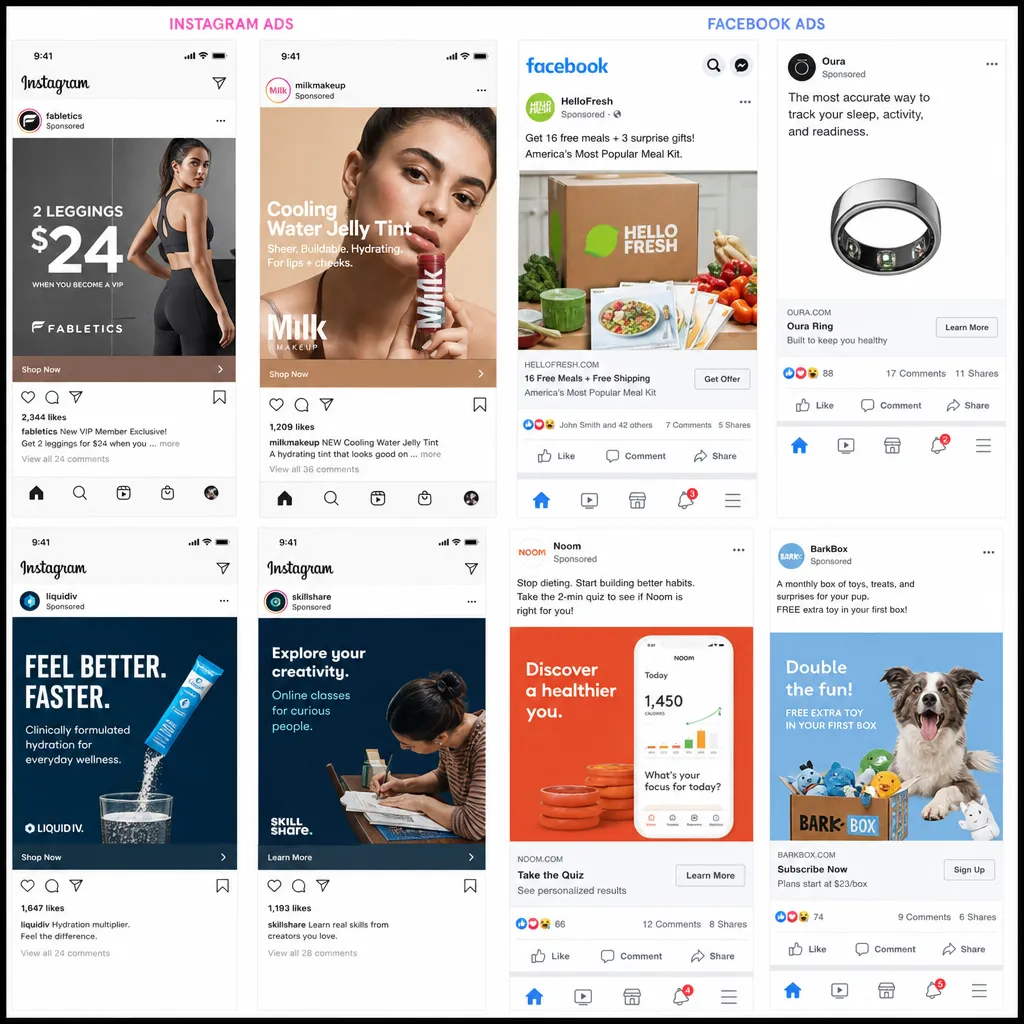
The real cost gap between Facebook ads and Instagram ads and which wins for ecommerce, leads, and B2B, and a starting budget split for your business type.

64% of Gen Z Uses TikTok Instead of Google—Here’s How to Make Sure They Find You
More Gen Z users are bypassing Google, turning to TikTok and Instagram for answers. Surveys show short-form video platforms are becoming Gen Z’s go-to search engines.
Ultimate Guide to Clip Farming in 2026 for Creators
Clip farming means three different things in 2026. Here's what each one is, how creators actually run it, what it pays, and what the platforms now penalize.
Put this into practice with Virlo
Turn what you just read into real research. These are the tools creators, agencies, and brands use to find what's working on short-form video.
Content Research Agent
Run your short-form research on autopilot — outliers, creators, and sounds across TikTok, Reels, and Shorts.
Tracking Center
Monitor breakout creators, videos, and competitors with daily snapshots and deep AI analysis.
Free Data
Explore free viral hooks, trending niches, breakout products, and more — no account required.
Get The Signal
Join creators, marketers, and agencies getting weekly trend breakdowns and social listening insights delivered free.
Subscribe to the Newsletter
Stop Guessing. Start Knowing.
Join thousands of digital entrepreneurs using data to take the guesswork out of capitalizing on trends.