Instagram SEO - The Ultimate Guide to Ranking on Instagram Search
Instagram is a discovery algorithm with a lesser known search engine. Learn how Instagram SEO works in 2026: the ranking signals, keyword research, and how to optimize every post and Reel.

Himanshu Bisht
Professional Blog Writer
Himanshu Bisht is a digital community and content expert. With the strategies he shares, companies and creators have generated over 10 million dollars in combined sales. His views have been featured in the magazines like Forbes and Authority Magazine. Himanshu writes expert articles for creators on Virlo AI.
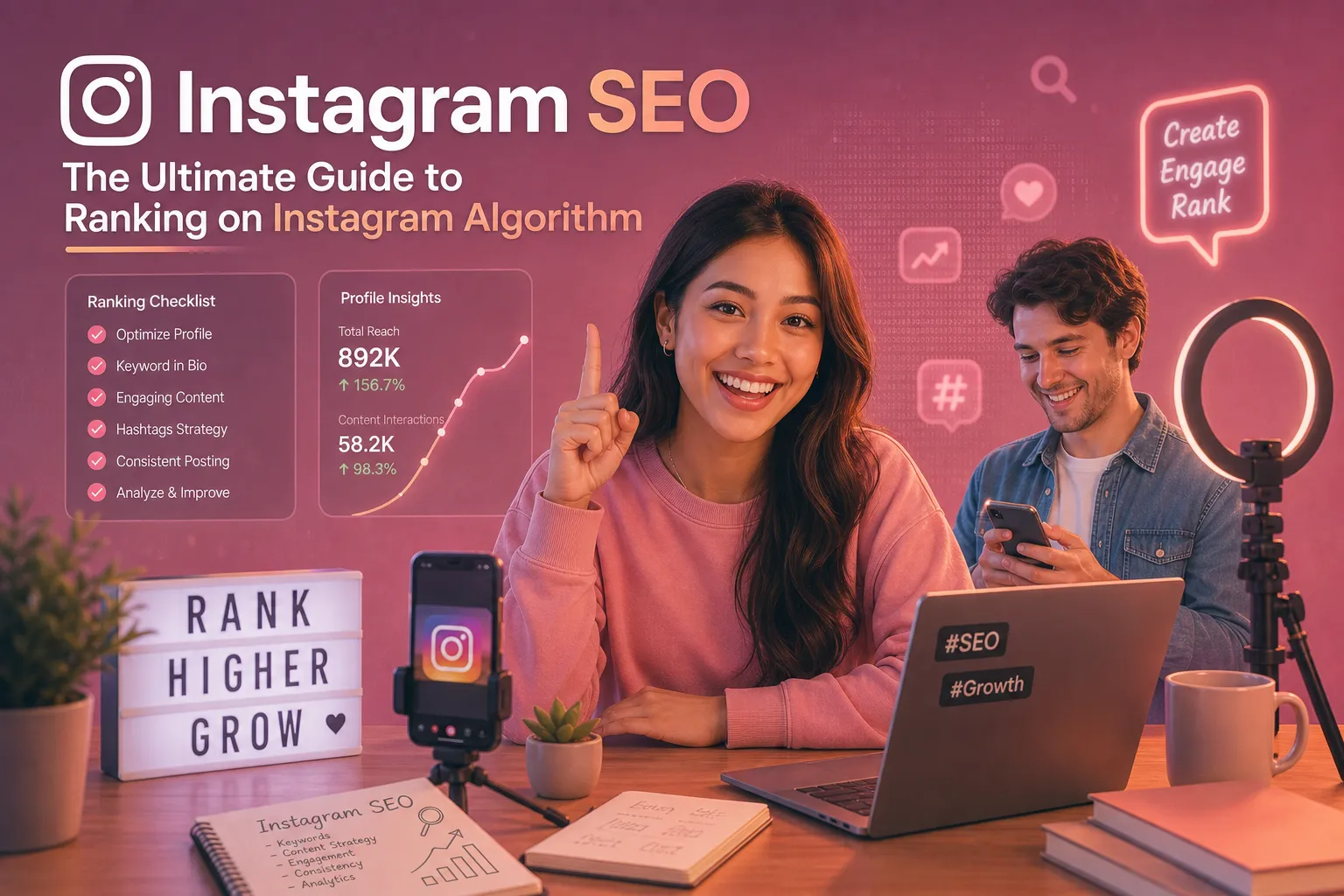
Instagram SEO can be a gamechanger as a creator. Millions of people use Instagram to search their favorite restaurant, reels, music, movies, local services, products. And most creators ignore this part.
Insta SEO is essentially the practice of optimizing your profile, posts, and videos so they appear when people search on Instagram, instead of depending on the feed or the algorithm's mood to carry them. It has become one of the highest-leverage skills a creator or brand can learn. Instagram is no longer just a place people scroll. It is a place people search, for products, recipes, workouts, restaurants, and answers.
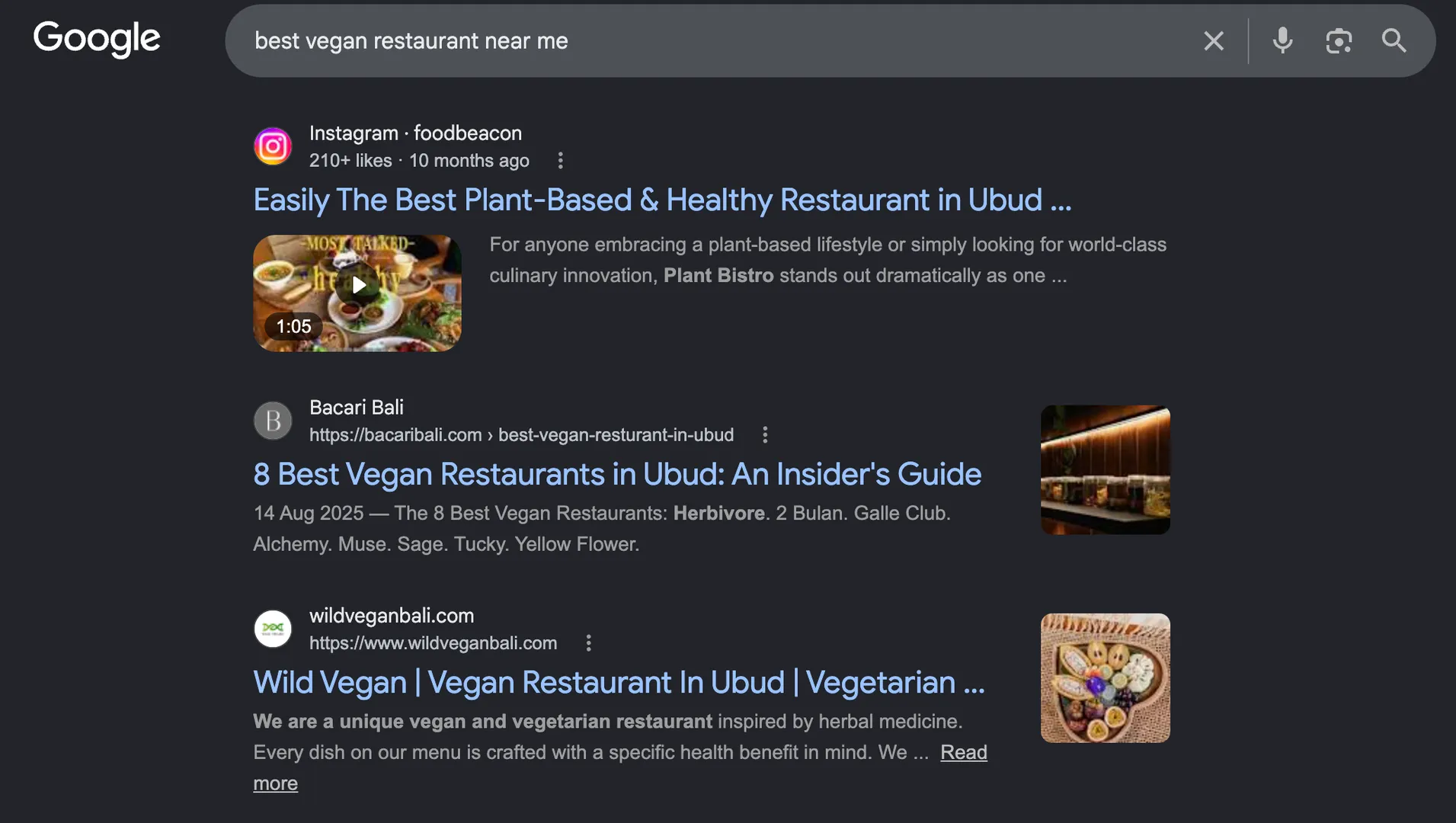
I have spent years in SEO, and the strategies I share have helped creators and companies generate millions of views. Some of those views have been featured in magazines like Forbes. Instagram search rewards different habits than Google does, and different habits than TikTok does too, which surprised me when I started testing across platforms. This guide covers the full system: how Instagram reads your content, what decides rankings, how to research keywords, and the exact process to optimize every post before you publish it.
TL;DR: Instagram SEO works because the platform reads your caption, name field, bio, alt text, on-screen text, and spoken Reels audio to understand your topic, then ranks you based on watch time, likes per reach, and sends per reach. To rank, front-load your keyword in the caption, say it and show it early in the Reel, put your topic in your name field, use three to five focused hashtags, and stay consistent in one niche.
What is Instagram SEO?
Instagram search optimization means making your content findable through Instagram's search bar and Explore page, the same way traditional SEO makes a website findable through Google. When someone types "small bedroom ideas" into Instagram, the Reels, carousels, and accounts that appear were not picked at random. They matched the query, earned strong engagement from the people who found them, and came from accounts Instagram associates with that topic.
The reason this deserves real effort comes down to how search traffic behaves. A post that rides the feed or lands on Explore spikes and fades within days. A post that ranks for a search term keeps collecting views, saves, and followers for months, because the demand behind a search renews itself daily. Someone searches "meal prep for beginners" this week, and someone else will search it every week after. If your Reel owns that result, it works for you the entire time.
Most creators pour everything into chasing the feed and leave search entirely uncontested. In most niches, that means the results are still winnable by whoever shows up with intention.
Why people search Instagram now
Google's own research found that around 40% of young people looking for a place to eat go to TikTok or Instagram before they ever open Google Maps or Search, a figure a Google executive shared publicly because it worried them. Visual search fits certain questions better than text results ever will. A person choosing a restaurant, a haircut, a hotel, or an outfit wants to see it, and Instagram is where the seeing happens.
There is a second layer to this that most guides miss. Since mid-2025, Instagram allows public content from professional accounts to be indexed by Google, which means a well-optimized Reel or carousel can now surface in Google results too. Your Instagram SEO work earns placement on two search engines at once, and increasingly a third, since AI assistants pull platform content into their recommendations.
A small example of what this looks like in practice. A friend of mine runs a home organization account, modest following, nothing viral. One carousel titled around "small closet organization ideas" ranks in Instagram search for exactly that phrase, and she told me it still brings her a steady drip of saves and follows more than a year after posting. Nothing else she made that month is doing anything. Search optimized content often has a longer lifespan than a general content made for discovery.
How Instagram algorithm reads your content
Before the tactics, you need a picture of what the system actually sees, because Instagram does not watch your Reel the way a person does. It reads several layers of text and signals, and combines them into an understanding of your topic. In this section let's look into some of such aspects.
Starting with the captions, Instagram parses your text on videos directly, and the words at the front carry the most weight, since they are also what displays before the caption truncates.
Your name field and bio are indexed for account search. This is why accounts with a topic in the name field surface for that topic, and accounts with only a name do not.
There is also an option of alt text which is read as content. Instagram auto-generates it for images, and you can overwrite it manually with a description that includes your keyword, which almost nobody does.
Your on-screen text is read from Reels and carousels, and your spoken audio in Reels is transcribed. What you say out loud becomes searchable text, the same way it does on TikTok.
The basic rule that we can drive from this is: your target keyword should appear across every layer you control. When your caption opens with "small closet organization ideas," your on-screen text shows it, you say it in the first seconds, and your alt text describes it, Instagram has no ambiguity about the topic, and it knows exactly which searches you belong in. When the layers are empty or contradictory, the system guesses, and content it has to guess about rarely ranks for anything.
Instagram search is not as advance as Google or Bing but it considers keywords and viewer's intent to some degree.
The Instagram SEO signals that decide Ranking
Matching a query makes you eligible. These signals decide whether you actually appear, and how high.
Watch time: Instagram's head, Adam Mosseri, has said plainly that watch time, likes per reach, and sends per reach are the signals that matter most for distribution. A Reel people watch to the end tells the system it satisfied the interest, and it holds its position in search and Explore. A Reel abandoned in two seconds disappears from results regardless of the caption.
Sends and Shares: A send, when someone shares your post in a DM, counts far more than a like, because forwarding content to a friend is the strongest endorsement a viewer can give. Content that people send is content Instagram spreads, and this is worth designing for deliberately. Posts that make someone think of a specific person, this is so her, get sent. Posts that are merely good get liked.
Save Signals: A save means someone intends to return, which is exactly the quality search results need. How-to content, reference lists, and idea collections earn saves naturally, and it is no accident that those formats dominate Instagram search results.
Account topic consistency: Instagram builds a model of what your account covers, and every post inside your niche sharpens it while every detour blurs it. Accounts the system can confidently categorize rank faster for their category with each post. However, note that unless the content is really old, this part someone does not matter that much for SEO specificaly.
Originality matters more each year. Instagram down-ranks watermarked reposts and recycled content, and rewards original material. Content pulled from TikTok with the logo still visible starts at a disadvantage before anyone has watched a second of it.
Instagram keyword research: finding what people actually search
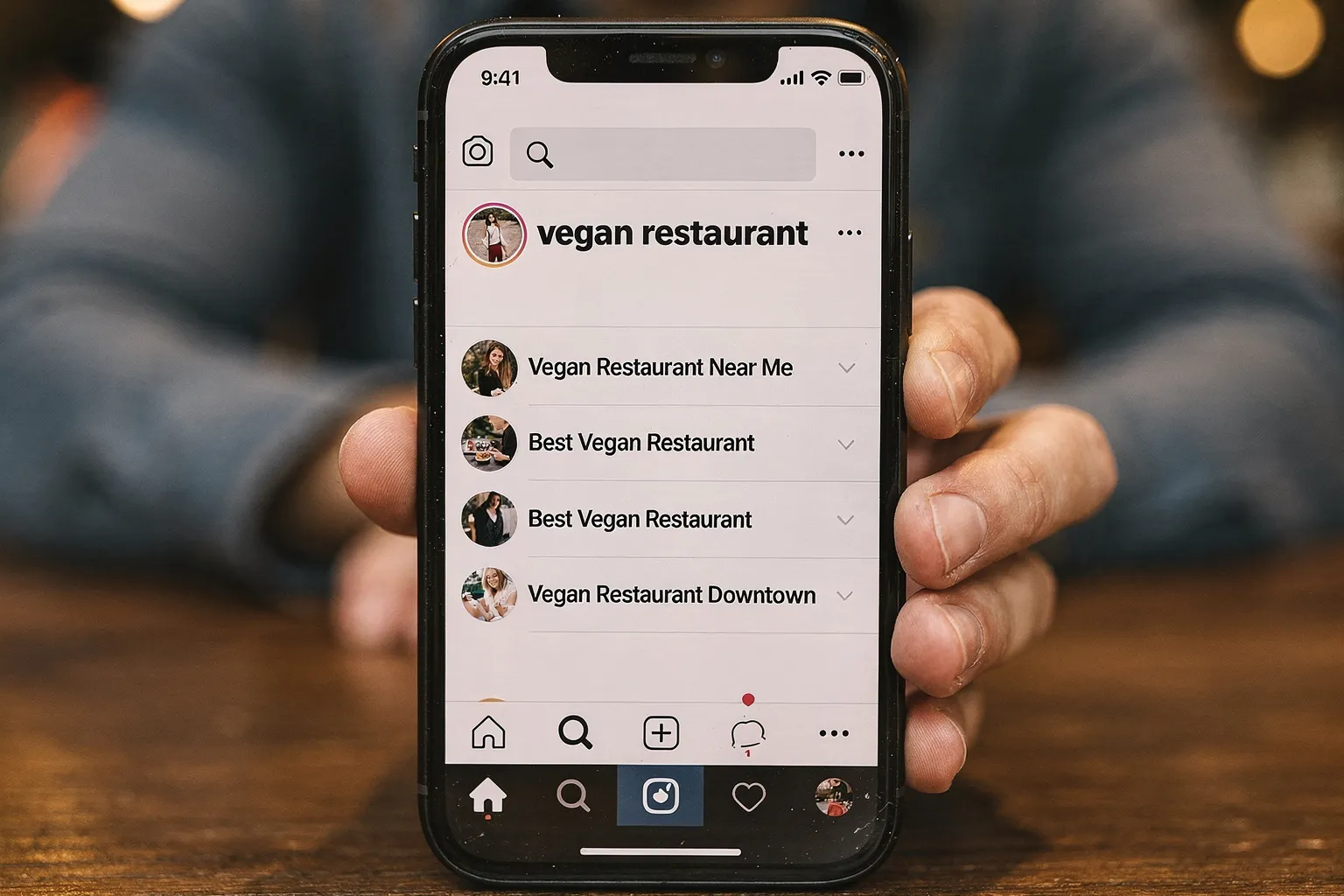
You cannot rank for a keyword you never chose, and most creators never choose one. They make the post first and write a caption at the end. This guide asks you to reverse that order: pick the search term first, then build the content to answer it.
Start inside Instagram itself. Type a phrase from your niche into the search bar and read the autocomplete suggestions, because those are real queries ordered roughly by popularity. Run a search and note the related suggestions that appear across the top of the results. Twenty minutes of this across your topic produces a keyword list most of your competitors never bothered to build.
Then study what already ranks. Search your target phrase and look at the top Reels and carousels carefully. Their formats, their lengths, their hooks, and their caption structures tell you what Instagram currently rewards for that query, and your job is to match the pattern while beating the weakest entry on usefulness.
For demand validation beyond the app, Google Keyword Planner helps, since many Instagram searches mirror Google searches for the same topics. And for spotting which topics are genuinely pulling in your niche before they saturate, this is where I use Virlo. When a Reel in a niche massively outperforms its creator's baseline, that outlier usually means demand is bigger than the current supply of content, and Virlo's Content Research Agent surfaces those outliers across Reels, TikTok, and Shorts automatically. Pairing Instagram's own search suggestions with outlier evidence has picked more winning topics for me than either source alone.
Optimizing a post for Instagram search, step by step
Here is the process to run on every upload. None of it requires design skill, only intention.
Front-load your caption with the keyword. The phrase belongs in the first line, written the way a person would write it. One clean use early beats five forced repetitions, and keyword-stuffed captions read as low quality to both the system and the humans deciding whether to tap.
Say the keyword in the first three seconds of a Reel. Your speech gets transcribed, and the opening carries the most weight. If your target is "beginner strength training," your first line should be close to "here is the beginner strength routine I wish I had started with." It doubles as a hook, since a searcher hears an immediate match with what they typed.
Show it as on-screen text early. Add the phrase as a text overlay in the first frames. It reinforces the topic for the system and serves the large share of viewers watching without sound.
Write the alt text yourself. On every image and carousel, replace the auto-generated alt text with a plain description that includes your keyword. It takes fifteen seconds, it helps accessibility, and it adds an indexed layer almost no competitor is using.
Use three to five focused hashtags. Choose tags that describe the actual topic, not broad dream tags. Hashtags work as category labels now rather than discovery engines, and a small set of precise ones does that job best. If you want quick options, Virlo's free hashtag generator gives you focused sets in seconds.
Rename your audio if it is original. Reels audio has a title, and "original audio" wastes an indexed field. A keyword phrase there is one more agreement between layers.
Design for the save and the send. Before posting, ask what would make someone save this for later or send it to a specific friend. If the honest answer is nothing, the content has a value problem no optimization will fix.
Optimizing your profile for search
Instagram ranks accounts in search results, not just posts, and the profile work takes ten minutes.
Your name field is the most valuable indexed real estate you have, and it is separate from your username. A name field like "Maya | Postpartum Fitness" surfaces for postpartum searches in a way a bare name never will. Keep the username itself simple enough to type after hearing it once, and if you are still choosing one, check availability with a handle checker before you build anything on it.
Write your bio in plain language that names your topics and who they serve. The bio is indexed for search and read by every human who lands on your profile, and it should answer the same question for both: what is this account about, and is it for me.
Then hold your lane. Consistency inside one niche is what lets Instagram categorize you confidently, and categorized accounts rank faster with every post.
Local search deserves specific attention here, because Instagram is unusually strong for it. People search for restaurants, salons, gyms, photographers, and services by place constantly, and the accounts that surface made their geography obvious. If you serve a physical area, put your city in your name field or bio, say it in your Reels, and tag your location on every post, since "wedding photographer Austin" searches reward exactly that clarity.
The formats that rank in Instagram search
Search results have format preferences, and matching them is part of the relevance game.
How-to Reels with visible steps dominate instructional queries, for the same reason tutorials win everywhere: they match what the searcher came to do. Carousels rank remarkably well for idea and list queries, "living room lighting ideas," "high protein lunch ideas," because they earn saves, and saves are the signal search rewards. Before-and-after and transformation content wins queries where the searcher is really asking whether something works.
Across all formats, original, natural content outperforms polished, produced material in search results. The person searching wants a real answer from a real person, and production that reads as advertising triggers the same skip an ad would.
On Reel length, let watch time be the guide rather than a rule. Thirty to ninety seconds suits most educational content, shorter suits trends, and the real test is whether people finish. A thirty second Reel watched fully beats a two minute Reel abandoned halfway, every time it competes.
Build clusters, not one-off posts
A single ranking post is a good outcome, and a cluster of them is what builds a durable search presence.
Map ten to fifteen related queries in your niche and cover them one post at a time, mixing Reels for the how-to queries and carousels for the idea queries. Each post strengthens Instagram's confidence in your account's topic, which makes the next one rank a little more easily, and the compounding works the same way topical authority does in website SEO.
Clusters also convert better. A person who arrives through one search and finds twelve neighboring answers follows the account, and search-driven followers arrive with intent rather than boredom. If you monetize through brand partnerships or UGC work, those are the followers that turn into income, because they came for exactly what you do.
Instagram SEO beyond Instagram
Your optimized content now gets found in two more places, and both reward the same work.
The first is Google. With public professional-account content indexable since 2025, well-optimized Reels and carousels surface in Google results for how-to and idea queries, which means your caption and alt text discipline earns real estate on the biggest search engine without any extra effort.
The second is AI assistants. When people ask ChatGPT or Perplexity for recommendations, the answers increasingly draw on platform content and the creators who are visible around a topic. This discovery layer has its own optimization discipline, and it rewards the same clarity Instagram search does. Generative engine optimization is here to stay and grow.
The practical point requires no extra work, only doing this guide's work properly. Clear keywords, self-contained answers, and a consistent topical identity are what every one of these systems rewards.
Getting discovered is only the first step; turning that visibility into consistent growth takes a strong content strategy. social media marketing helps businesses turn that visibility into engaging content and long-term growth.
Mistakes that keep content invisible on Instagram
Instagram takes spam and intentionally enforcing any kind of visibility very seriously.
Keyword stuffing reads as spam to the system and to people, in captions especially. Say the phrase once or twice and let the layers agree with each other. Thirty hashtags dilute your topic signal, and the era when they drove discovery is over. Reposting watermarked TikToks starts every video at a ranking disadvantage. Ignoring alt text throws away an indexed layer for the sake of fifteen saved seconds.
A weak opening costs more than any of these, because watch time decides rankings and watch time is decided in the first moments. Niche-hopping does its damage more slowly, keeping Instagram permanently unsure of what your account is about, which quietly caps how far anything you post can travel.
However, if your caption is completely irrelevant to the video, there is a high chance that it will still be shown on discovery engines. It's just the search engine works little differently.
How to measure whether Search Optimization is working
Give the strategy a few weeks, then check three places.
Search your target keywords from an account that does not follow you and note where you appear, both in the top results and in the Reels tab. Open your insights and watch where reach is coming from, because growth in non-follower reach on your keyworded posts is the signature of search and Explore working.
Then track saves and sends over time, since those are the signals rankings follow, and compare your engagement against your niche with Virlo's free engagement calculator if you want an honest benchmark.
Expect the timeline to reward patience. Individual posts can surface in search within days, while meaningful search traffic builds over one to two months as your cluster deepens and your account's topical identity firms up. The reward is the part most creators never experience: posts that keep working long after the feed forgot them.
Frequently asked questions
What is Instagram SEO?
Instagram SEO is optimizing your profile, posts, and Reels to appear in Instagram's search results and Explore page. It involves placing your target keyword in your caption, name field, alt text, on-screen text, and spoken audio, then earning the watch time, saves, and sends that convince Instagram the content satisfies the search.
How do I rank in Instagram search?
Choose a keyword people actually search, front-load it in your caption, say it and show it in the first seconds of your Reel, write keyword-rich alt text, use three to five focused hashtags, and stay consistent in one niche. Watch time and sends per reach decide rankings more than any other signals.
Do hashtags still matter for Instagram SEO?
They help categorization but no longer drive discovery on their own. Use three to five specific tags that describe the topic and skip broad ones, since keywords in your caption, name field, and audio now carry more weight than any hashtag strategy.
How do I find keywords for Instagram?
Use Instagram's search bar autocomplete and the related suggestions on results pages to collect real queries, then study what already ranks for each phrase. Google Keyword Planner helps validate demand, since many Instagram searches mirror Google searches for the same topics.
Does Instagram content show up in Google?
Yes. Since 2025, public content from professional accounts can be indexed by Google, so optimized Reels and carousels surface in Google results too. The same caption, keyword, and alt text work serves both search engines at once.
How long does Instagram SEO take to work?
Individual posts can appear in search within days, and meaningful search traffic typically builds over one to two months as you cover a cluster of related queries and your account develops a clear topical identity. Ranked posts then keep collecting reach for months.
Does Instagram SEO work for small accounts?
Yes, often better than for large ones, because search rewards relevance and engagement quality rather than follower count. A small account that matches a query precisely and earns saves can outrank a much larger account that posts about everything.
Where to start today
Everything in this guide reduces to a sequence you can run on your next post. Pick one search term before you create, using autocomplete and the results page rather than instinct.
Build the Reel or carousel to answer it in the format the current results reward. Front-load the caption, say the phrase early, show it on screen, write the alt text, and support it with a handful of honest hashtags. Then stay in your lane long enough for the authority to compound, and check your non-follower reach in a month.
Instagram SEO rewards consistency that the feed never asks of you, which is why so few creators practice it seriously. The accounts who do end up owning search results that keep paying them in reach and followers every week, while everyone else starts over with each post. Start with one keyword on your next Reel, and let the compounding do the rest of the convincing.
See What's Trending Right Now
- Social listening for TikTok, Reels & Shorts
- Spot viral trends before they peak
- Turn insights into ads, scripts & briefs
The Signal Newsletter
Weekly trend breakdowns, creator insights, and social listening tips — straight to your inbox.
Subscribe FreeSee Virlo in action
See What's Trending Right Now
- Social listening for TikTok, Reels & Shorts
- Spot viral trends before they peak
- Turn insights into ads, scripts & briefs
The Signal Newsletter
Weekly trend breakdowns, creator insights, and social listening tips — straight to your inbox.
Subscribe FreeRelated Articles

Mapping “Earn Money Online” Demand Through Social Signals
Virlo AI’s Orbit data shows that modern viral moments form as sharp, isolated explosions of attention, driven by platform-specific algorithms, creator trust, and rapid audience feedback loops. Instead of slow, multi-platform growth, trends now peak fast, expire quickly, and reward creators who move first and not those who scale widest.
Case Study: How Orbit Turns Narrative Into Measurable Insight
This post showcases a real experiment using Virlo’s Content Studio to demonstrate the impact of Orbit data on content creation. The same blog prompt was run twice to show the difference in data between the two, and the impact it can have.
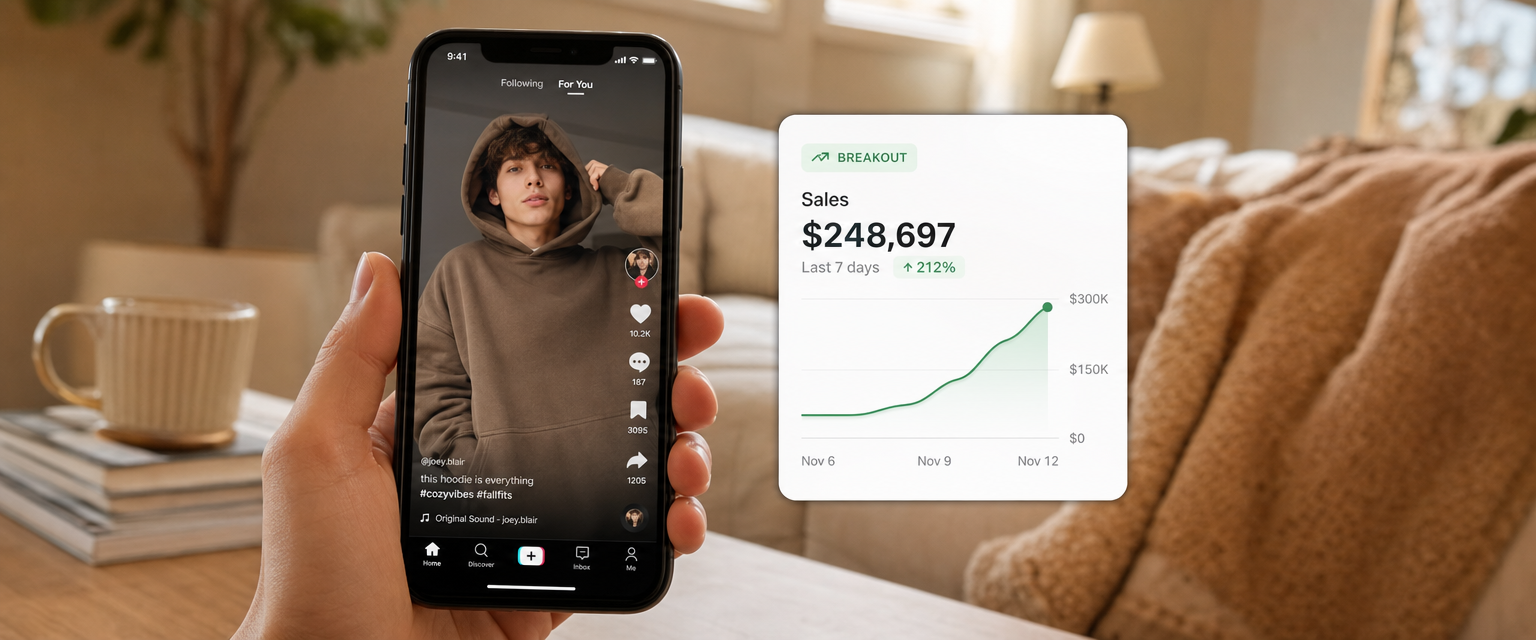
How Comfrt Grew Into the #1 Hoodie on TikTok (and Hit $500M in Under 3 Years)
Comfrt launched in 2022 with $50,000 and three hoodie colors. Under three years later it's the #1 apparel brand on TikTok Shop with $500M+ in revenue. Here's the playbook, and how to run it without a decade of relationships.
Put this into practice with Virlo
Turn what you just read into real research. These are the tools creators, agencies, and brands use to find what's working on short-form video.
Content Research Agent
Run your short-form research on autopilot — outliers, creators, and sounds across TikTok, Reels, and Shorts.
Tracking Center
Monitor breakout creators, videos, and competitors with daily snapshots and deep AI analysis.
Free Data
Explore free viral hooks, trending niches, breakout products, and more — no account required.
Get The Signal
Join creators, marketers, and agencies getting weekly trend breakdowns and social listening insights delivered free.
Subscribe to the Newsletter
Stop Guessing. Start Knowing.
Join thousands of digital entrepreneurs using data to take the guesswork out of capitalizing on trends.