How 38-0-0 Went Viral on a $0 Budget: the Short-Form Play Behind a #1 App
A 24-year-old who cannot code built a #1 App Store game in a weekend for under $50, beating studios that spend millions. Here is the real story, why it actually went viral, and the exact short-form play you can run.

Jaife Esienna
Co-Founder of Virlo
Jaife Esienna is a co-founder of Virlo, where he helps ecommerce brands, GTM teams, and marketing agencies turn viral short-form video data into seven-figure content strategies. He writes about short-form video, content strategy, and the data behind what actually goes viral.

How 38-0-0 went viral, in one paragraph
A 24-year-old who cannot write a line of code built a football game called 38-0-0 with Claude in one overnight session, spent under $50 and $0 on ads, and watched it hit #1 in the UK App Store above Fortnite, pull 2 million users in its first week, and do 100,000 downloads in 48 hours. Game studios spend years and millions chasing that. He did it in a weekend, alone. The reason it spread is the part most founders never learn: building stopped being the hard part a year ago, and getting found is the whole game now. Disclosure up front so nothing reads like a hidden plug: Deniz is my co-founder at Virlo, and the only marketing he paid for was a Virlo subscription. This is exactly how he did it, and the play you can run on your own thing.
Key takeaways
Building was never the bottleneck. Getting found is. AI builds the app; distribution is the skill almost nobody teaches.
A non-coder beat the studios. Deniz is a civil engineer who cannot code. ~5 hours of work, under $50, no team, no ads.
It did not go viral because it was good. It fed content football fans were already racing to make, during the biggest sports moment of the year.
A 57-follower account pulled 121,895 views posting about it. The format did the reach, not the audience.
He found the wave with data, not luck. He pointed a marketing agent at football and it handed him the exact trend to ride and the angles to run.
You cannot doomscroll your way to this. Start a $0 Virlo trial, point it at your niche, and the wave shows up in a chat instead of after the fact.
The part nobody warns you about
You already know you can build an app in a weekend. Claude, Codex, Lovable, take your pick. The thing that used to need a year of runway and a team of fifty takes an afternoon.
So nobody warns you about what happens next.
You post it once... fifty downloads, all from people who already follow you... then the graph flatlines by day two.
And it is 2am, and you are refreshing a dashboard you know will not move, palms gone a little clammy, doing the quiet math on whether you just burned your weekend on the wrong thing. The cruel part is you cannot even tell which it was. A bad app, or an app nobody ever found.
Your app was probably fine. Nobody ever found it.
Getting found gets filed under luck, a lottery the algorithm runs on you while you sleep. It is not luck. The spread is a wave you can see in the data before you ride it, and a guy who cannot code just proved it on the biggest stage there was.
How a guy who cannot code beat studios that spend millions
Deniz Sancar is 24. Civil engineering degree, a stint at a bank, a genuine Arsenal obsession, and zero ability to write code. Keep that last part in mind, because it is the whole point.
He could not stop seeing a basketball game called 82-0 on his timeline. A dead-simple draft game with the entire NBA world in a chokehold, athletes and sports pages posting their results. He tried it, got hooked, and had one thought: take what made this spread and point it at the biggest sport on earth.
He started at 11pm. He fed Claude the 82-0 site, a folder of screenshots, and the idea: spin 11 times, draft a player for each position, find out if your team can go a full Premier League season unbeaten. 38 wins, 0 draws, 0 losses. 38-0-0. About 45 minutes of back-and-forth later, the game worked. He hosted it for free, pointed a $10 domain at it, and went to sleep at 4am. Total build, roughly five hours.
The one thing he engineered on purpose was the share card. You finish a run, you hit share, and a results card lands in a friend's chat... and now they have to try it. It reads like a tiny feature. Underneath, it is the whole growth engine. 37% of finishers shared it. 90% of starters finished. Both elite, which in plain English means the game barely leaked a single soul on its way around the internet.
He woke up to 1,724 active users from zero, and people in his DMs saying they were addicted. By the end of the week, 2 million users. The app crossed 100,000 downloads in 48 hours and sat at #1 in the UK, above Fortnite, for days. His words when the dashboard loaded: "my mind is absolutely blown."
Now sit with the contrast, because this is the part that should get under your skin.
A game studio | Deniz, in a weekend | |
|---|---|---|
Time | Months to years | ~5 hours, one night |
Cost | Millions | Under $50 |
Team | Dozens to hundreds | One person who cannot code |
Marketing | Big paid launch | $0 ads, one subscription |
Result | Hope it lands | #1 in the UK, above Fortnite |
He is not special. He is not a secret genius. He combined an opportunity that was already moving with the right tools, and he moved first. That is the entire trick, and it is a trick you can copy.
Why it actually went viral
Here is the lesson the whole thing rests on. 38-0-0 did not blow up because it was a good game. Plenty of good apps die in silence, and you have probably shipped one. It blew up because it fed content people were already dying to make.
We pointed Virlo at the game to map exactly how. In 18 minutes it pulled 116 videos and sorted them into the same handful of formats, over and over. This is the wave 38-0-0 was riding, in the actual data:
Format football fans were already making | A real example | Views |
|---|---|---|
"Did football just find its Wordle?" explainer | @rory_talks_more | 859,971 |
"This game is impossible" rage clip | @compton2000 (1,309 followers) | 464,827 |
Tiny account, just dropped the link | @oleditslie (57 followers) | 121,895 |
"Day 4 of trying to go 38-0-0" series | recurring across creators | hundreds of thousands |
Read the third row again. 57 followers, almost 122,000 views. That is the proof you do not need an audience. You need the format that is already winning, and a thing that feeds it. Deniz did not invent the demand. He fed it.
Here are three of them, straight from the data Virlo pulled:
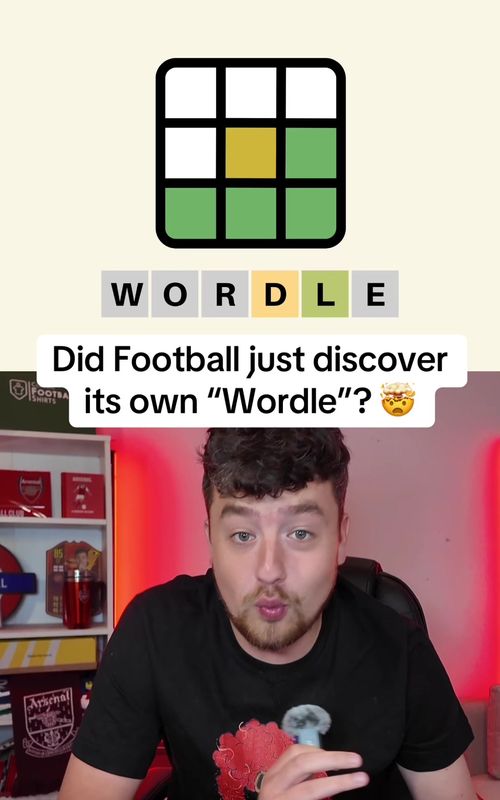 @rory_talks_more, 859,971 views. The "is this football's Wordle?" explainer that pulls in people who do not even play.
 @compton2000, 464,827 views from 1,309 followers. The "this game is impossible" rage clip.
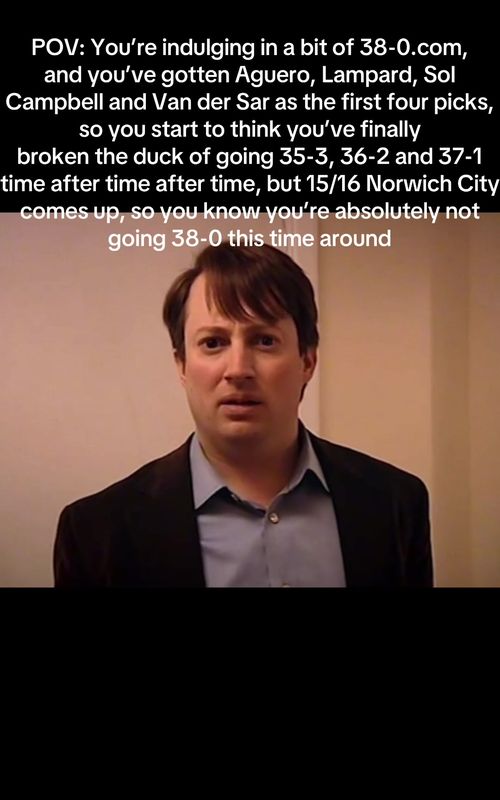 @oleditslie, 121,895 views from 57 followers. Just dropped the link, the format did the rest.
And it is bigger than one lucky upload. Virlo flagged the same thing across the whole football wave 38-0-0 was riding: accounts with a few hundred followers pulling six figures of views just by feeding the moment. One of them sits at 565 followers, averages 86,000 views a video, and put up a single clip at 735,000 views. When the wave is that big, the format carries the reach, not the size of your following.
So the only real question is how he knew which formats to feed, on day one, with under 1,000 followers of his own.
He did not guess.
The tool that let him see the wave
Here is where most people get stuck, and where this becomes about you instead of him. You cannot see the wave by hand. You can doomscroll TikTok for three hours and come away with a vibe and a sore thumb. Claude is brilliant and just as blind to it, because it reasons off training data that is months stale, so ask it what is trending today and it guesses. The wave is live, and you need something watching it live.
That is the gap Virlo fills. It is a marketing agent that sits on top of TikTok, Instagram and YouTube, watches millions of short-form videos a day, scores what is actually gaining reach right now, and hands you the exact hooks and formats winning in your corner of the internet.
This is not a hunch. When we pointed Virlo at football, it did not just list videos, it broke the wave down into the five formats driving it, counted how many creators were running each, and explained why each one worked:
Format Virlo detected | Creators running it | Why it works |
|---|---|---|
Challenge series ("Day X to go 38-0-0") | 23 | Serial attempts to go unbeaten pull viewers back for every update |
"This game is impossible" rage | 7 | Shared frustration sparks debate and comment wars |
Direct promotion ("play it now") | 7 | Links and app-store call-outs turn curious viewers into players |
"What is this?" explainer | 3 | The Wordle comparison hooks people who do not even play football |
Tips and draft strategy | 3 | Specific advice makes the creator the authority |
It even told him when to post: engagement peaked at 10am, 3pm and 5pm, the work-break and after-school windows. The connecting thread across all of it, in Virlo's own read: aspirational challenge content plus relatable frustration, content that either dares you to play or pulls you into the shared struggle of beating it. That is the difference between guessing and knowing.
So Deniz wired Virlo into Claude and typed one line: using Virlo, tell me what is trending in football and give me a dialed-in marketing strategy.
It handed him the wave. The 2026 World Cup was days away, which meant football attention was sitting at its single highest point of the entire four-year cycle. The agent even surfaced the #2 trend on the whole internet that day. Then it gave him the angles to run, dare formats and nostalgia bait, and the move: get under the posts already pulling millions of eyes. He seeded the cascade from a sub-1,000-follower account, and the share card did the rest.
That was the agent reading a moment after it formed. Now flip it. Point it at your niche before you build, and you walk in already knowing what your people are about to want. That is the difference between guessing and knowing, and it is the only part of this story you cannot do by hand.
It is not just Deniz
If you are telling yourself this only works for a guy with a viral football game, look at who else runs this exact engine. Same move every time: AI builds it, the right data finds the wave that distributes it.
Founder | What they built | Result | The move |
|---|---|---|---|
Maor Shlomo / Base44 | AI app builder, solo | $80M Wix exit in 6 months | Bootstrapped, organic, fast |
Sabrine Matos / Plinq | Safety app, non-coder | $456K ARR in 45 days | Read the audience, shipped fast |
Leo / Anything | Vibe-coding platform | $100M valuation in 2 weeks | Uses Virlo daily before he ships |
Matt Berman | Agency system on the Virlo API | 11M views on a client video, month one | Packaged it and resold it |
Different apps, different surfaces, identical engine.
How to make your app go viral in your niche (the exact play)
You do not get a World Cup every week. Agreed. But something is always peaking in your niche, a trend, a format, a sound, a moment, and the whole skill is seeing it before everyone else and building into it. Here is the play, the way Deniz ran it, that you set up once in about ten minutes:
Connect Claude to Virlo. Create an account at virlo.ai, generate an API key, and add the Virlo connector in Claude. Now Claude can pull live trend data instead of guessing.
Ask it for the wave. Using Virlo, tell me what is trending in [your niche] right now and give me a dialed-in content strategy, the angles to run and the sounds to use.
Build to feed it. Take the format that is already winning and make the thing, or the content, that drops straight into it.
Let the share loop run. Give people a reason to send it to a friend, the way the share card did for 38-0-0.
Reframe the whole story in one line and it is this. Deniz did not get lucky. He spotted a proven pattern, read the live moment off the data, and moved first. His own words: "don't ask AI to do the ideation for you. You need to do the ideation." You spot the opportunity. The data and the AI ride it.
Frequently asked questions
Is it really possible to build an app with AI? Yes. 38-0-0 was built by a civil-engineering graduate who cannot code, using Claude, in about five hours overnight. It reached #1 in the UK App Store above Fortnite.
How do I make my app go viral? Stop guessing what to post and find the format that is already winning in your niche, then build something that feeds it. 38-0-0 spread because it fed content football fans were already making, and a built-in share card sent it friend to friend. Deniz found the format to feed using Virlo.
How do you promote an app with no money? 38-0-0 hit #1 on $0 ads. The spend was a $10 domain and a Virlo subscription. The reach came from a share loop plus riding a trend that was already moving, found in the data rather than by scrolling.
Can you actually vibe code an app? Yes, and 38-0-0 is the proof. The harder, more valuable half is not the build, it is getting the thing found once it exists.
How much is an app with 100,000 users worth? It depends entirely on retention and revenue, not the raw number. 38-0-0's signal was not just downloads, it was a 90% completion rate and a 37% share rate, the kind of engagement that compounds.
What tool did Deniz use to market 38-0-0? Virlo, a marketing agent that tracks viral content across TikTok, Instagram and YouTube. He connected it to Claude so the AI could see live trends instead of stale training data.
You are one play away from his success
Deniz is not special. He is a 24-year-old who cannot code and got beaten by his own game's difficulty more than once. What he had was an opportunity that was already moving and a way to see it, and he moved before anyone else did.
That is the whole gap between you and a #1 app. Not talent. Not runway. Not a team. The studios with millions and years could not do what he did in a weekend, and the only edge he had over them was that he could read the wave and they were still guessing.
You can be the person who reads it. Start a $0 Virlo trial, point the agent at your niche, and find out what is peaking this weekend that you cannot see yet.

About the author. Jaife Esienna is Co-founder of Virlo, a marketing agent that surfaces the viral videos, hooks and formats winning in any niche across TikTok, Instagram Reels and YouTube Shorts. He writes about short-form video distribution, AI marketing workflows, and the real plays behind viral content.
See What's Trending Right Now
- Social listening for TikTok, Reels & Shorts
- Spot viral trends before they peak
- Turn insights into ads, scripts & briefs
The Signal Newsletter
Weekly trend breakdowns, creator insights, and social listening tips — straight to your inbox.
Subscribe FreeSee Virlo in action
See What's Trending Right Now
- Social listening for TikTok, Reels & Shorts
- Spot viral trends before they peak
- Turn insights into ads, scripts & briefs
The Signal Newsletter
Weekly trend breakdowns, creator insights, and social listening tips — straight to your inbox.
Subscribe FreeRelated Articles

Mapping “Earn Money Online” Demand Through Social Signals
Virlo AI’s Orbit data shows that modern viral moments form as sharp, isolated explosions of attention, driven by platform-specific algorithms, creator trust, and rapid audience feedback loops. Instead of slow, multi-platform growth, trends now peak fast, expire quickly, and reward creators who move first and not those who scale widest.

Instagram SEO - The Ultimate Guide to Ranking on Instagram Search
Instagram is a discovery algorithm with a lesser known search engine. Learn how Instagram SEO works in 2026: the ranking signals, keyword research, and how to optimize every post and Reel.

Case Study: How Orbit Turns Narrative Into Measurable Insight
This post showcases a real experiment using Virlo’s Content Studio to demonstrate the impact of Orbit data on content creation. The same blog prompt was run twice to show the difference in data between the two, and the impact it can have.
Put this into practice with Virlo
Turn what you just read into real research. These are the tools creators, agencies, and brands use to find what's working on short-form video.
Content Research Agent
Run your short-form research on autopilot — outliers, creators, and sounds across TikTok, Reels, and Shorts.
Tracking Center
Monitor breakout creators, videos, and competitors with daily snapshots and deep AI analysis.
Free Data
Explore free viral hooks, trending niches, breakout products, and more — no account required.
Get The Signal
Join creators, marketers, and agencies getting weekly trend breakdowns and social listening insights delivered free.
Subscribe to the Newsletter
Stop Guessing. Start Knowing.
Join thousands of digital entrepreneurs using data to take the guesswork out of capitalizing on trends.