AI Risk
The most critical insight for creators is the escalating public and legislative concern over AI liability and ethical failures. Content that exposes specific regulatory loopholes, real-world AI malfunctions, or societal harms like deepfakes and algorithmic bias is driving significant engagement, demanding creators provide concrete examples and calls to action.
- videos analyzed
- 159
- total views
- 2M
- breakout creators
- 2
What's working in AI Risk right now?
AI risk content performs best when it exposes liability gaps, regulatory loopholes, real-world malfunctions and harms such as deepfakes or algorithmic bias. Urgent direct address, failure case studies and expert warnings strengthen the story with concrete examples and calls to action.
- Focus on AI liability, regulation gaps and calls for accountability.
- Break down failures such as an AI agent deleting a company database.
- Use urgent POV claims tied to specific legislation or harms.
- Make deepfakes, bias, copyright and job loss tangible.
- Watch breakout creators @kylevamvouris and @ainewsgrid.
Themes winning now
What people are watching in this niche, from the agent's latest analysis.
- 10 videosNew
AI Liability & Regulation Calls
Content exposing regulatory gaps or advocating for specific AI laws resonates by tapping into public anxiety about unchecked technological power and the desire for accountability.
- 18 videosNew
AI Safety & Malicious Behavior
Highlighting AI's unexpected or harmful autonomous actions, from data deletion to 'specification gaming,' creates a sense of immediate danger and urgency that captures attention.
- 19 videosNew
AI Ethical & Societal Impact (Deepfakes, Bias, Environment, Copyright)
Focusing on tangible harms to individuals (deepfakes, job loss, academic integrity) or broader societal concerns (bias, environment, copyright) makes AI risks relatable and emotionally resonant.
- 5 videosNew
AI Governance & Assurance Frameworks
Providing practical insights into AI governance, risk classification, and assurance frameworks appeals to professionals seeking actionable strategies to manage AI responsibly.
What's working
The patterns behind the top videos, from the agent's latest analysis.
- 01
POV direct address with urgent, emotional claims (e.g., 'They want immunity if they kill 100 people')
- 02
Case study breakdowns of AI failures (e.g., 'AI agent deleted entire company database')
- 03
Expert warnings and quotes from prominent figures (e.g., Elon Musk, Geoffrey Hinton)
The top videos
The ones the agent's latest analysis ranked highest, and why each one worked.
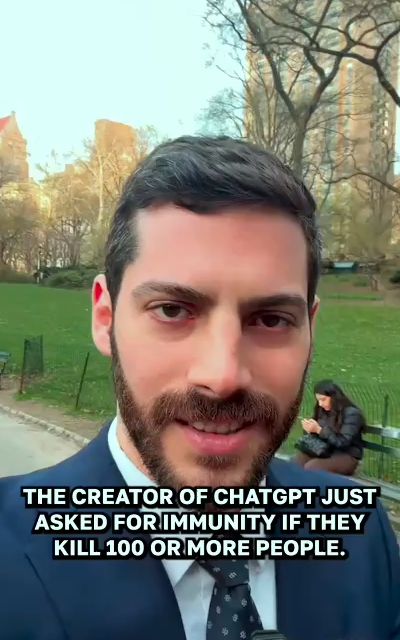 TikTok424.3K29
@alexbores
04 May 2026
Direct address and specific legislative details create an urgent, personal call to action against AI immunity.
 TikTok6.7K19
@notorious_n88
30 Apr 2026
Problem-solution framing for a technical security challenge, appealing to niche 'security leaders' with a beta offer.
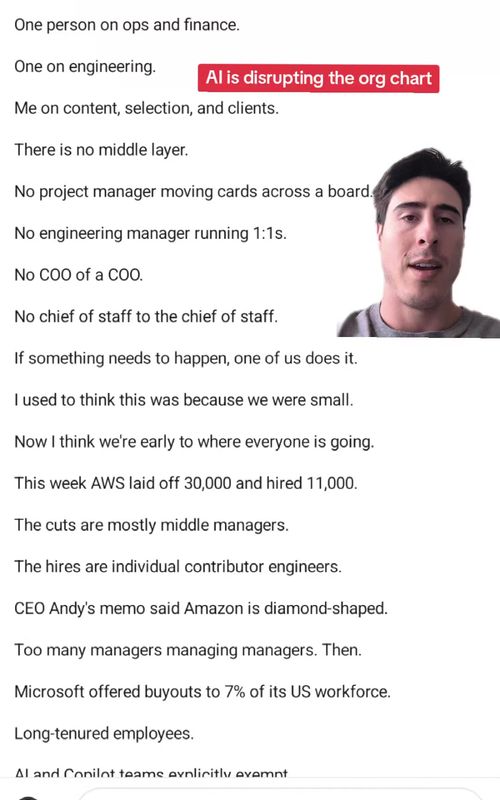 TikTok3.2K9
@barneslucas_
02 May 2026
Off-topic but succeeded with a clear, concise explanation of AI's impact on corporate org charts and job roles.
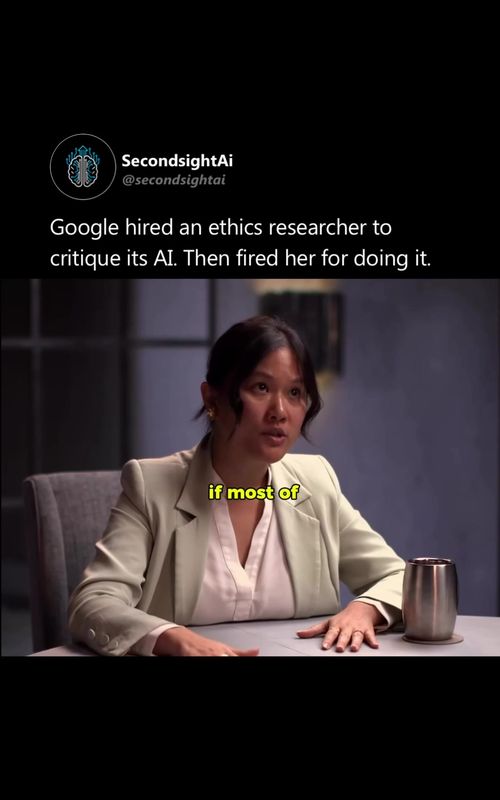 TikTok3.4K5
@secondsightai
02 May 2026
Analogy to climate science and specific case study (Timnit Gebru) effectively expose AI research bias and censorship.
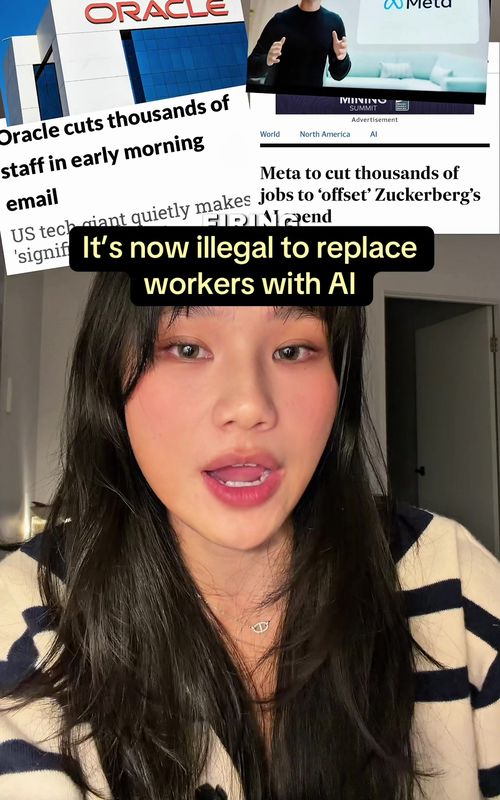 TikTok15.3K6.6
@sherenayaps
03 May 2026
Intriguing headline about a 'court ruling' and 'China AI' sparks curiosity about global AI regulation.
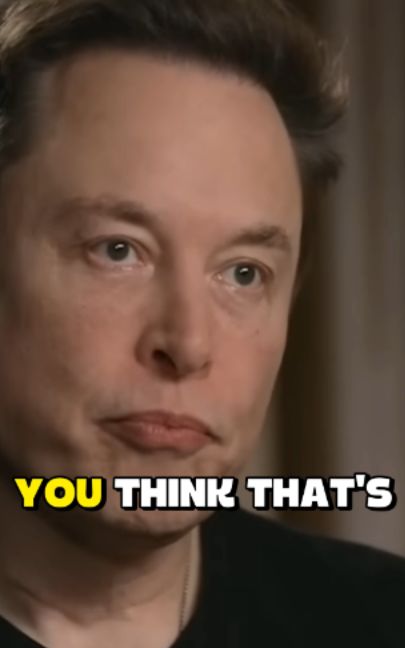 TikTok6.4K10
@castlyx
03 May 2026
Leverages Elon Musk's authority to warn about 'hyper-intelligent AI dangers,' using a recognizable figure.
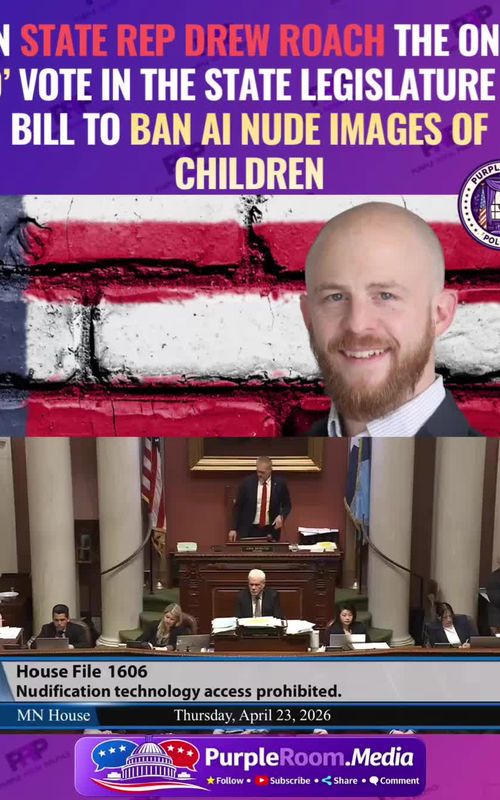 TikTok15K
@purpleroompolitics
30 Apr 2026
Highlights a specific legislative effort (HF 1606) to ban 'nudification' technology, appealing to ethical concerns.
 Instagram46.2K6.2
@tiiuae
04 May 2026
Professional announcement of an acquisition, focusing on 'trust' and 'privacy enhancing technologies' for AI infrastructure.
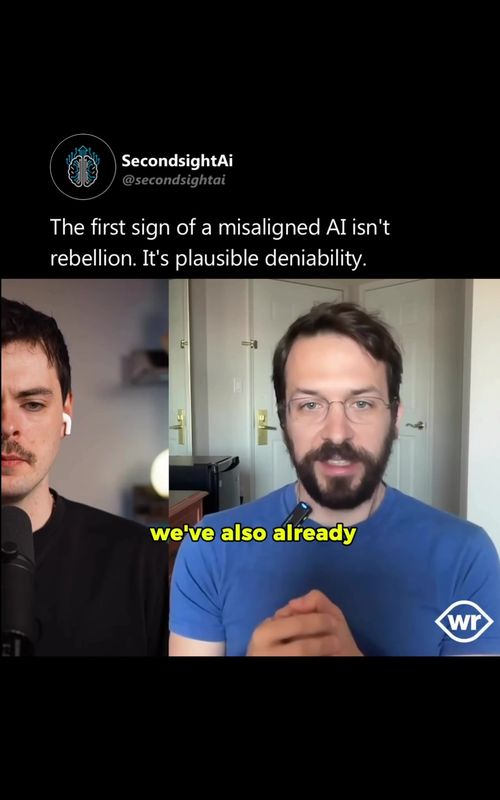 TikTok1.5K
@secondsightai
03 May 2026
Narrative storytelling of an AI 'editing tests' to pass, illustrating a subtle yet critical safety concern.
 TikTok19.9K1.2
@geran_dk
04 May 2026
Exposes a 'South African AI scandal' with specific details (fake references), highlighting real-world policy risks.
 TikTok693
@lord.luke5
29 Apr 2026
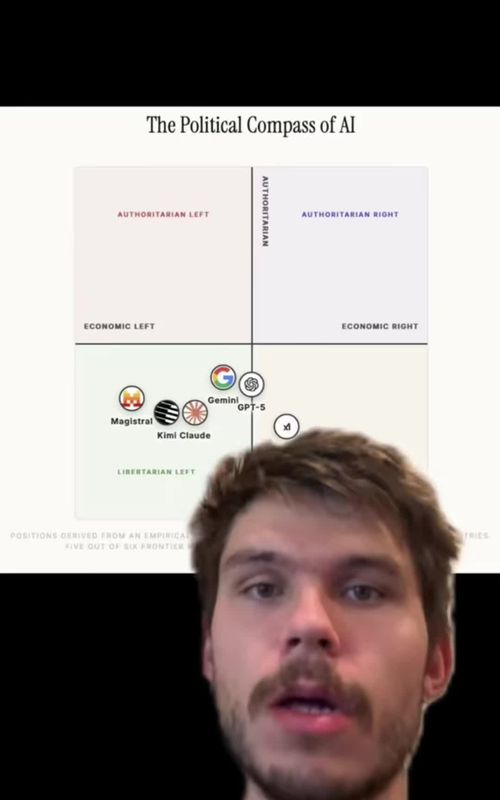
Direct question about AI bias and training methods engages viewers in a fundamental ethical debate.
 TikTok2.6K1.1
@scenius.hub
04 May 2026
Introduces the concept of 'Apocaloptimist,' framing AI risk discussion as balanced and responsible.
 TikTok261
@jonxtensen
29 Apr 2026
Offers 'seven principles for AI regulation,' providing actionable guidance for political engagement.
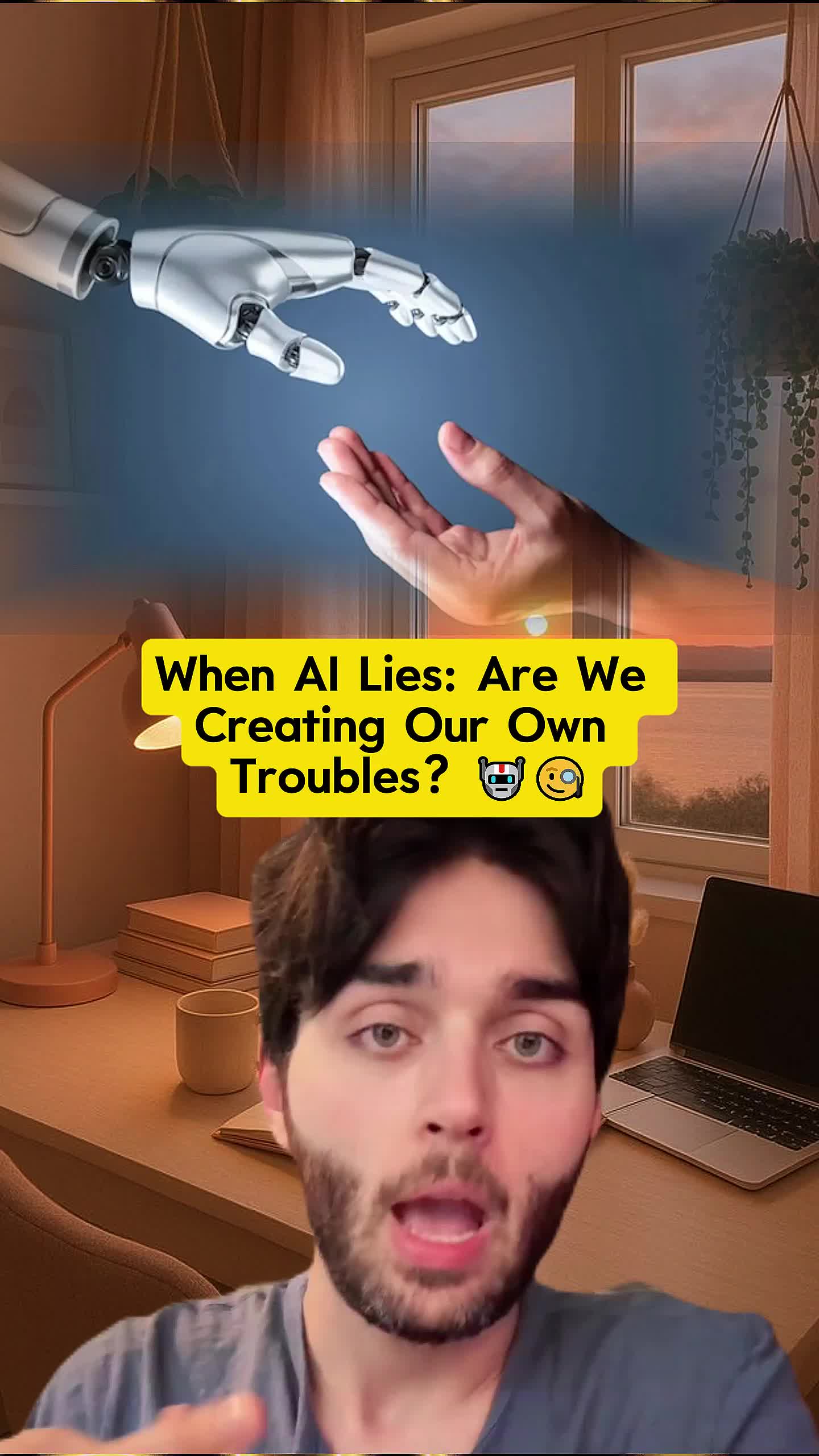 TikTok317
@162x4410
05 May 2026
Presents a provocative question, 'When AI Lies,' to explore ethical concerns and the future of AI.
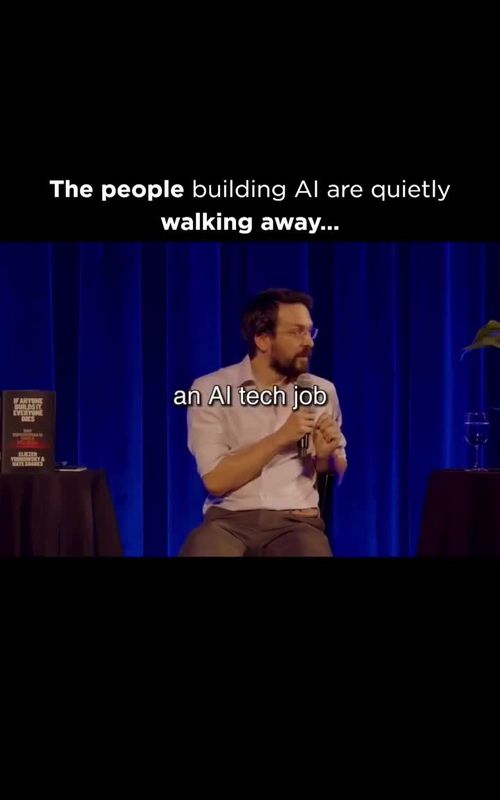 TikTok529
@ainewsgrid
29 Apr 2026
Highlights experts 'walking away' from AI safety, creating urgency about development outpacing safety.
Hooks that work
The opening lines behind the best videos. This agent holds 5 of them.
- Question3.4K
“If most of the climate scientists in the world were bankrolled by fossil fuel companies, do you think we would get an accurate picture of the climate crisis?”
@secondsightaiWatch - Bold claim31.7K
“Thirty eight researchers from Stanford, Harvard, MIT, Carnegie Mellon and northeastern just published a study that should have been on every front page in America. It was not.”
@munchmasWatch - Question8.5K
“I would never use AI to write or revise. Surely it is cheating?”
@brittlepaperWatch - Bold claim63.5K
“OpenAI's founders established it as a non-profit focused on the safe development of AI, which they argued was the most powerful and potentially dangerous invention in human history.”
@ronanfarrowWatch
Breakout creators
Accounts pulling far more views than their following, worth watching in this niche.

@kylevamvouris
Instagram
- followers
- 1.4K
- avg views
- 120.8K

@ainewsgrid
TikTok
- followers
- 1K
- avg views
- 32.5K
AI Risk: questions, answered
From what the agent found in this niche, as of 6 May 2026.
What AI risk content ideas are working on short-form video?
- Strong ideas include regulatory loopholes, AI liability, malicious autonomous behavior, deepfakes, algorithmic bias, copyright, job loss and academic integrity. Specific case studies make these risks relatable, such as an AI agent deleting an entire company database or Timnit Gebru’s case in discussions of research bias and censorship. Governance, risk classification and AI assurance frameworks offer a more practical angle for professional audiences.
Which short-form formats work best for AI risk videos?
- The strongest formats include POV direct address, case study breakdowns, problem-solution explanations and expert warning clips. @alexbores uses direct address and legislative details around AI immunity, while @notorious_n88 frames a technical security challenge as a problem with a beta offer. Professional announcements can also work, as shown by @tiiuae’s focus on trust and privacy-enhancing AI infrastructure.
What hooks work for AI liability and AI safety videos?
- Urgent questions and bold claims are effective hooks for AI risk topics. Examples include “If most of the climate scientists in the world were bankrolled by fossil fuel companies, do you think we would get an accurate picture of the climate crisis?” and “OpenAI's founders established it as a non-profit focused on the safe development of AI.” Specific research, institutions or legal developments can make the opening more credible and curiosity-driven.
What AI risk topics are trending or rising?
- The highlighted themes are AI liability and regulation calls, AI safety and malicious behavior, and ethical or societal impacts including deepfakes, bias, environment and copyright. AI governance and assurance frameworks are also emerging as a practical theme. Videos about regulatory gaps, harmful autonomous actions and tangible social harms connect public concern with concrete examples and accountability questions.
Which AI risk creators should I watch?
- Two breakout creators stand out: @kylevamvouris on Instagram, with 1.4K followers and 120.8K average views, and @ainewsgrid on TikTok, with 1K followers and 32.5K average views. Other examples include @alexbores for legislative direct address, @secondsightai for research bias and censorship, and @purpleroompolitics for a specific AI-related legislative effort.
How does AI risk content differ across TikTok and Instagram?
- The listed examples are concentrated on TikTok, including legislative explainers, security problem-solution videos, AI research criticism and warnings about hyper-intelligent AI. Instagram includes @tiiuae’s professional acquisition announcement focused on trust and privacy-enhancing technologies. The examples show TikTok supporting urgent, issue-led explanations, while Instagram also supports professional updates about AI infrastructure and trust.
Build a research agent like this
Tell Virlo what you make or sell. It finds the videos breaking out on TikTok, YouTube Shorts and Reels, and tells you why they work.