How to Get Brand Deals on TikTok (Even With a Small Following)
You can get brand deals on TikTok at 1K to 100K followers: here is how to find brands already paying creators your size, set rates, pitch, disclose correctly, and earn deal two.

Himanshu Bisht
Professional Blog Writer
Himanshu Bisht is a digital community and content expert. With the strategies he shares, companies and creators have generated over 10 million dollars in combined sales. His views have been featured in the magazines like Forbes and Authority Magazine. Himanshu writes expert articles for creators on Virlo AI.
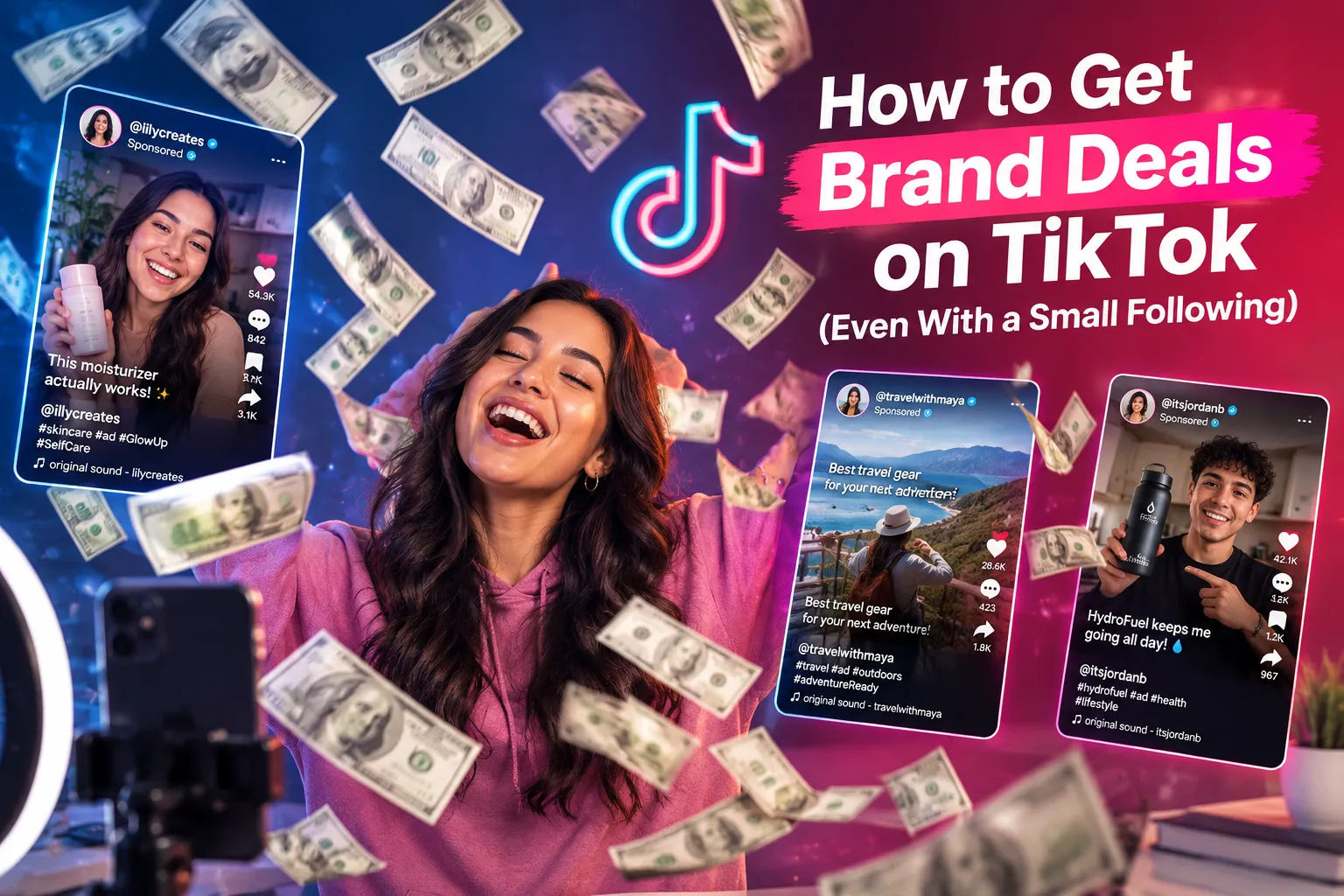
TikTok is one of the few places where a creator with a few thousand followers can reach millions of people in a single afternoon. For brands, that makes it the most direct route to customers who skip ads, which is why budgets keep moving there. So as a creator, this opens up a monetization opportunity even if you are not someone with a million followers (yet).
But let's be straight: You won't get a $100k deal at this point. But you can get a deal much better than what you think you can get. And that is a great point to start.
The money is moving toward smaller accounts, too. In Influencer Marketing Hub's 2026 benchmark survey, 87% of brands expected their influencer budgets to grow this year.
If you post consistently, you have probably watched creators your size tag brands in their videos. Maybe a dropshipping store has already messaged you offering "exposure" and a free sample in exchange for three videos. We also have TikTok One official that connects brands with creators inside TikTok Studio, and the Shop affiliate program opens at 1,000 followers in many countries. Every post also carries a branded content toggle for paid work.
But waiting for a brand to notice you is the slowest route. The creators who get paid tend to find the brands already paying people their size and do something better...
TL;DR
Brands pay TikTok creators through flat fees, gifted products, affiliate commissions, ambassador retainers, and usage rights for ads.
Direct outreach needs no minimum followers. TikTok Shop affiliate opens at 1,000 followers in most regions, and TikTok One reportedly asks for about 10,000.
Brands check your baseline views, not your best video. A steady floor of views beats one viral spike.
The fastest way to find paying brands is to look at who already sponsors accounts like yours, through #ad posts or sponsored-video data.
A short pitch built around a content idea and two numbers gives a brand something to say yes to.
One creator's published benchmarks put nano accounts at roughly $50 to $200 per video and micro accounts at $200 to $1,200. Brand surveys suggest many budgets at those sizes sit under $500.
How to get brand deals on TikTok: how the deals work
A brand deal is any arrangement where a company gives you something of value in exchange for content that features them. The value can be money, product, commission, or a mix.
Creators who use Virlo regularly, use mix of all these methods:
Flat-fee sponsored video. The brand pays a set amount for one or more posts on your account.
Gifted or product-only deal. The brand sends product and asks for a post. No cash changes hands.
Affiliate deal. You earn a commission on sales from your link or code, often through TikTok Shop.
Ambassador or retainer. A monthly fee for a set number of posts over several months.
UGC deal. You make videos the brand runs on its own channels or as ads. Your account may never post them.
Usage rights and Spark Ads. The brand pays extra to run your video as an ad from your handle, which TikTok calls Spark Ads.
The same video can earn in several of these ways at once. A sponsored post can carry an affiliate code, then get licensed to the brand for ads afterward.
Much of the budget comes from brands that already run creator programs. Our guide to how much UGC creators make covers the content-only side of that market in detail.
How many followers you need for brand deals on TikTok
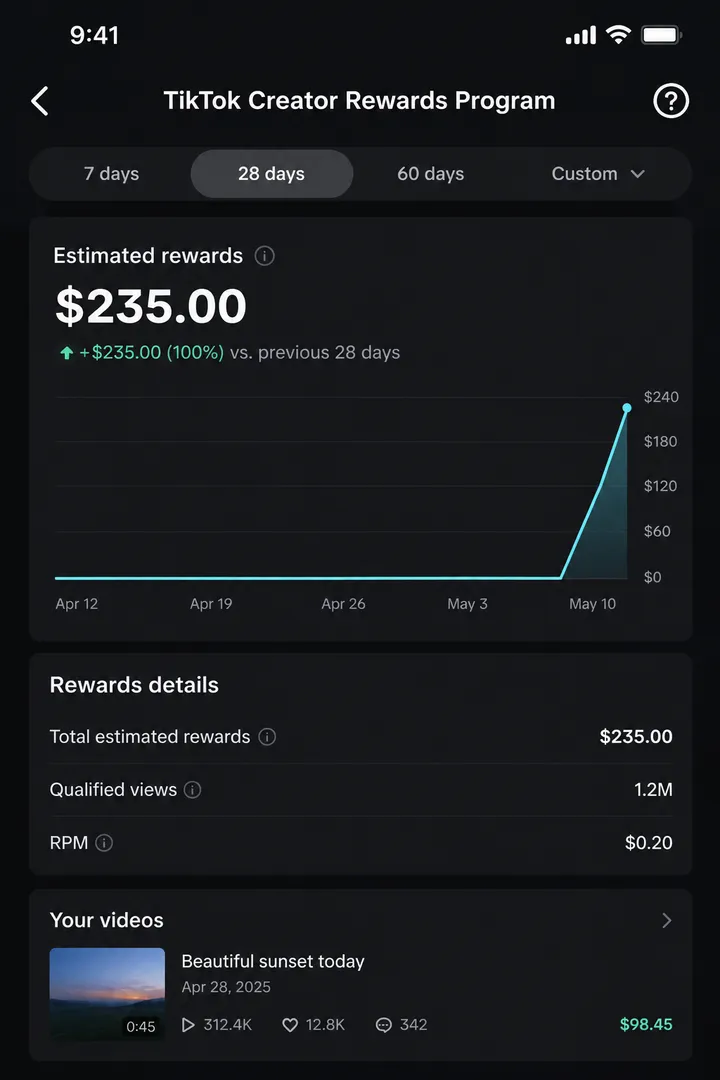
There is no single follower number that unlocks brand deals, because each route has its own gate. Especially, direct outreach has no minimum at all. A creator with 2,000 followers and a clear niche can email a brand today, which is how many first deals start.
TikTok Shop's affiliate program opens at 1,000 followers in most regions. In the US, the full program reportedly requires 5,000, with a limited tier for creators between 1,000 and 5,000 followers.
TikTok One, the platform's own marketplace for brand campaigns, reportedly asks for about 10,000 followers plus recent activity. Current guides cite three posts and at least 1,000 views in the last 30 days. You can check on Tiktok studio if you qualify.
Brands themselves tend to care less about the follower count than about what sits behind it. A creator whose videos average 20,000 views on 4,000 followers often looks stronger to a marketer than one averaging 3,000 views on 40,000 followers. Since Tiktok is more of an attention farming platform, views often become more important in this calculation for brands.
Also, you need to know that the audience fit matters as much. A skincare brand wants viewers who ask about routines in the comments, not a general audience that happened to watch one viral clip.
What a brand's team checks before saying yes
Knowing what a marketer looks at lets you run the same check on yourself before you ever send a pitch.
The first thing experienced teams separate is your baseline from your spikes. One video with two million views tells them little, because it may never happen again. A steady floor of views across your last twenty posts tells them what their sponsored video will probably get.
Our guide on how brands track influencer performance explains why they compare each video against a creator's usual numbers rather than against the single best one.
Beyond the baseline, the usual checks include:
View reach, meaning average views divided by followers. A ratio above one means TikTok pushes your content past your own audience.
Engagement that signals trust, such as comments asking where to buy, saves, and shares, rather than likes alone.
Audience data from your creator analytics: age, gender, country, and the times your viewers are active.
Content quality and consistency, including hooks, clear audio, and a recognizable style across the last month of posts.
A way to contact you in the bio, plus any brand you have already featured, paid or not.
Running this check on your own account before pitching shows you what the brand will see. If the baseline is low or erratic, tightening your posting for a month may do more for your chances than any pitch wording.
Method to find brands that already pay creators your size
Once your own numbers hold up, the question becomes which brands to show them to. The easiest brand to close is one that already pays creators like you, because it has a budget and a person whose job is finding more of them.
Hashtag Method
One very successful way is to search TikTok for #ad, #sponsored, and "paid partnership" posts inside your niche. Each one names a brand. The creator's follower count tells you whether that brand works at your size. This is a really simple but effective since these creators are already getting paid by the brands. Do not consider them as your competitors since brands pay for more visiblity.
A spreadsheet with the brand, the creator, their follower count, the product, and the call to action builds up fast. After a few dozen posts, the same handful of brands tends to keep appearing with creators in your range.
Automated Method
The same scan runs far faster with data. An app like Virlo can make your life easier as creator here. Virlo tags which videos in a niche are sponsored, which brands they name, and what call to action they use. A content research agent can then return the paid videos across your category instead of the few you scroll past.
In our experience of working with hundreds of creators, the brands worth pitching first share a few signals:
They have sponsored several creators under 50,000 followers in the past few months.
Their sponsored videos use the same format you already make, such as a routine, a review, or a day in the life.
They sell something your viewers already ask about in your comments.
They run an affiliate program or TikTok Shop listing, which means they already pay for results.
Brands that only appear with celebrity-sized accounts belong on a later list. Their budgets exist, but their past choices suggest they are not buying from accounts your size yet.
Virlo's public data on winning ad creatives adds another angle. A brand running creator-style videos as paid ads has already decided that format works for it, which makes a pitch for that format an easier conversation.
There are also other less popular methods if you are open to different style of brand deals aka Clipping. Clipping is essentially promoting a brand in exchange of views. This can be a better idea if you are already getting solid views but you do not have followers yet. On some clipping platforms, creators are earning up to $10,000 from other brands.
Getting your profile and media kit ready
A brand that likes your first message will open your profile next, so the profile has to confirm what the message promised.
Four things matter on the profile itself: a bio that names your niche in plain words, a business email, and a working link. The fourth is a run of recent videos a brand would want to appear in.
A pinned video that features a product, even one you bought yourself, shows brands what a sponsored post would look like. Marking it "not sponsored" in the caption keeps it honest while still serving as a sample.
The media kit is a one or two page document that answers the questions a marketer asks before replying. It usually includes:
A short bio with your niche, tone, and who watches you.
Average views over the last 30 days, follower count, view reach, and engagement rate.
Audience breakdown by age, gender, and top countries, pulled from your creator analytics.
Two or three example videos with their view counts.
The services you offer, such as sponsored videos, Spark Ads rights, affiliate posts, or UGC.
Past brand work, including gifted collaborations.
Canva templates make the design part quick. The numbers matter more than the layout, so a monthly update keeps the kit truthful.
How to pitch brands on TikTok (Use this Free Template)
A good pitch reads as an idea for the brand rather than a request for money. The marketer should finish it knowing what you would make, who would see it, and why that audience fits.
Email beats a DM for anything beyond a first hello. Brand teams work from inboxes, where an email leaves a record that a comment reply never will.
Finding the right person takes a few searches. The brand's website often lists a partnerships or creator email. A LinkedIn search for the brand name plus "influencer" or "creator partnerships" usually surfaces the manager.
The pitch itself can stay under 150 words:
Subject: Paid TikTok partnership idea for [Brand] in [month]
Hi [Name],
I make [niche] videos on TikTok for an audience of mostly [age range, country]. My last 30 days averaged [X] views per video on [Y] followers. Your [product] comes up in my comments regularly.
I'd love to make a sponsored video for you: [one-sentence idea, e.g. "a 45-second morning routine that shows how I actually use the serum, with a code for viewers"].
I've attached a short media kit. Are you open to paid partnerships this quarter?
[Name], [handle], [email]
Two numbers, one idea, and one question is the whole structure. The idea does the most work, because it shows the brand you understand their product and your own format.
A single follow-up after a week is reasonable. After that, the next brand on the list deserves the time more than a third email.
Volume matters at the start. A steady weekly batch of personalized pitches to brands on your list gives you more replies to learn from than one polished email to a dream brand.
Inbound offers deserve the same scrutiny as outbound pitches. A dropshipping store offering "exposure" plus a sample is proposing a gifted deal. The same questions apply: does the brand already pay creators, does the product fit your audience, and what would you charge if they asked?
How much to charge for a TikTok brand deal
Rates on TikTok depend on views, niche, and what the brand gets to do with the video. Every published number is a starting point rather than a price list.
Jordan Diggs, a creator with 660,000 followers who publishes rate guidance through Toptal, lists per-video benchmarks for 2026. Nano creators (1,000 to 10,000 followers) sit at $50 to $200 and micro creators (10,000 to 50,000) at $200 to $1,200. Mid-tier creators (50,000 to 500,000) land at $1,200 to $5,000 in his guidance, and macro creators at $5,000 to $15,000.
However, this is not entirely the picture across all niches. Some niches are more expensive than others. A finance creator might generate less views than a comedy skit creator. However, there audience is much more valuable than the later.
Brand budgets tell a more sober story. In Influencer Marketing Hub's 2026 survey, around 55% of brands' answers on nano creator costs and about 45% on micro creator costs fell under $500 per activation.
Both views are true at once. Many first deals close small. The creators who move up the range tend to be the ones who can show reach beyond their followers and charge extra for rights.
Three modifiers change the number most in Diggs' guidance. Average views at 80% to 150% of your follower count add about 25%, rising to about 50% above 150%. Reposting rights on the brand's channels add roughly 30%, while paid ads or Spark Ads can add up to 75%.
Diggs also notes that niches with higher-value customers, such as finance, software, and specialized skincare, tend to pay above these ranges.
Asking for the brand's budget before naming a price gives you a reference point, since a first offer often leaves room. This is why, knowing your floor in advance, the lowest fee you would accept, stops the negotiation drifting below it. A reply such as "that's below my usual rate for a video with ad rights, could we adjust the fee or the rights?" leaves the door open.
For context on the alternative, TikTok's own Creator Rewards Program pays by qualified views, at roughly $0.40 to $1.00 per 1,000 according to the studies. You can dig deeper into how much TikTok pays if you want to get the full breakdown of program payments.
TikTok One and third-party platforms
Direct pitching is the highest-paying route, but marketplaces offer a second one. They remove the hunting while adding competition and sometimes a cut.
TikTok One replaced the old Creator Marketplace in 2025. Brands post campaigns, eligible creators apply inside TikTok Studio, and both sides can see performance data after the post goes live.
Eligibility reportedly requires around 10,000 followers, three posts in the last 30 days, and 1,000 or more views in the same window, with the account in good standing. TikTok Studio shows whether you qualify.
Diggs' guidance notes that brands on the marketplace often pay less than in negotiated direct deals, since brands fix the budget before any creator applies. Treating TikTok One as one source among several keeps that from capping your rates.
Third-party platforms serve creators below the 10,000 mark. Collabstr and Creator.co list campaigns for small creators, while #paid lets creators raise a hand for specific brands. Aspire and Fohr lean toward longer ambassador relationships with established brands.
A profile on two or three of these costs nothing beyond setup time. Applying only to campaigns that match your niche, rather than everything available, keeps your acceptance rate and your rates healthier.
Negotiating terms and avoiding bad deals
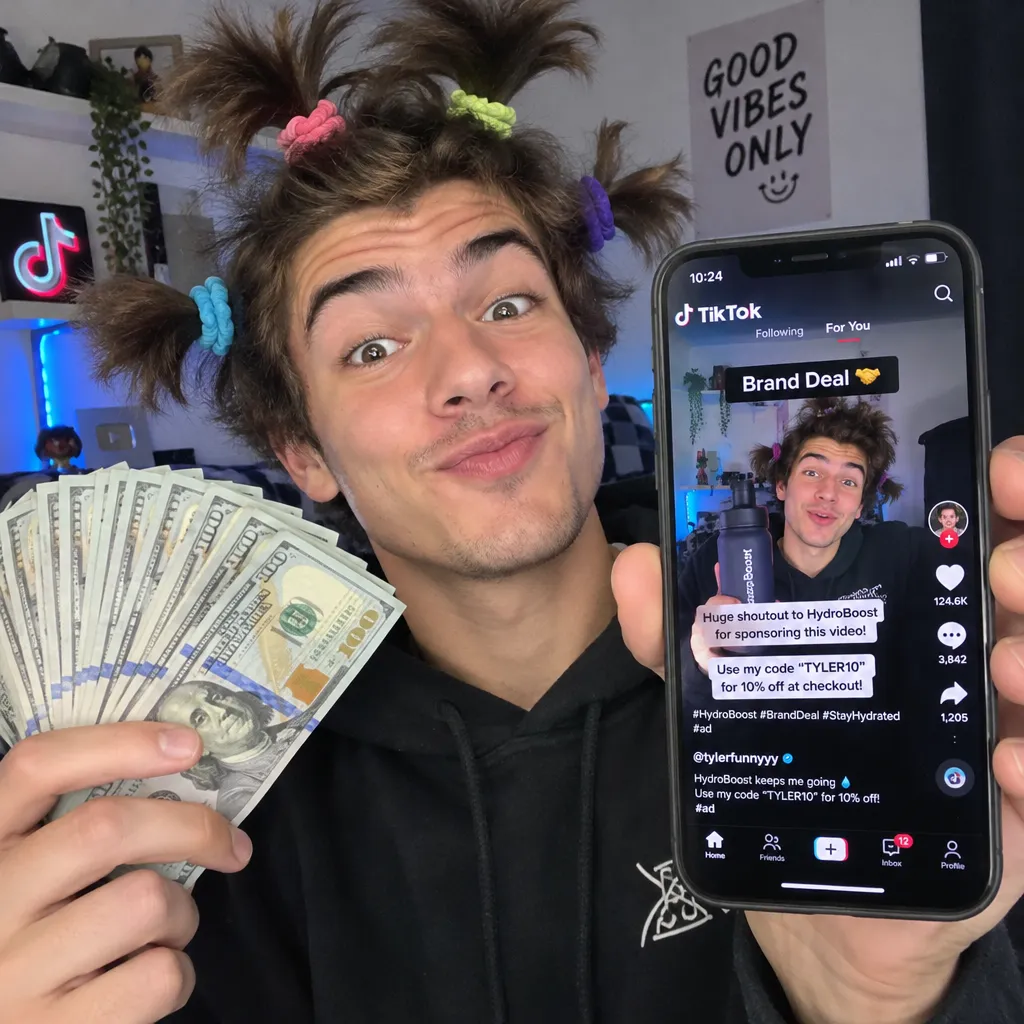
The fee is only one line in a brand deal. The other lines decide whether the deal pays off. There are a few important points to keep in mind while you are making a sponsorship deal. I will also encourage you to make mistakes and learn instead of waiting for perfection here:
Scope of work. The exact number of videos, their length, the number of revision rounds, and the deadline. Open-ended revisions can turn one video into several.
Usage rights. How long the brand can use the video, where, and whether it can run as paid ads. Permanent, unlimited rights deserve a much higher fee or a no.
Exclusivity. Which competitors you agree not to work with and for how long.
Ownership. Licensing the video to the brand while you keep ownership is the common arrangement. Full ownership transfers should cost more.
Payment terms. When you invoice and when they pay. Net 30 is normal, while anything beyond net 60 is a warning sign.
Kill fee. What you receive if the brand cancels after you have started.
Diggs also publishes a red-flag list: payment in exposure only, unlimited usage rights with no extra pay, demands for full ownership, and no contract. Pressure to accept on the spot and payment terms past net 60 round it out.
A short written agreement protects both sides even for a gifted deal. An email that restates the deliverables, deadline, fee, and rights, confirmed by the brand, works when no formal contract exists.
Disclosing paid partnerships on TikTok
Alongside the contract terms, every paid or gifted deal carries a disclosure duty. Getting it right protects the video's reach as well as your account.
In the US, the Federal Trade Commission requires creators to disclose any material connection with a brand, which includes free products, discounts, and commissions, not only cash. The FTC's guide for social media influencers asks for disclosures that viewers can't miss. That means inside the video itself, in plain words such as "ad" or "paid partnership with Acme", and never buried in a hashtag pile.
TikTok adds its own layer. The branded content toggle in the post settings applies a "Paid partnership" label, which TikTok's rules require for any content you were paid or gifted for.
Creators who skip the toggle reportedly receive a notification with 24 hours to add it before the video loses eligibility for the For You feed. Turning it on before posting avoids the scramble.
The FTC also notes that a platform's label alone may not be enough. Saying the disclosure out loud or on screen in the first few seconds, plus the toggle, covers both the legal and the platform side.
Brands generally prefer this too, since a mislabeled video can create problems for them as well.
The ladder from your first deal to a retainer
With disclosure handled, the remaining question is how a first small deal grows into steady work. Many creators start below a flat fee, with affiliate or gifted work. Those earlier rungs become useful when you treat them as evidence.
Affiliate deals are a common first rung for small accounts. TikTok Shop's affiliate program and a brand's own program let you prove that your videos sell. A screenshot of real orders from one video makes a stronger pitch than any media kit line.
Gifted deals fill the same role. A product-only collaboration that produces a strong video gives you a case study, a sample, and a brand contact who already trusts you. Taking one or two is sensible early on, while treating every gifted deal as free work holds rates down.
After any deal, a short results report changes what happens next. A one-page summary covers views, engagement, saves, comments that mention the product, and any sales or clicks. Sending it a week after posting, without being asked, puts you ahead of creators who go quiet once paid.
That report gives the brand a reason to book you again. A creator with two or three repeat partners has the beginnings of a retainer conversation.
Retainers tend to go to consistent creators rather than the biggest ones. A brand paying monthly for two videos wants a creator who delivers on time, discloses properly, and keeps the baseline steady. That is the same baseline it checked before the first deal.
FAQ
How do you get brand deals on TikTok with a small following?
The shortest route is to find brands already sponsoring creators your size, then email them a specific content idea backed by your average views and audience fit. Affiliate and gifted deals can serve as early proof, while a results report after each deal makes the next one easier.
How many followers do you need to get brand deals on TikTok?
There is no fixed minimum for direct deals. Creators with a few thousand engaged followers land paid work through outreach. TikTok Shop's affiliate program opens at 1,000 followers in many countries, while TikTok One campaigns reportedly require roughly 10,000 followers and recent activity.
How much do TikTok brand deals pay?
Published benchmarks from creator Jordan Diggs put nano accounts at $50 to $200 per video and micro accounts at $200 to $1,200. Influencer Marketing Hub's 2026 survey found around half of brand budgets for nano and micro creators under $500 per activation. Rates rise for ad usage rights, exclusivity, and high-value niches.
How do I find brands that sponsor small creators?
Searching #ad and "paid partnership" posts in your niche shows which brands already pay accounts in your follower range. Tools that tag sponsored videos, such as Virlo's content research agents, return the same list across a whole category. Each result includes the brand named and the call to action used.
What is TikTok One?
TikTok One is TikTok's marketplace for brand campaigns, which replaced the Creator Marketplace in 2025. Brands post briefs, eligible creators apply inside TikTok Studio, and both sides can track results. Eligibility reportedly requires around 10,000 followers and recent posting activity.
Do I need a media kit to get TikTok brand deals?
A media kit is not required, but it answers the questions brands ask before replying: average views, audience demographics, example videos, services, and past work. A one-page version made in Canva and updated monthly is enough for most pitches.
Should I accept free product instead of payment?
Gifted deals make sense early on when the product is valuable and the brand is one you would feature anyway, because they produce samples and contacts. Once your videos show steady views and engagement, product-only offers from brands with real budgets are usually worth declining or converting into a paid deal.
How do I disclose a paid partnership on TikTok?
The branded content toggle in the post settings adds the "Paid partnership" label. Saying the disclosure inside the video as well, with words like "ad" or "paid partnership with Acme", covers the legal side. The FTC's influencer guidance applies to gifted products and affiliate commissions as well as cash.
What are usage rights in a brand deal?
Usage rights define how the brand can use your video beyond your account. Common examples are reposting it on their channels or running it as a paid ad through Spark Ads. Longer and broader rights cost the brand more. Permanent unlimited rights should carry a much higher fee.
How long should an exclusivity clause be?
Thirty to ninety days is common in published creator guidance, with the longer window priced higher. Exclusivity beyond that blocks you from competitors for much of a year. It makes sense only with a higher fee or a retainer rather than a one-off payment.
Can I get brand deals on TikTok with 1,000 followers?
Yes, direct outreach and affiliate programs both work at that size. TikTok Shop's affiliate program opens at 1,000 followers in many regions. Brands that sponsor nano creators look for niche fit and a steady view baseline rather than follower totals. A clear niche and a business email in the bio matter more than the count.
Where to start
Now you know how can you start earning even without hitting massive followership. The quickest first step from here to get your first brand deal on TikTok is the brand scan. A list of the brands already sponsoring creators your size turns a vague goal into a set of names to email. As we mentioned the strategy above, you can start using hashtags for your advantage. I also recommend checking Virlo's hashtag search for this. You can also sign up for a free trial and use the platform to discover trends and create popular content faster. In the end, your progress will directly translate into your income on Tiktok.
A clean profile, a one-page media kit, and a weekly batch of pitches to those brands give you the first real conversations. Start today. And if you have any questions, feel free to reach out.
See What's Trending Right Now
- Social listening for TikTok, Reels & Shorts
- Spot viral trends before they peak
- Turn insights into ads, scripts & briefs
The Signal Newsletter
Weekly trend breakdowns, creator insights, and social listening tips — straight to your inbox.
Subscribe FreeSee Virlo in action
See What's Trending Right Now
- Social listening for TikTok, Reels & Shorts
- Spot viral trends before they peak
- Turn insights into ads, scripts & briefs
The Signal Newsletter
Weekly trend breakdowns, creator insights, and social listening tips — straight to your inbox.
Subscribe FreeRelated Articles
How to Use AI Video Generation for Marketing in 2026 (9 Strategies That Actually Work)
AI video tools just hit a tipping point. The cost of producing a video collapsed 91%. Here's how marketers are actually winning with AI video in 2026 — and the one thing every guru is missing.

7 Tips on How to Make Money Editing Videos
Discover 7 proven ways on how to make money editing videos, from freelancing to passive income tips that boost your creative earnings fast.
How to Make Money on Tiktok Without Showing Your Face
Learn how to make money on TikTok without showing your face using simple strategies that work for creators who prefer to stay behind the scenes.
Put this into practice with Virlo
Turn what you just read into real research. These are the tools creators, agencies, and brands use to find what's working on short-form video.
Content Research Agent
Run your short-form research on autopilot — outliers, creators, and sounds across TikTok, Reels, and Shorts.
Tracking Center
Monitor breakout creators, videos, and competitors with daily snapshots and deep AI analysis.
Free Data
Explore free viral hooks, trending niches, breakout products, and more — no account required.
Get The Signal
Join creators, marketers, and agencies getting weekly trend breakdowns and social listening insights delivered free.
Subscribe to the Newsletter
Stop Guessing. Start Knowing.
Join thousands of digital entrepreneurs using data to take the guesswork out of capitalizing on trends.