How to Use AI Video Generation for Marketing in 2026 (9 Strategies That Actually Work)
AI video tools just hit a tipping point. The cost of producing a video collapsed 91%. Here's how marketers are actually winning with AI video in 2026 — and the one thing every guru is missing.

Virlo Team
Virlo Marketing Team
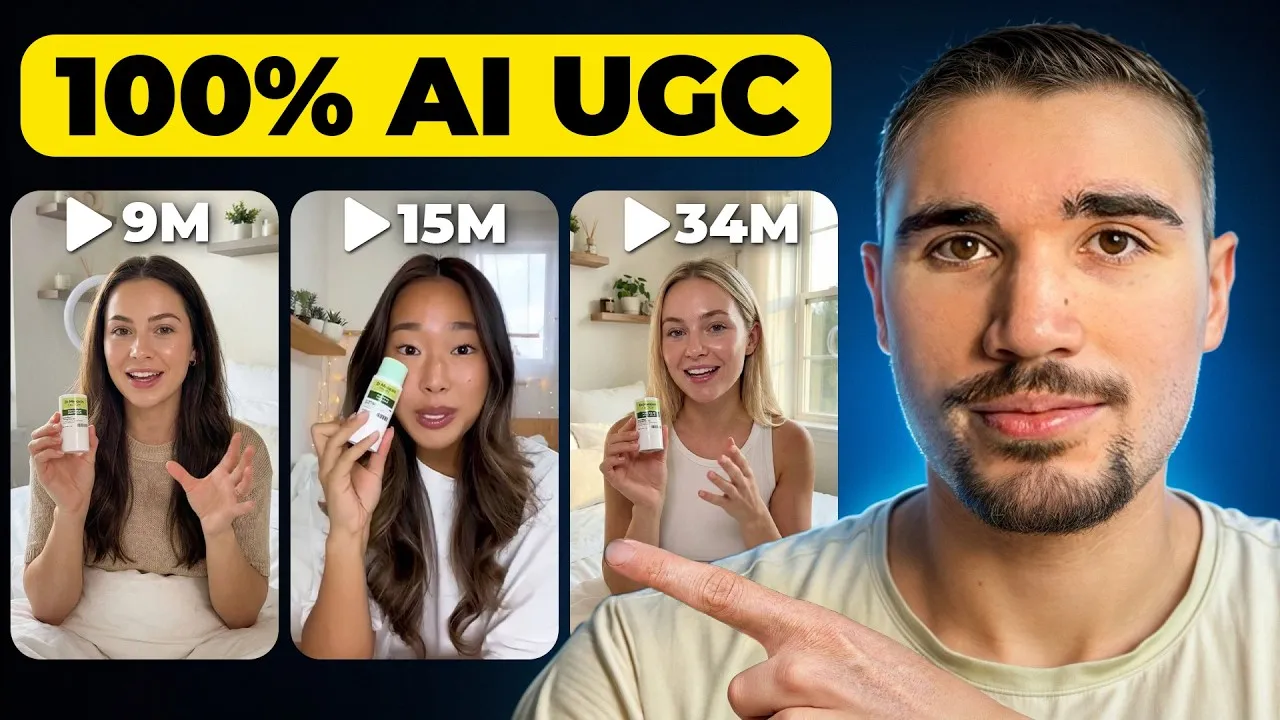
The other day Elon Musk posted a fully AI-generated talking head video on X.
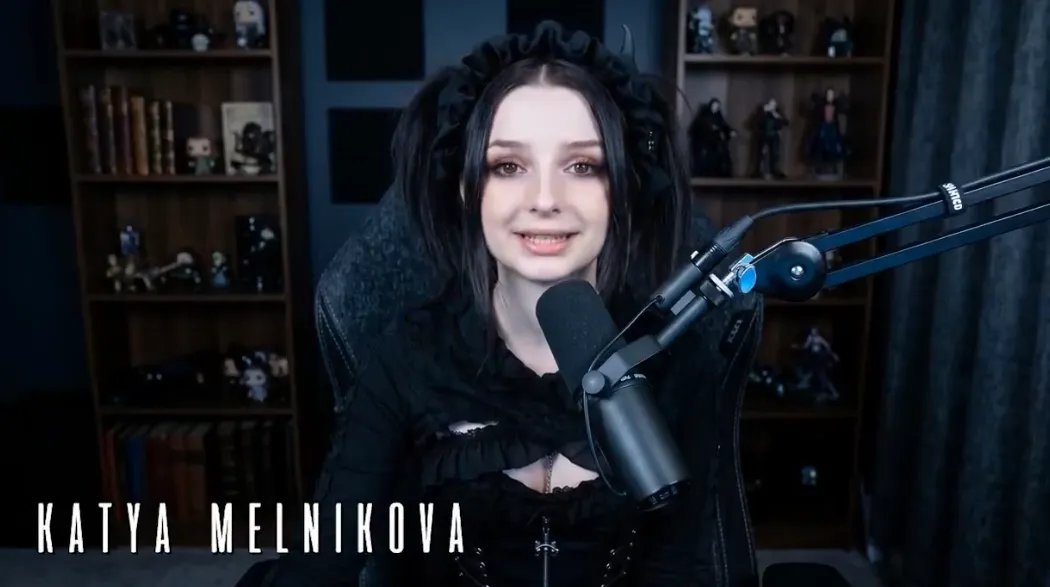
The room. The mic. The lighting. The lip sync. All of it generated by xAI's Grok Imagine. The post pulled 60K likes in a few hours. By morning, the replies were full of marketers posting their own AI-generated talking-head ads, photorealistic UGC clips, and entire commercial spots that looked uncomfortably real.
If you run paid social, manage a content team, or sell anything online, you've been watching this build for two years. Grok Imagine, HeyGen, Synthesia, Veo 3, Pika, Runway — every few weeks another AI video tool drops and the internet acts like the playing field just got flattened.
It never works like that.
The cost of making a video just hit zero. The cost of knowing what video to make didn't. That gap is where the next 12 months of marketing will be won and lost. And one tool that closes it is Virlo's content intelligence platform — the social-listening agent that watches your market 24/7 and hands you the brief before you ever open Grok.
This guide breaks down 9 specific strategies for using AI video generation in your marketing in 2026, three real brand examples, and the workflow most marketers are missing.
What Is AI Video Generation (And Why Marketers Are Panic-Adopting It)
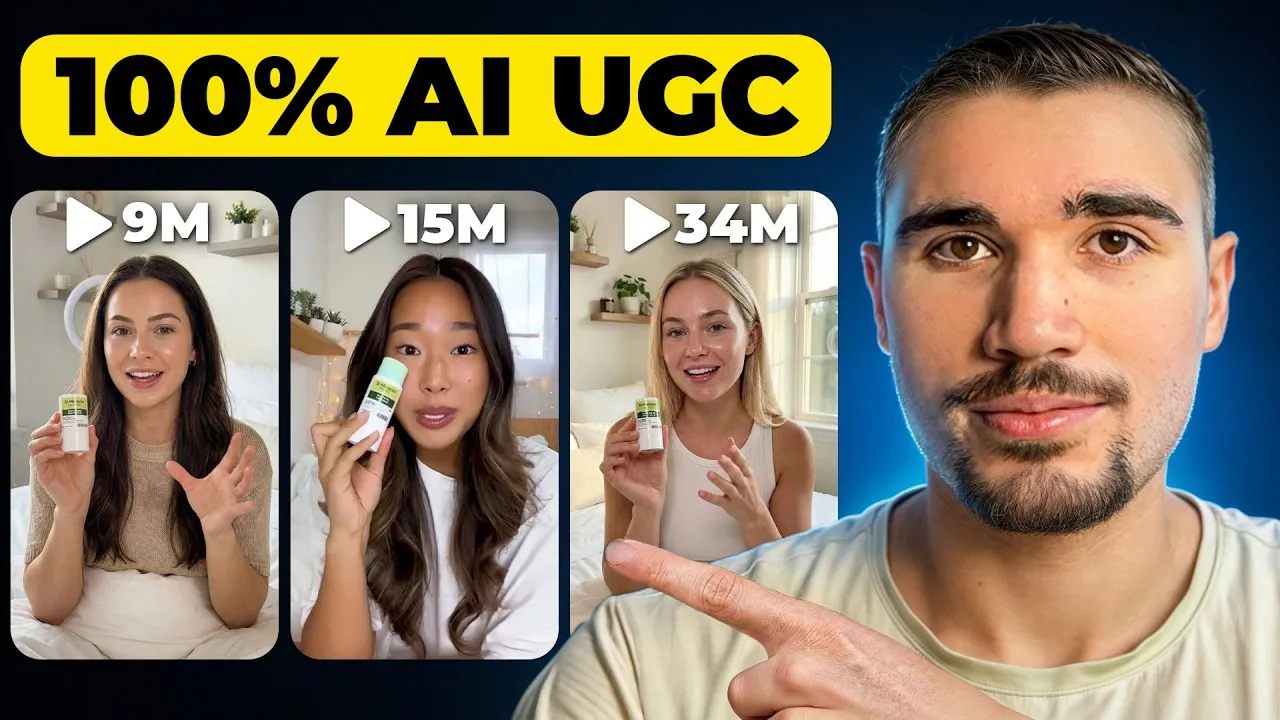
AI video generation is the use of generative AI models — text-to-video, image-to-video, and AI avatars — to produce ad creative, social videos, UGC-style content, explainer clips, and product demos without a camera, studio, or human creator.
The category includes:
AI talking-head and avatar tools — HeyGen, Synthesia, D-ID, Creatify
Text-to-video and image-to-video models — Veo 3, Grok Imagine, Pika 2.1, Runway Gen-4, Kling AI
AI clipping and repurposing tools — OpusClip, Vizard, Revid AI
AI script and storyboard generators — The Brief, Jasper, Foreplay AI Briefs
The reason the entire marketing world is paying attention right now: production cost just collapsed.
Median AI video production cost dropped from approximately $4,500 per finished minute in 2024 to roughly $400 per minute in 2026 — a 91% reduction. A 10-video social campaign that cost $100,000+ through a traditional agency now costs about $89 through AI tools. Calvin Klein, Gucci, Samsung, H&M, and Klarna are all running AI-driven creative campaigns and reporting 15-30% conversion lifts. Klarna alone saved $10M in annualized marketing costs by integrating AI video into their workflow.
78% of marketing teams now use AI-generated video in at least one campaign per quarter. AI video generation volume grew 840% between January 2024 and January 2026. The global AI video generation market is projected to reach $18.6 billion by the end of 2026, up from $5.1 billion in 2023.
Numbers like that mean two things for marketers:
The competitive moat used to be "we can produce more video than the next agency." That moat is gone.
Whatever replaces production speed as the moat is the next 12 months of who wins paid social.
See what's actually winning in your market — start your first content agent in Virlo
How AI Video Generation Actually Works for Marketing
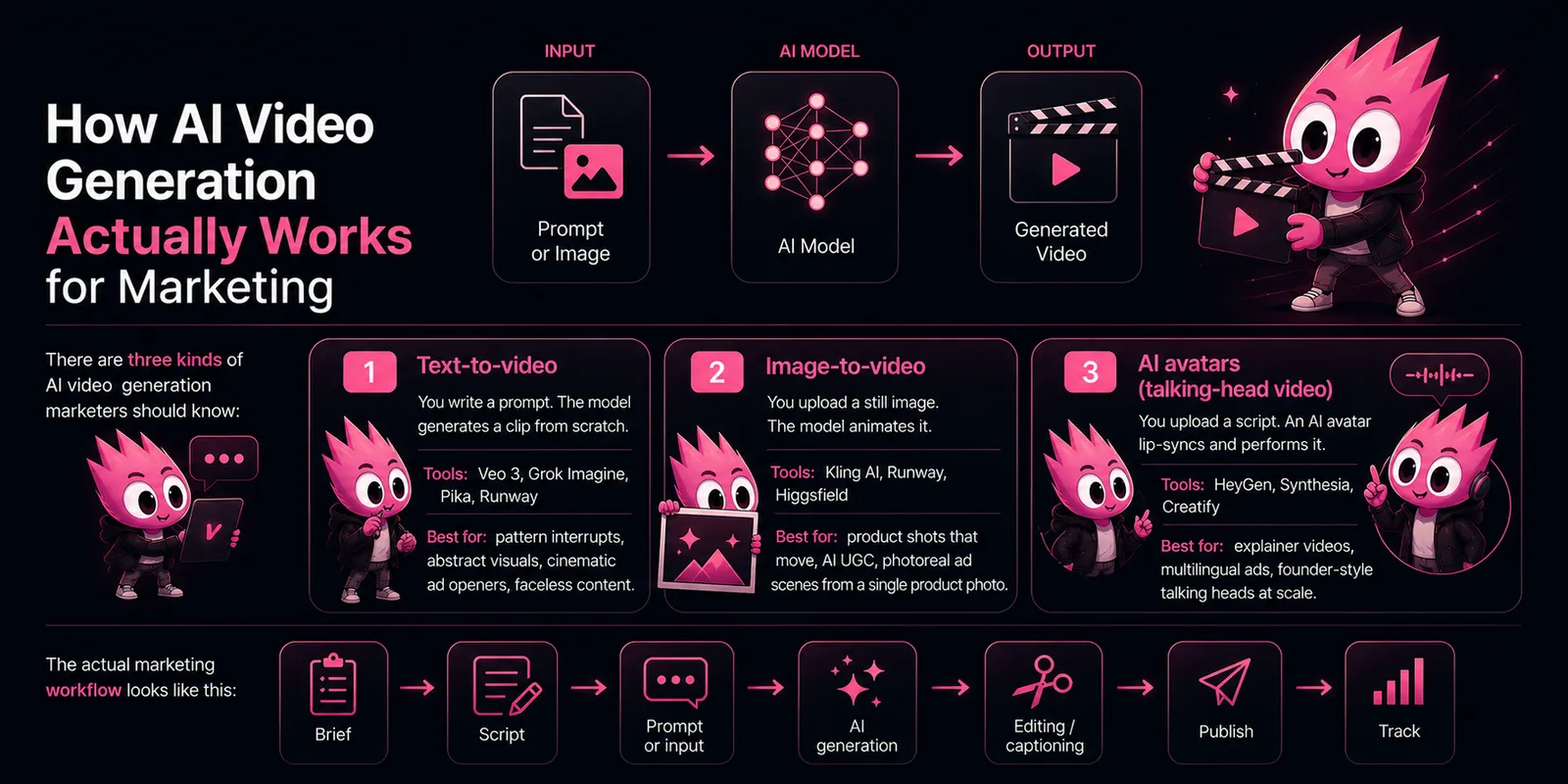
There are three kinds of AI video generation marketers should know:
1. Text-to-video. You write a prompt. The model generates a clip from scratch. Tools: Veo 3, Grok Imagine, Pika, Runway. Best for: pattern interrupts, abstract visuals, cinematic ad openers, faceless content.
2. Image-to-video. You upload a still image. The model animates it. Tools: Kling AI, Runway, Higgsfield. Best for: product shots that move, AI UGC, photoreal ad scenes from a single product photo.
3. AI avatars (talking-head video). You upload a script. An AI avatar lip-syncs and performs it. Tools: HeyGen, Synthesia, Creatify. Best for: explainer videos, multilingual ads, founder-style talking heads at scale.
The actual marketing workflow looks like this:
Brief -> Script -> Prompt or input -> AI generation -> Editing/captioning -> Publish -> Track
Notice what's missing from that workflow if you start at "Brief": the part that decides whether the video has any chance of working in the first place — the research and signal layer that tells you which hook, which format, and which angle is currently pulling views in your specific niche.
Most marketers skip that part. They open Grok, type whatever's in their head, ship five variations, and call it a creative test. That's not testing. That's guessing with extra steps.
The marketers winning in 2026 do it backward. They feed Virlo's content agent into the brief stage so the AI tool gets pointed at hooks and formats already proven to win in their market — before a single video is generated.
9 Ways to Use AI Video Generation for Viral Marketing Content
These aren't "10 cool AI tools" listicles. These are nine actual strategies marketers are using right now to ship better creative, faster, and at lower cost.
1. Use Virlo to Find the Hook Before You Generate
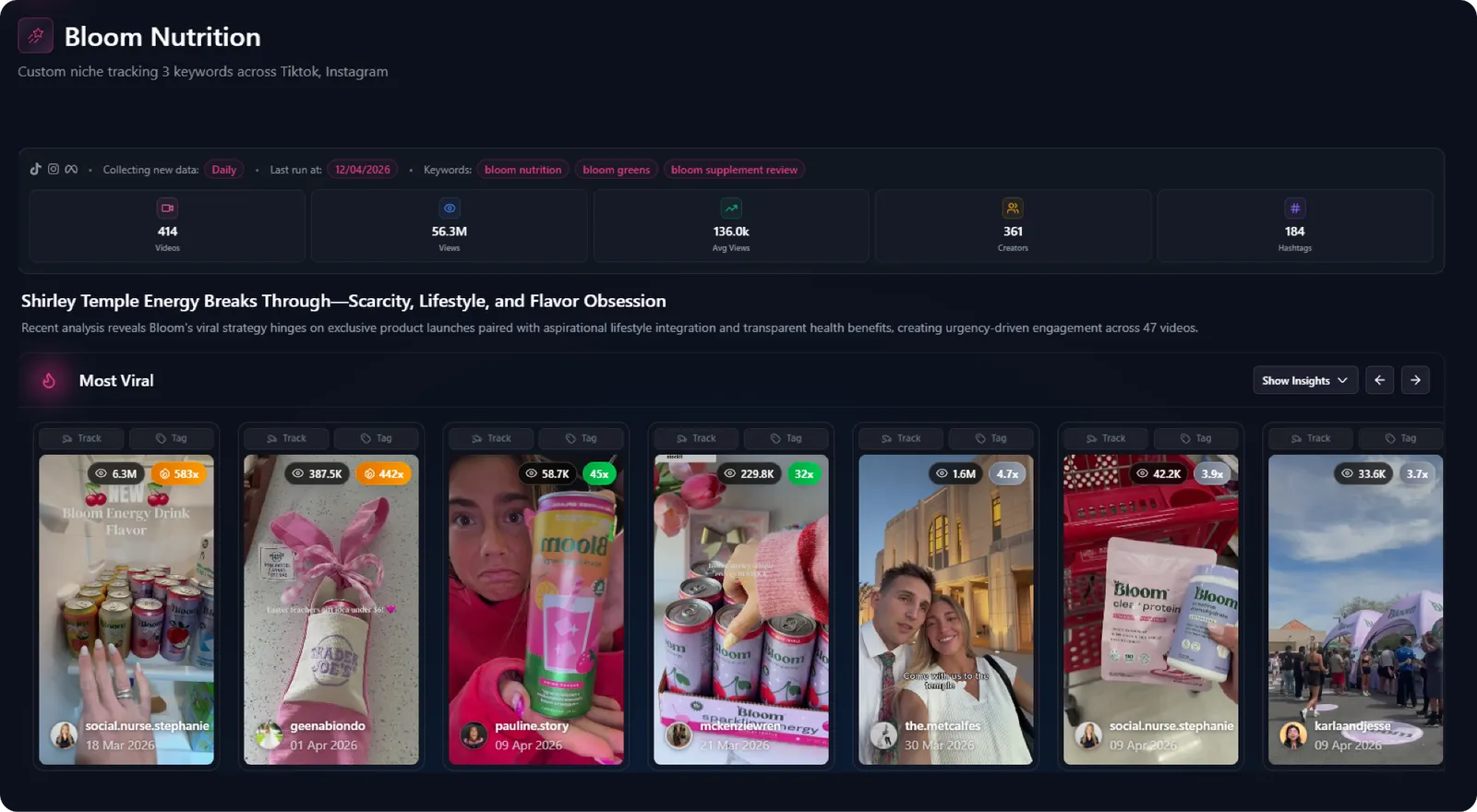
Before you open any AI video tool, you need to know what hooks are currently winning in your market. Not generic "stop the scroll" advice. The exact opening lines, on-screen text patterns, and emotional triggers that are pulling outlier views in your niche this week.
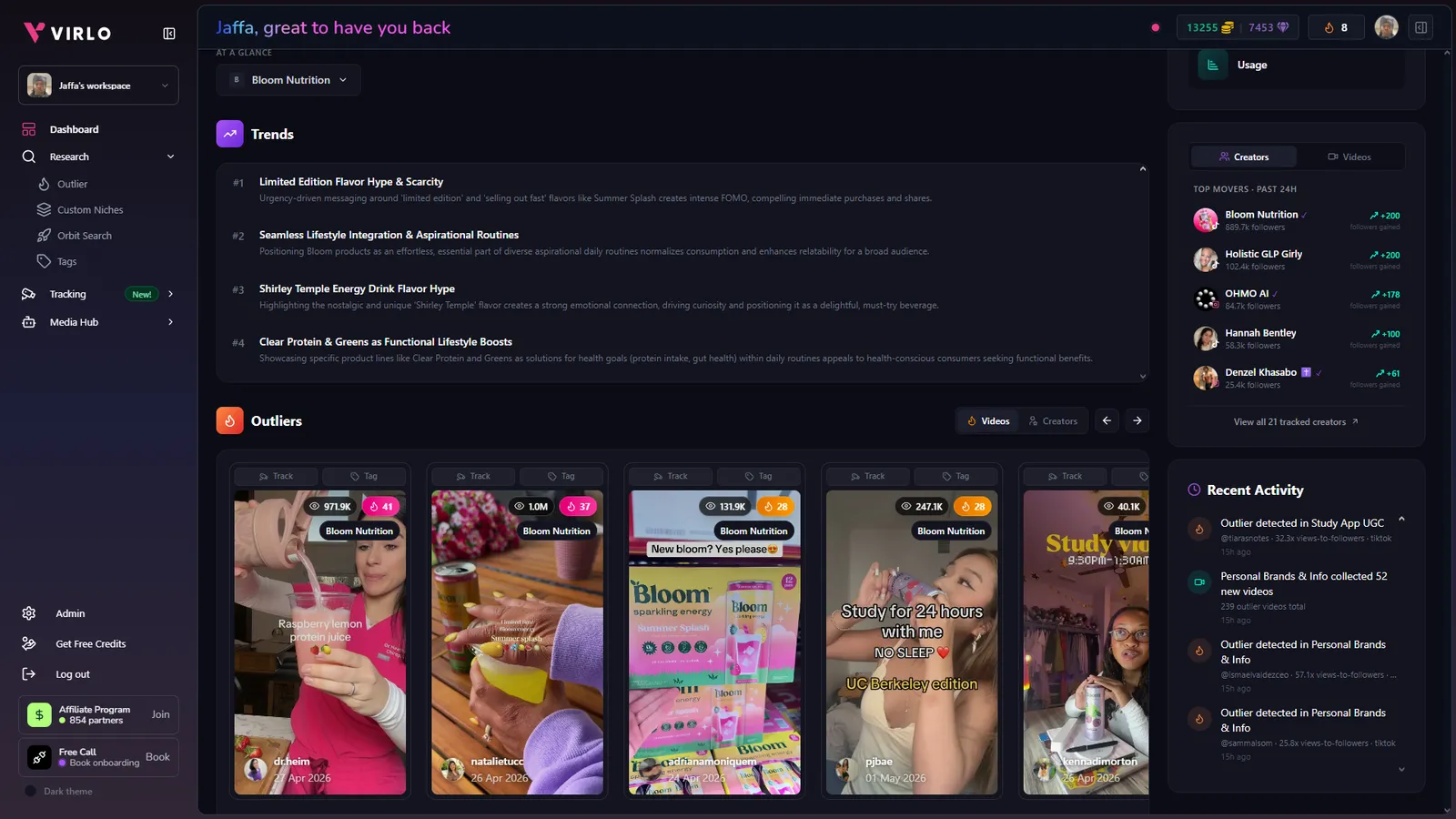
That's what Virlo's Custom Niches do. You set up a content agent around your market — supplements, B2B SaaS, fashion, fintech, anything — and it scrapes TikTok, Instagram Reels, and YouTube Shorts every day. It surfaces the videos pulling abnormal view counts relative to the creator's follower base. It pulls the hook, the format, the comment sentiment, and the brand-safety signals.
Setup takes about four minutes. After that, you wake up to a fresh list of what's working in your market every morning.
Then you walk into Grok or HeyGen with a brief that's already half-written. Real signal, fast execution. In that order.
Set up your first content agent → app.virlo.ai/custom-niches
2. Generate AI UGC for Product Ads (Without Hiring 30 Creators)
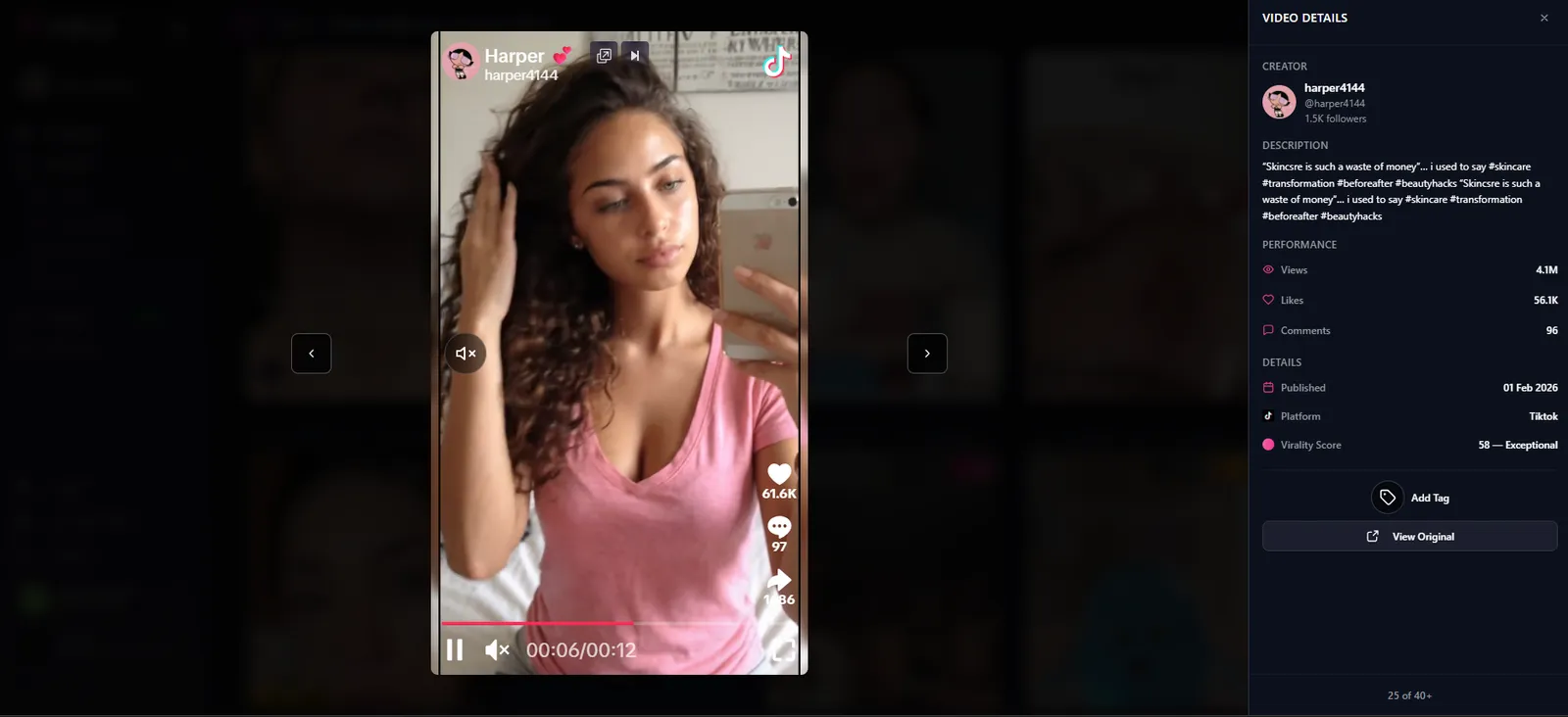
UGC is still the most cost-efficient ad format on Meta and TikTok. Brands typically pay UGC creators around $250 per 1M views delivered. Now AI tools can generate UGC-style videos — talking head, casual settings, handheld feel — without the creator.
The workflow:
Pull the top 5 UGC videos in your niche from Virlo
Extract the hook structure, format, and CTA pattern
Write 10 scripts using those proven beats
Generate 10 AI UGC videos in HeyGen or Creatify with different avatars
A/B test against your control set
Where most marketers fail: they use AI UGC tools without studying what UGC angles are actually working in their niche. The result is generic AI slop that looks polished and converts nothing. Virlo fixes the input layer.
3. Use Image-to-Video for Product Hero Shots
If you're running ecom, you already have product photography. Image-to-video tools like Kling AI and Runway can turn a single product into a 4-8 second cinematic clip — the bottle being poured, the supplement powder swirling, the sneaker rotating in 360 — without a video shoot.
This format crushes on TikTok Shop and Meta product ads because the first frame is your existing product photo. Continuity from your catalog to your ad.
4. Translate Your Best-Performing Ads Into 50+ Languages With AI Avatars
HeyGen's video translation feature is genuinely impressive. You upload a winning ad, pick target languages, and the tool re-generates the video with synced lip movement in the new language using the same avatar.
Use case: take your top-performing US ad, translate it into Spanish, Portuguese, German, French, and Japanese, and run identical campaigns in each market with one creative production cycle. Klarna, Spotify, and several DTC brands report 40-60% improved conversion in non-English markets when ad copy is genuinely localized vs subtitled.
5. Build a Faceless Content Channel With AI Voiceover and Stock Footage
For content categories where the message matters more than the messenger — finance, news, education, productivity — AI voiceover tools (ElevenLabs, Play.ht) plus stock footage plus AI editing (OpusClip, Vizard) can produce a faceless TikTok or YouTube Shorts channel at scale. Five videos per day, one operator.
Best paired with Virlo's video tracking so you can study which faceless creators in your niche are growing the fastest and reverse-engineer their content formula.
6. Spin One Long-Form Video Into 30 Short-Form Clips
OpusClip, Vizard, and Revid AI can take a single hour-long podcast, webinar, or YouTube long-form and auto-clip it into 20-30 short-form videos with captions, hooks, and platform-specific aspect ratios. The AI scores each clip's virality potential and reorders them.
This used to be a 6-hour editor task. It's now a 4-minute upload. Use it to systematically convert your founder content into LinkedIn, TikTok, Reels, and Shorts.
7. Use AI Storyboards to Pre-Visualize Ad Concepts Before Production
For agencies and ecom brands that still shoot live action, AI storyboarding tools (Foreplay AI Briefs, LTX Studio) generate full pre-visualizations of an ad concept before booking a studio. You walk into the shoot with shot-by-shot visuals already approved by the client. Cuts revision cycles by 40-60%.
8. Multilingual AI Avatars for Outbound Cold Video
Tools like Tavus and HeyGen Video Agent let you record one outbound video, then generate hundreds of personalized variations using AI avatars that say the recipient's name, company name, and a relevant insight. Used by SDR teams to lift cold email reply rates from 1-2% to 8-15%.
9. AI-Generated Comment Bait Videos (Pattern Interrupts)
For top-of-funnel awareness, surreal AI-generated visuals — abstract patterns, impossible physics, retro 80s aesthetics — outperform realistic content because they pattern-interrupt the scroll. Veo 3 and Pika excel at this. Pair the surreal visual with a strong text overlay or voiceover and you have a thumb-stop machine.
The catch: virality without conversion is a vanity metric. Pull from Virlo's Orbit search to find which surreal/abstract visual styles are actually driving conversions in your category, not just views.
Find the exact hooks pulling outlier views in your market — start free in Virlo
3 Real Examples of Brands Winning With AI Video in 2026
Example 1: How Matt Generated 11M Views in 28 Days for One Client
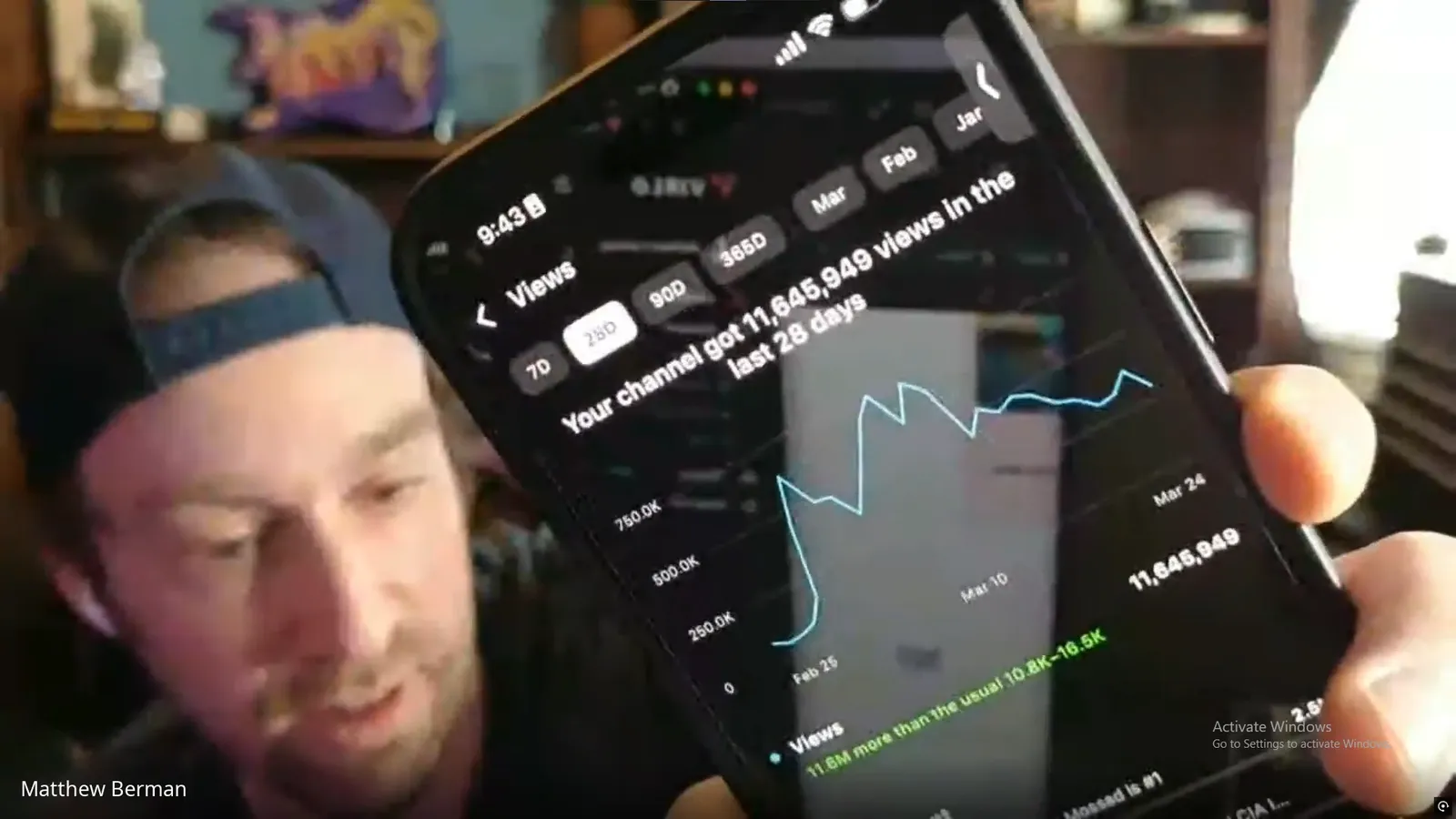
A few weeks back I was on a Zoom with a friend, Matt. Matt runs digital marketing for a handful of online entrepreneurs. Halfway through the call he pulled up his phone and showed me one of his client dashboards.
11 million views in 28 days.
Not because Matt has some magical editing style. Not because he sat on a yoga mat manifesting virality. He had a repeatable research loop built on top of Virlo's API
Every Monday he pulls outlier content from his client's niche through Virlo
He extracts the hooks, formats, and creators outperforming relative to follower count
He pulls comment sentiment to surface what audiences actually want
He briefs his content team with that data
The team produces creative with AI tools where it makes sense, live shoots where it doesn't
By the time anyone touches Grok or HeyGen, the brief is already half-written. The AI tool isn't generating from a blank page — it's executing on signal.
Example 2: Bloom Nutrition's UGC + AI Hybrid Stack
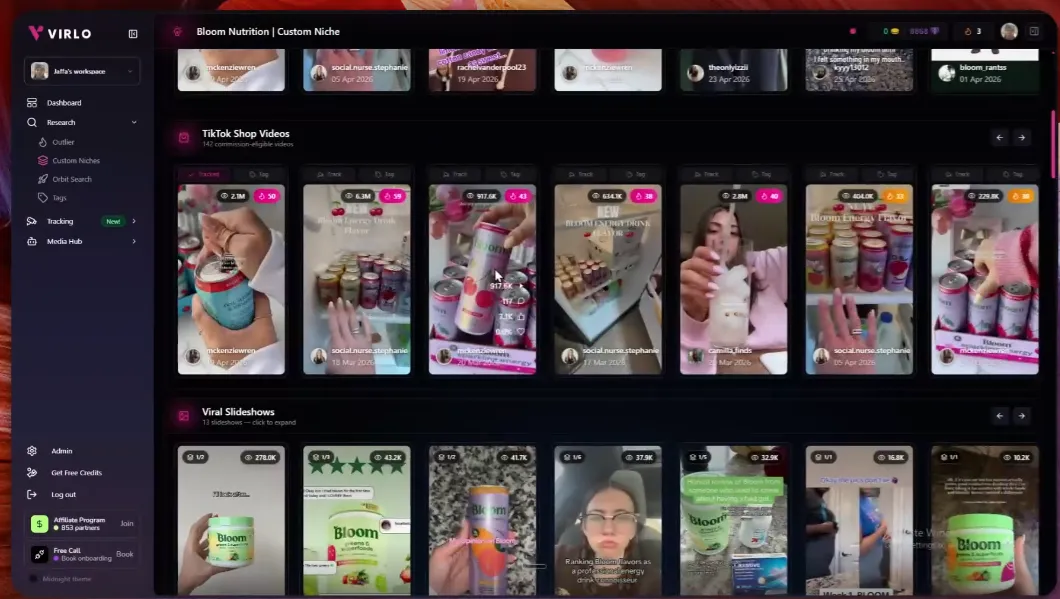
Bloom hires actual UGC creators to produce videos around their supplements. One creator with under 6,000 followers in their network posted a single video that pulled 8.1 million views — driven by an "identity hook" opener that named the exact ICP segment in the first frame.
Brands like Bloom now blend real UGC creators (for the human signal) with AI tools (for repurposing, translation, and variation testing). The AI doesn't replace the creator. It scales their best work. One winning UGC clip becomes 30 platform-specific variations through OpusClip and HeyGen.
Example 3: An AI Video Agency Built on Virlo's Intelligence Layer
A founder who'd already exited a previous company is building an AI video agency where every video starts with a Virlo-generated brief. Their pitch to clients: "We don't write scripts from scratch. We pull the 5 hooks already winning in your market, extract the format DNA, and generate 30 variations using AI." Their clients see 4-7x improvement in cost-per-acquisition vs traditional creative.
The pattern is the same across all three examples: AI video tools execute. Virlo provides the signal layer that decides what to execute on.
Find Viral Hooks Before You Generate: Why Virlo Makes AI Video Work
Here's the part most "AI video for marketing" guides skip:
AI is a multiplier. If you multiply garbage data by any number, you still get garbage.
The marketers who lose the next 12 months are going to open Grok, type whatever's in their head, generate 12 variations, feel productive for 40 minutes, post them, get nothing back, and conclude that "AI video doesn't work."
The marketers who win are going to feed AI tools market-backed inputs:
"Here are the 5 hooks already pulling outlier views in our niche this week"
"Here are the formats our audience is responding to right now"
"Here are the objections showing up in the comments under competitor videos"
"Here are the creators outperforming their follower count in our category"
Then: "Now generate 20 video variations using these inputs."
Same AI tools. Game-changing inputs.
Virlo's content agent is the layer that produces those inputs. It runs 24/7 across TikTok, Instagram Reels, and YouTube Shorts. It scrapes, scores, and surfaces:
Outlier videos in your niche (videos beating the creator's own baseline by 2x, 5x, 10x+)
Hook patterns and on-screen text formulas that are working
Comment sentiment and audience pain points
Creator outliers — small accounts punching above their weight before competitors find them
Brand-safety signals so AI-generated content doesn't drift into trouble
You set up a Custom Niche in about 4 minutes. After that, every morning your dashboard is full of fresh signals from your market. You walk into your AI tool of choice with a brief that's already half-written.
That's the play in 2026. Not "panic-adopting Grok faster than your competitors." Real signal, fast execution. In that order.
Stop generating AI slop. Start generating with signals. Start your first content agent in Virlo →
Related Virlo Tools & Features
Custom Niches (Content Agents) — Set up a 24/7 social-listening agent for your market. Surfaces outliers, hooks, and formats every morning.
Orbit Search — Run a one-time deep-dive search across TikTok, Reels, and Shorts to find what's working in any niche.
Vee AI Assistant — Your content agent in Slack. Type "/v" and pull viral hooks, brief breakdowns, and competitor analysis without leaving your workflow.
Public API — Plug Virlo's intelligence layer directly into your team's pipeline. The same API Matt used to generate 11M views in 28 days.
Stop Guessing... Start Knowing.
The cost of AI video production is dropping every month. The value of market intelligence is going up at the same rate.
The marketers who get this asymmetry now are going to look very annoying six months from now. They won't just be making more content. They'll be making content with a reason behind it — backed by data their competitors don't have.
Start your first content agent in Virlo →
Or book 15 minutes with the team for a walkthrough on how Virlo's content intelligence layer fits into your AI video stack.
About the author: Jaife Esienna is a co-founder of Virlo, the short-form content intelligence platform. He writes daily on X and LinkedIn about AI, marketing, and the patterns separating outlier content from average content. Follow @dsqjaffa on X and Jaife Esienna on LinkedIn
Related Reading:
See What's Trending Right Now
- Social listening for TikTok, Reels & Shorts
- Spot viral trends before they peak
- Turn insights into ads, scripts & briefs
The Signal Newsletter
Weekly trend breakdowns, creator insights, and social listening tips — straight to your inbox.
Subscribe FreeSee Virlo in action
See What's Trending Right Now
- Social listening for TikTok, Reels & Shorts
- Spot viral trends before they peak
- Turn insights into ads, scripts & briefs
The Signal Newsletter
Weekly trend breakdowns, creator insights, and social listening tips — straight to your inbox.
Subscribe FreeRelated Articles

How Many Hashtags Should I Use on YouTube Shorts + How to Find Them
Wondering how many hashtags you should use on YouTube Shorts? Discover the perfect number to boost your visibility and reach your audience effectively.

YouTube Shorts Specs (2026): Length, Dimensions, Aspect Ratio, Resolution & Thumbnail Size
Complete 2026 guide to YouTube Shorts specs: 60-second max length, 9:16 vertical aspect ratio, 1080x1920 resolution, file size limits, and thumbnail dimensions. Covers every spec creators need.
8 Tips on How to Make Faceless Tiktok Videos
Learn how to make faceless TikTok videos with 8 creative tips to boost engagement while keeping your identity private.
Put this into practice with Virlo
Turn what you just read into real research. These are the tools creators, agencies, and brands use to find what's working on short-form video.
Content Research Agent
Run your short-form research on autopilot — outliers, creators, and sounds across TikTok, Reels, and Shorts.
Tracking Center
Monitor breakout creators, videos, and competitors with daily snapshots and deep AI analysis.
Free Data
Explore free viral hooks, trending niches, breakout products, and more — no account required.
Get The Signal
Join creators, marketers, and agencies getting weekly trend breakdowns and social listening insights delivered free.
Subscribe to the Newsletter
Stop Guessing. Start Knowing.
Join thousands of digital entrepreneurs using data to take the guesswork out of capitalizing on trends.