Complete Guide to YouTube Shorts Monetization in 2026
YouTube Shorts monetization pays roughly $0.03 to $0.10 per 1,000 views but this is not an exact figure. It depends on factors that most people miss. Here is what you need to know if you are a creator

Himanshu Bisht
Professional Blog Writer
Himanshu Bisht is a digital community and content expert. With the strategies he shares, companies and creators have generated over 10 million dollars in combined sales. His views have been featured in the magazines like Forbes and Authority Magazine. Himanshu writes expert articles for creators on Virlo AI.
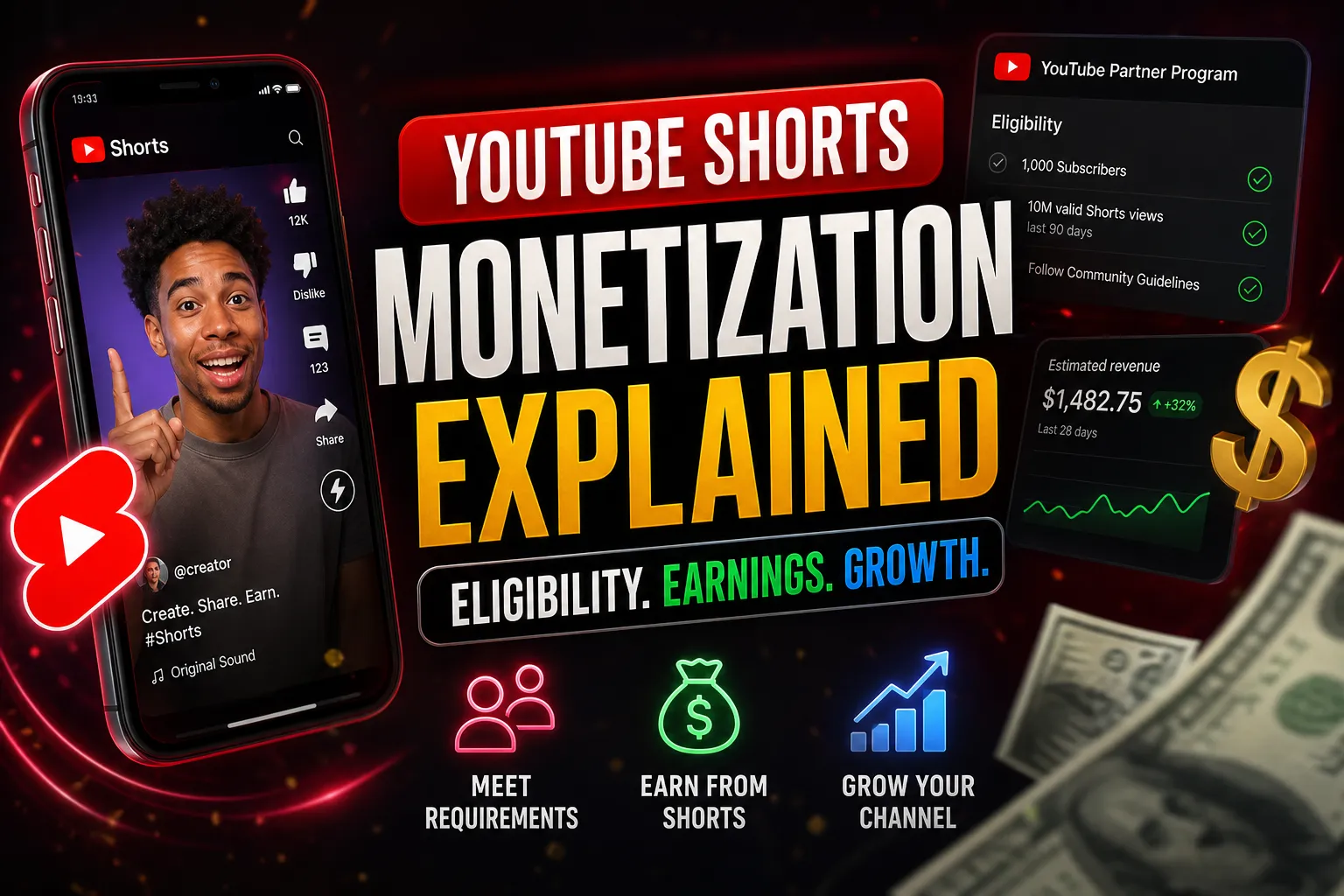
YouTube Shorts is one of the most popular content production platform for creators. Millions of people consume Short form content on their phones and tablets. As a creator, this offers an incredible opportunity to monetize your skills.
YouTube shorts program pays roughly $0.03 to $0.10 per 1,000 views, which means a Short with a million views earns somewhere between $30 and $100. While this numbers vary based on your audience location and your type of content, this is where majority of creators fall in. But there is more to YT Shorts monetization than just this.
On 1 February 2027, YouTube is changing two separate things about how Shorts earn.
The first raises the bar for creators applying to the Partner Program. The second sets an ongoing view requirement for earning ad revenue on Shorts at all, and it applies to channels that are already monetized today.
TL;DR: Today you need 1,000 subscribers plus either 4,000 qualified watch hours in 12 months or 10 million qualified Shorts views in 90 days to join the YouTube Partner Program. From 1 February 2027, new applicants need 8,000 watch hours or 20 million Shorts views, and existing members are not affected by that entry change. Separately, from the same date, ad and subscription revenue sharing on Shorts requires 10 million qualified Shorts views per rolling 90 days for everyone. Expect $0.03 to $0.06 RPM in most niches, and treat ad revenue as a small slice of a larger stack.
YouTube Shorts monetization requirements right now
There are two ways to get into Youtube monetization program.
The long-form path asks for 1,000 subscribers and 4,000 qualified public watch hours over the previous 12 months. The Shorts path asks for 1,000 subscribers and 10 million qualified Shorts views over the previous 90 days.
Clearing either one makes you eligible for the full program, which includes Shorts monetization. There is no requirement to satisfy both.
Note that the watch time on Shorts does not count toward the 4,000-hour long-form threshold, and the two paths never feed each other. A channel posting nothing. However, Shorts will reach 10 million views long before it reaches 4,000 hours, which is precisely why the Shorts can be quicker to monetize.
There is also a fan-funding program for shorts creators. It asks for 500 subscribers, three public uploads in the previous 90 days, and either 3,000 watch hours over 12 months or 3 million Shorts views over 90 days.
If you can clear this, it unlocks Super Thanks, Super Stickers, and channel memberships.
That tier carries no ad revenue. It lets your audience pay you directly while you work toward the full program. YouTube has confirmed these fan funding thresholds are not changing in 2027.
The Partner Program operates only in supported countries and regions, and if yours is not on the list, YouTube Studio will not let you opt in regardless of how many views you accumulate.
However, it is a great way to start generating revenue from your content before even getting to official partner program. Alongside of this, you can always collaborate with affiliate partners and sponsors if you have started generating good views consistently.
New Updates on YouTube Monetization in 2027
YouTube announced two distinct changes in August 2026, and they apply to different people. Conflating them is the reason so much advice circulating right now is wrong.
The first change raises the entry bar for new applicants. From February, creators applying to join YPP will need 8,000 qualified watch hours over 365 days, or 20 million qualified Shorts views over 90 days. The 1,000-subscriber requirement stays where it is.
YouTube states directly that this update will not impact creators already in the Partner Program. If you are monetized today, the new entry numbers are not your problem.
The second change applies to everyone, including you. From the same date, eligibility for ad and subscription revenue sharing on Shorts requires 10 million qualified Shorts views over the trailing 90 days.
If you fall below that line, you do not get removed from YPP. Your channel stays in the program and your long-form videos keep earning normally. What stops is Shorts revenue specifically... and it restarts automatically once your rolling 90-day count climbs back above 10 million.
For a channel producing 3 million Shorts views a quarter, this is a real revenue event. Ad income from Shorts disappears in February and returns only if output or performance changes substantially.
YouTube is not leaving those channels with nothing. The announcement describes new incentive programs aimed at creators below the 10 million threshold.
Three are named: bonuses tied to YouTube Shopping, incentives for brand deals, and earnings boosts for starting and growing trends. Details have not been published, and the shape of those programs will determine how much the change costs smaller channels.
The new terms are already visible in YouTube Studio for review and signature, taking effect on 1 February.
Qualified views are not the views in your dashboard
Every threshold above counts qualified views, not the number displayed on your video. Those two figures are rarely the same, and creators who plan around the bigger one end up short of where they thought they were.
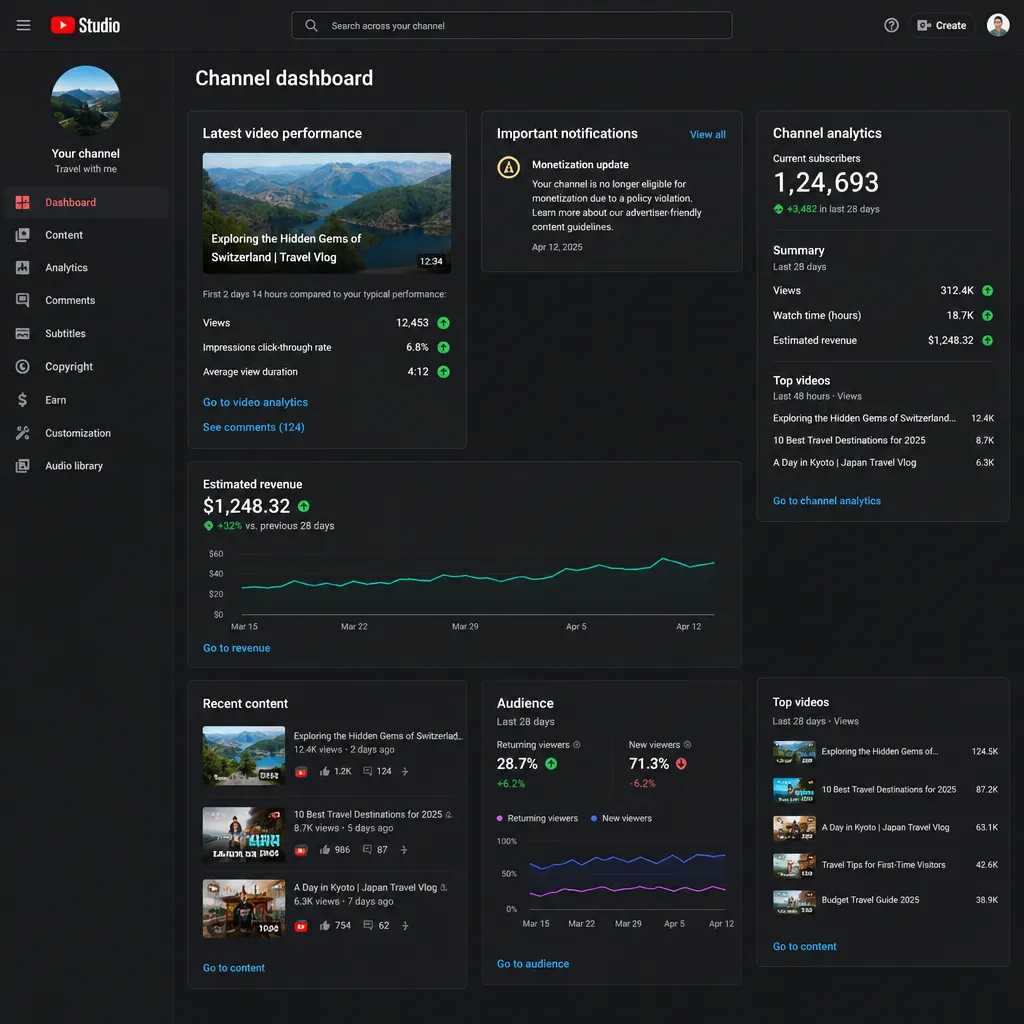
YouTube published the definitions in August 2026, and they are stricter than most people assume.
A qualified Shorts view has to come from a public Short and has to be an engaged view. YouTube defines an engaged view as one where the viewer stayed past the initial seconds, and the definition explicitly excludes loops.
That loop exclusion deserves a moment. Shorts replay automatically, and a viewer who watches your 15-second Short four times through generates a view count that flatters you and a qualified count that does not move accordingly. Channels built on short, highly loopable content will see a wider gap here than channels making 45-second Shorts that people watch once.
You can check engaged views per video directly in YouTube Analytics, which is the only reliable way to measure your real position against the 10 million bar.
Several other categories are excluded outright. Private Shorts, unlisted Shorts, deleted Shorts, Shorts viewed as an ad, long-form views, and image posts appearing in the Shorts feed all fail to qualify.
The long-form side has its own exclusion list. Qualified watch hours come from public long-form videos, podcasts, and archived livestreams. Private, unlisted, and deleted videos do not count, nor do videos watched as an ad, nor livestreams you never archived, nor any Shorts watch time.
Deleting underperforming videos is the trap worth naming here. Creators tidying up a channel before applying sometimes remove old uploads and watch their qualifying total fall, because the hours those videos earned vanish with them.
How the Shorts revenue pool divides your money
Shorts do not earn the way long-form videos earn, and understanding the mechanism explains why the RPM numbers look the way they do.
Long-form monetization is roughly per-impression. Ads run against your video, and a share of what advertisers paid for those specific impressions comes to you.
Shorts monetization is bit different as it is pooled. Ads in the Shorts feed appear between videos, not attached to any single one, so YouTube collects the revenue from across the entire surface and puts it in one pot.
From that pot, music licensing comes out first. Shorts using licensed tracks trigger payments to publishers and rights holders, deducted before creators are paid. Shorts using original or no audio leave the pool intact.
The creator pool gets distributed according to each channel's share of total qualified Shorts views. A channel responsible for one percent of qualified views receives one percent of the pool.
Then the split applies. Creators keep 45% of their allocated Shorts revenue, against 55% for long-form. That ten-point difference compounds on top of an already smaller pool.
Subscription revenue works on a parallel track. YouTube directs 30% of net Premium subscription revenue and 60% of Premium Lite revenue into dedicated pools.
Those pools are distributed by member watch time and views, and the same 55/45 split between long-form and Shorts applies to what creators receive.
The design rewards reach over depth, which suits a feed people scroll quickly. It also means no amount of optimization lifts your Shorts RPM into long-form territory. The ceiling is structural, not something you are failing to unlock.
Scale explains why the per-view number stays small. YouTube reports over 200 billion daily Shorts views and more than 3 million creators in the Partner Program, so any single channel's slice of that pool is thin by arithmetic.
How much money does YouTube pay for Shorts?
YouTube Shorts RPM sits between $0.03 and $0.10 for most channels after YouTube's cut, with the bulk landing in the $0.03 to $0.06 band.
500,000 monthly Shorts views produces somewhere around $15 to $50. A million views lands between $30 and $100. Five million views brings roughly $150 to $500, and ten million views, which is the new eligibility bar, produces something like $300 to $1,000 per month.
A channel doing the volume required to stay eligible for Shorts ad revenue in 2027 is earning a few hundred dollars a month from it.
Audience geography matters most here. Advertisers pay far more to reach viewers in the United States, the United Kingdom, Canada, and Australia than in most other markets. Two channels with identical view counts and different audience locations can differ by several multiples.
Most people also miss the Niche. Niche follows closely. Finance, business, software, and insurance content attracts advertisers with real budgets. Entertainment, memes, and general lifestyle content attracts less. Our breakdown of the highest RPM niches on YouTube covers where the money concentrates.
Music usage has a direct cost, since licensed tracks divert part of the pool to publishers before your share is calculated. Original audio keeps more of it with creators.
There is also Seasonality that swings harder than most creators expect. Advertiser budgets concentrate in the fourth quarter and evaporate in January, so the same channel with the same views can see RPM fall by half between December and the new year.
Shorts against long-form, honestly
Long-form YouTube RPM runs between $1 and $30 depending on niche and audience. Shorts run between $0.03 and $0.10.
A million long-form views at a modest $2 RPM generates around $2,000. A million Shorts views generates around $50. That is a 40x gap in the mild case, and it widens dramatically at the top of the long-form range.
That arithmetic should shape how you structure a channel rather than whether you make Shorts at all. Shorts are the most efficient discovery mechanism YouTube has ever offered, reaching viewers who have never heard of you at a scale long-form cannot match.
The channels earning real money from Shorts use them as the top of a funnel. Shorts acquire the audience, subscribers move to long-form, and long-form carries the ad revenue. Our comparison of Shorts and long-form video goes deeper on where each format belongs.
The accurate framing is that Shorts are an acquisition channel paying a small dividend. Channels built on the assumption that YouTube Shorts ad revenue alone will sustain them tend to stall once the maths becomes obvious.
Switching monetization on in YouTube Studio
Learning how to monetize YouTube Shorts includes one step that catches people after they have already been accepted. Acceptance into the Partner Program does not switch on Shorts revenue by itself.
The Shorts module is a separate opt-in with its own terms, and creators regularly sit monetized for weeks without realizing their Shorts are earning nothing.
On desktop, open YouTube Studio, go to the Earn tab, review your eligibility status, accept the Shorts monetization terms when prompted, and confirm your settings.
On mobile, open the YouTube Studio app, tap Earn, accept the Shorts terms, then reopen the Earn tab to verify the change registered.
If the module does not appear at all, either your channel has not qualified or the feature is unavailable in your region.
Review timelines vary and YouTube does not guarantee a turnaround, so treat any specific figure you read as an estimate rather than a commitment. Approval and activation remain separate steps regardless, so check the Earn tab after acceptance instead of assuming revenue has started.
Income streams beyond Shorts ad revenue
YouTube Shorts ad revenue is one line in a larger income statement, and for most Shorts-heavy channels it is not the largest one. Apart from YouTube moentization through Google's programs, there are over 7 new ideas to moentize your shorts.
Fan funding opens earlier than ads and converts better than its reputation suggests. Super Thanks lets viewers tip individual videos, Super Chat and Super Stickers work during livestreams, and channel memberships create recurring income. A Shorts audience that watches you daily will fund you at rates that surprise people who only look at RPM.
YouTube Shopping is the most direct conversion path the platform offers. Product tagging turns a Short into a storefront, and the affiliate version lets you earn commission on other brands' products without holding inventory. YouTube's 2027 incentive programs specifically include Shopping bonuses, which makes this worth setting up before February.
Also there are Brand deals that pay more per view than the ad pool by a wide margin. Shorts appeal to brands because the format is cheap to produce and fast to turn around.
Note that the retention and engagement rates carry more weight in these conversations than subscriber count, so a small channel with strong hold rates has a real case to make.
Affiliate marketing suits Shorts because the format drives impulse traffic efficiently. One clean link in the description or a pinned comment, promoted across a run of Shorts, compounds better than scattered links across dozens of videos.
Digital products convert well from short-form attention. Templates, presets, guides, and paid communities all work, and creators increasingly host them on dedicated platforms rather than building storefronts themselves. This breakdown of Whop covers how that model works for creators selling digital products and community access.
The long-form funnel remains the highest-leverage move available. Shorts grow subscribers, subscribers watch long-form, and long-form earns between $1 and $30 RPM instead of $0.05. Every hour spent making Shorts pay more directly is usually better spent making Shorts lead somewhere.
Why your Shorts have views but no revenue
A large gap between view count and earnings has a small number of likely explanations, and they are worth checking in this order.
The module is not enabled. Check the Earn tab first, because this accounts for more cases than anything else and takes a minute to fix.
Your views are not qualifying. Loops, private or unlisted Shorts, and image posts in the Shorts feed all inflate your visible count without contributing anything. Compare engaged views in Analytics against your public count to size the gap.
The content is classified as reused or inauthentic. YouTube's channel monetization policies define reused content as material that is not clearly your own creation and carries no significant original commentary or substantive modification. Compilations, clips, and reaction videos are assessed against it.
A separate policy covers inauthentic content, renamed from repetitious content in July 2025. It targets mass-produced and repetitive uploads, including image slideshows with minimal narrative value.
Licensed music is taking the revenue. Tracks from the audio library trigger publisher payments deducted before your share. Swapping to original audio on a few videos and comparing RPM will show you the size of the effect on your channel.
Your audience sits in low-CPM markets. This is not fixable through settings, though it does change what you should optimize for. Channels with geographically inexpensive audiences generally do better pursuing sponsorships and products than chasing ad revenue.
AI-generated Shorts deserve their own note, since the question comes up constantly and the answer is more specific than people expect.
YouTube's position is not that AI disqualifies content. Its inauthentic content policy names AI-generated material built from generic or unoriginal templates, where the output gives the impression of mass production without adding the creator's own insight or perspective.
An AI-assisted workflow producing something distinctive monetizes normally. A pipeline generating fifty near-identical videos from a template does not.
Reaching 10 million qualified views in 90 days
From February, this number stops being an entry requirement and becomes an ongoing condition. Roughly 111,000 qualified views per day, sustained.
Volume alone rarely gets channels there. At Virlo we track millions of short-form videos across TikTok, Reels, and Shorts, and the pattern that separates channels hitting this kind of scale is concentration rather than output. A handful of videos carry the bulk of the views, and those videos almost always share a format the channel found and then repeated deliberately.
Find your outliers and repeat them. Sort your Shorts by views and look at the top five. The shared structure between them, whether that is a hook style, a topic angle, or a format, is the thing to make more of.
We see this repeatedly in the data. Channels usually stumble onto their winning format by accident, then keep posting variety instead of doubling down on the one thing their audience demonstrably wanted.
Post into rising trends rather than peaked ones. A format that broke out three days ago still has distribution available. The same format two weeks later is saturated, and the algorithm has already served it to the people who wanted it. Our guide to getting more views on YouTube Shorts covers the mechanics of this in detail.
Track engaged views rather than views. Given the loop exclusion, the two numbers diverge, and only one of them counts toward eligibility. Reviewing engaged views weekly in Analytics, or through Shorts analytics tooling, keeps you measuring the metric YouTube actually pays against.
If you are weighing platforms, our breakdown of what TikTok pays creators covers how the economics compare on the other major short-form surface.
Frequently asked questions
How many views do you need to monetize YouTube Shorts?
Ten million qualified Shorts views in 90 days, alongside 1,000 subscribers, qualifies you for the Partner Program through the Shorts path. Alternatively, 1,000 subscribers and 4,000 qualified watch hours over 12 months qualifies you through the long-form path. You need only one.
How much does YouTube pay per 1,000 views on Shorts?
Between $0.03 and $0.10, with most channels between $0.03 and $0.06. A million Shorts views typically earns $30 to $100, varying with audience location, niche, music usage, and time of year.
Can you monetize YouTube Shorts without 1,000 subscribers?
Not for ad revenue. At 500 subscribers, with 3,000 watch hours or 3 million Shorts views in 90 days and three public uploads, you can access fan funding features including Super Thanks and channel memberships. Ad revenue requires the full Partner Program.
Do YouTube Shorts count toward the 4,000 watch hours requirement?
No. Shorts watch time is excluded from the long-form watch hours threshold entirely. Shorts have their own separate path of 10 million qualified views in 90 days.
What is an engaged view on YouTube Shorts?
A view where the person stayed past the initial seconds, excluding loops. Only engaged views on public Shorts count toward monetization thresholds, which is why your qualified total sits below your displayed view count. You can see engaged views per video in YouTube Analytics.
What changes for YouTube Shorts monetization in February 2027?
Two things. New YPP applicants will need 8,000 qualified watch hours or 20 million qualified Shorts views, and existing members are unaffected by that. Separately, ad and subscription revenue sharing on Shorts will require 10 million qualified Shorts views per rolling 90 days for all creators, with revenue resuming automatically if you drop below and climb back.
Will I lose monetization if my Shorts views fall below 10 million?
You stay in the Partner Program and your long-form content keeps earning. Only Shorts ad and subscription revenue pauses, and it resumes automatically once your trailing 90-day qualified views cross back above the threshold.
Do Shorts with music earn less?
Yes. Music licensing is deducted from the revenue pool before creators are paid, so Shorts using licensed tracks return less than Shorts using original or no audio.
Can you monetize AI-generated Shorts?
Yes, when the content is original and advertiser-friendly. YouTube evaluates whether the video adds genuine value rather than whether AI was involved. Automated voiceovers over stock footage and low-effort compilations are typically classified as reused content and excluded from revenue.
How long does YouTube Partner Program approval take?
YouTube does not publish a guaranteed review window, and reported waits range from days to over a month. After approval you must still enable the Shorts monetization module in YouTube Studio, since it does not activate on its own.
The Final Words
If you are close to 1,000 subscribers and either threshold, applying now under the current entry requirements is straightforward arithmetic. The bar for new applicants is rising for shorts monetization.
If you are already monetized, work out your trailing 90-day qualified Shorts views and compare them against 10 million. That single figure tells you whether February changes your income.
Sitting comfortably above it means nothing changes. Sitting below it means Shorts ad revenue pauses, long-form revenue continues, and the new Shopping and brand deal incentive programs become the thing to watch when YouTube publishes details.
YouTube Shorts monetization rewards scale, and the 2027 rules make that more explicit than before. The creators who come through the change in good shape are the ones who already treat ad revenue as one income stream among several.
If that describes your channel, February is an administrative date. If your income depends on the Shorts pool alone, you have until then to build a second stream.
See What's Trending Right Now
- Social listening for TikTok, Reels & Shorts
- Spot viral trends before they peak
- Turn insights into ads, scripts & briefs
The Signal Newsletter
Weekly trend breakdowns, creator insights, and social listening tips — straight to your inbox.
Subscribe FreeSee Virlo in action
See What's Trending Right Now
- Social listening for TikTok, Reels & Shorts
- Spot viral trends before they peak
- Turn insights into ads, scripts & briefs
The Signal Newsletter
Weekly trend breakdowns, creator insights, and social listening tips — straight to your inbox.
Subscribe FreeRelated Articles
How the TikTok Algorithm Works in 2026
Every TikTok scroll is a decision the algorithm made for you. The For You Page (FYP) isn't chronological, isn't follower-based, and isn't random — it's a recommendation engine ranking millions of videos against signals about what you, specifically, are likely to watch to the end. For creators, th...

How to Find Trending TikTok Hashtags in 2026
Most "trending TikTok hashtags" lists are dead on arrival. Here's how to find the ones actually working in your niche right now, and how to tell which ones are worth using.
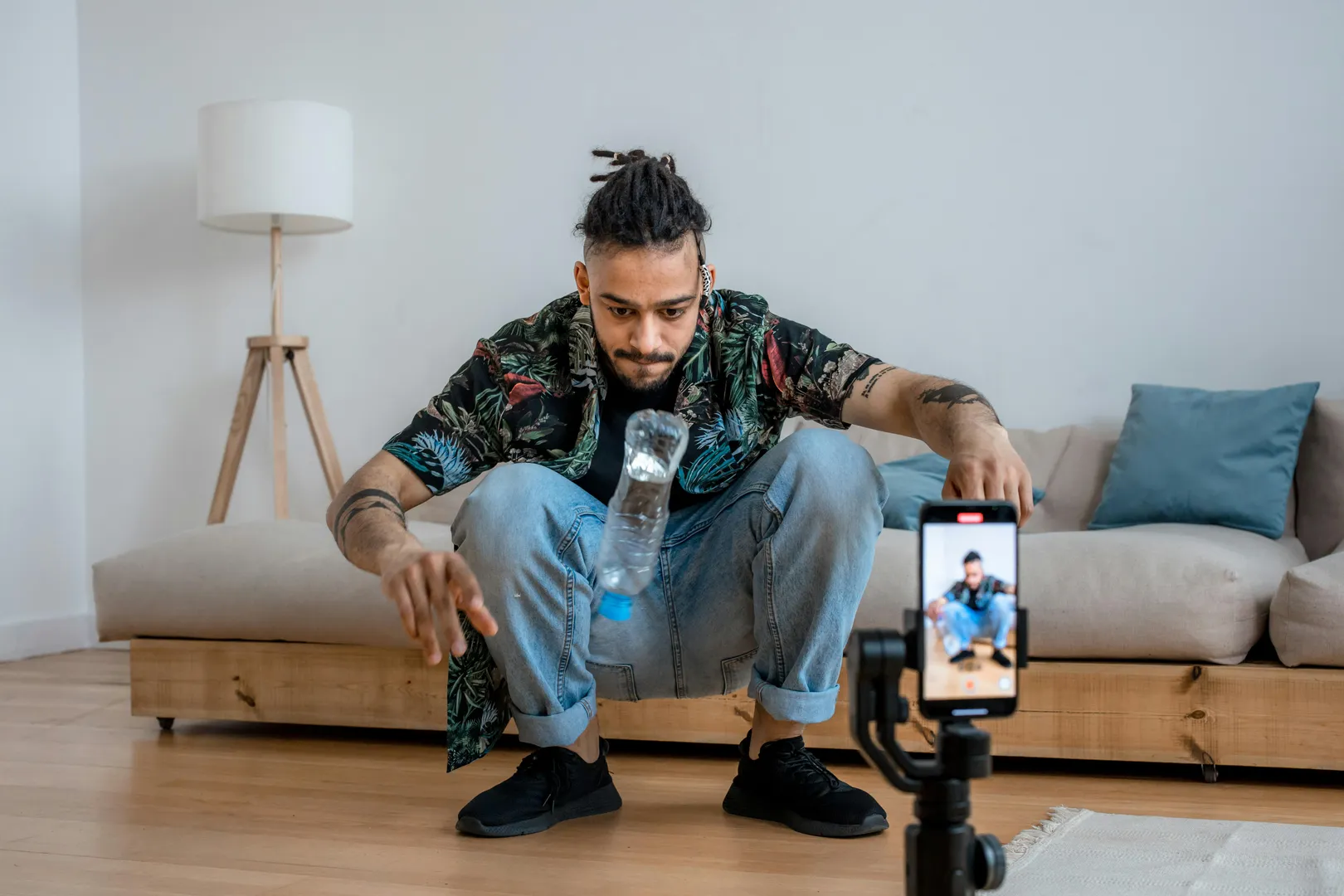
How Often Should You Post on TikTok to Go Viral?
If trying to figure out how often you should post on TikTok feels like listening to ten people yell ten completely different answers at you, you’re not alone. This guide breaks down how often creators should realistically post on TikTok, why posting frequency matters, and the other key factors that influence whether a video actually gains traction and goes viral.
Put this into practice with Virlo
Turn what you just read into real research. These are the tools creators, agencies, and brands use to find what's working on short-form video.
Content Research Agent
Run your short-form research on autopilot — outliers, creators, and sounds across TikTok, Reels, and Shorts.
Tracking Center
Monitor breakout creators, videos, and competitors with daily snapshots and deep AI analysis.
Free Data
Explore free viral hooks, trending niches, breakout products, and more — no account required.
Get The Signal
Join creators, marketers, and agencies getting weekly trend breakdowns and social listening insights delivered free.
Subscribe to the Newsletter
Stop Guessing. Start Knowing.
Join thousands of digital entrepreneurs using data to take the guesswork out of capitalizing on trends.