Ultimate Guide to Clip Farming in 2026 for Creators
Clip farming means three different things in 2026. Here's what each one is, how creators actually run it, what it pays, and what the platforms now penalize.

Himanshu Bisht
Professional Blog Writer
Himanshu Bisht is a digital community and content expert. With the strategies he shares, companies and creators have generated over 10 million dollars in combined sales. His views have been featured in the magazines like Forbes and Authority Magazine. Himanshu writes expert articles for creators on Virlo AI.
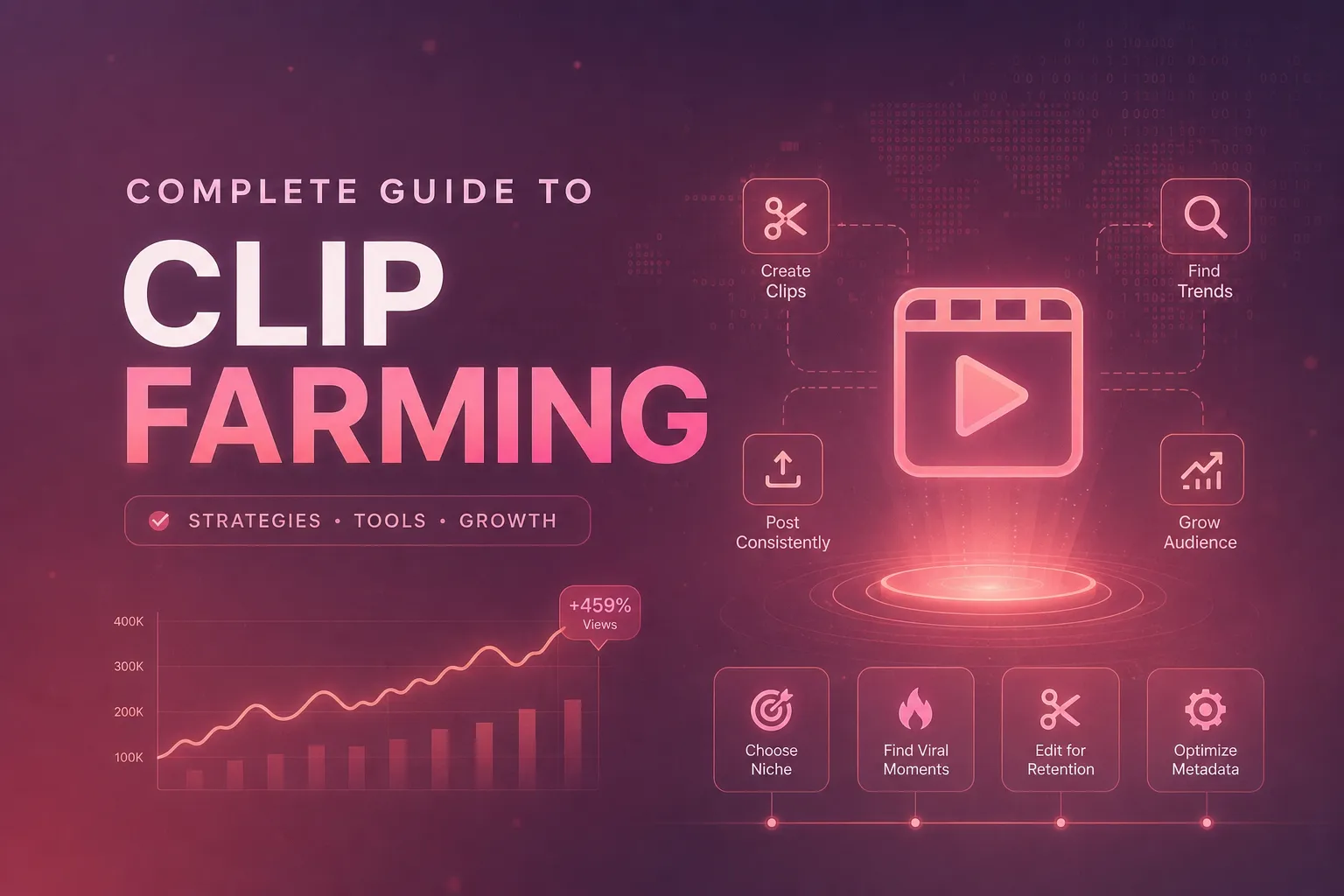
If you have heard the phrase "clip farming", there is a decent chance all the people meant something different by it.
To a Twitch viewer, it is an insult; a streamer faking a meltdown so someone clips it. To a podcast editor, it is a job description; one two-hour episode becomes forty Shorts. And to a nineteen-year-old getting paid $2 per thousand views on Whop, it is a side income. The same phrase might mean three separate practices and three completely different outcomes for your account. I have been working with Virlo for last few months where I see hundreds of creators using this software for discovering Clipping opportunties for clients and their own content. This puts me in the perfect place to discuss this topic.
Clip Farming is Not Real Farming (as you could guess)
I know it sounds like you need to go to the farm and plant some seeds for it but Clip farming has nothing to do with it (pun intended).
Clip farming is the practice of producing or harvesting short video clips at volume in order to capture attention, views, or payouts. The term covers three distinct behaviors: a streamer engineering moments on purpose so they get clipped, a creator cutting one long video into dozens of shorts, and a paid clipper reposting someone else's content for a per-view reward.
The word "farming" is doing the work in that sentence. It signals repetition and extraction — treating clips as a crop to harvest rather than moments that happen to be worth saving. Whether that reads as smart distribution or cynical spam depends entirely on which of the three versions someone is describing.
Here is what Clip Farming Really Mean
Clipping Type | What it looks like | Who does it | Main risk |
|---|---|---|---|
Performative clip farming | Staging outrage, fake rage, manufactured drama on a live stream so viewers clip it | Twitch, Kick and YouTube livestreamers | Audience trust; burnout |
Repurposing clip farming | Cutting one podcast, stream, or long video into 20–50 shorts across platforms | Podcasters, YouTubers, brands, agencies | Low — this is standard practice |
Paid clip farming | Reposting a brand's or creator's footage for a per-1,000-view payout | Independent clippers on Whop, Vyro and similar | Copyright, originality penalties, low actual pay |
Performative clip farming: the original meaning
The phrase started in Twitch chat and it started as an insult. Wiktionary still tags it as derogatory: to act, or produce or exploit a situation, with the goal of gaining online attention, especially repeatedly or inauthentically.
On stream it looks like a drink poured over someone's own head, rage at a trivial in-game loss, a keyboard destroyed on camera, or a personal revelation that arrives with suspicious timing about forty minutes in. The broadcast becomes a delivery mechanism for a moment that was decided on in advance.
What makes this different from ordinary entertainment is the direction of causation. A streamer who reacts genuinely and gets clipped produced a clip as a byproduct. A streamer who plans the reaction produced the clip as the product, and the stream is packaging.
Chat can usually tell, and that is the part worth internalizing. The accusation gets typed in real time, and once it lands the clip stops working, because a staged reaction that reads as staged converts nobody. The performance has to be undetectable to pay off, which means the ceiling on this strategy is your acting ability, not your creativity.
Repurposing: the version with no stigma
The second meaning is what editors and marketers mean, and it carries no negative charge. You record one long asset, then cut it into every standalone short it can support.
A ninety-minute podcast realistically yields somewhere between fifteen and forty usable clips. Each gets a vertical crop, burned-in captions, its own hook, and its own posting slot over the following two weeks. Nearly every creator publishing long-form content does some version of this.
The reason it gets grouped with the pejorative meaning is purely a question of scale and care. Twelve deliberately chosen clips from an episode is distribution. Two hundred template-cut clips from the same episode is spam, and the platforms now have specific machinery for telling the difference.
Paid clipping: the version driving the 2026 search volume
Here is the mechanism, because most explanations skip it.
A brand or creator funds a pool of money and publishes a brief. The brief specifies approved source footage, required format, allowed platforms, submission deadline, minimum view threshold, and a fixed rate per 1,000 views. Clippers cut the footage, post it from their own accounts, submit the link, and get paid on verified views up to the point where the pool empties.
Whop's Content Rewards is the largest marketplace running this model. The company reports distributing over $1.7 million across more than 98,000 creators. Vyro and several smaller platforms run near-identical mechanics.
This is the version that produces the accounts you have noticed: no face, no bio, no original content, five posts a day, every one of them a clip of the same podcaster. Those accounts are the farm, and they exist because somebody is paying for them.
Why clip farming blew up in 2026
Three things happened at roughly the same time.
Short-form payouts stayed low, so per-view contracts got attractive. Platform creator funds pay poorly and unpredictably. A campaign paying a fixed $2 per 1,000 views is worse than a brand deal but far more predictable than a Creator Rewards RPM, and it requires no audience of your own to start.
AI clipping tools removed the labor. Paste a URL, get back ten to fifteen scored clip candidates with captions and a vertical crop already applied. What used to be a two-hour editing session became an eight-minute one. Once production cost approaches zero, volume becomes the only lever, and volume is what farming means.
The term itself went mainstream. A TikTok explaining the practice went viral in April 2026, and the phrase jumped from streaming Discords into general creator vocabulary within weeks. That is also the point at which platforms started paying attention.
Why clip farming became a real industry in 2026
Three shifts made this economically inevitable, and they are worth understanding in order, because they explain both why the practice exploded and why it is already getting squeezed.
Clipping is cheaper than advertising, and it does not look like advertising
This is the demand side, and it is the reason money flows into clipping at all.
A brand paying $2 per 1,000 views is buying attention at a $2 CPM. Paid social sits well above that on most objectives, and paid impressions arrive labeled as ads, with all the skepticism that label triggers. A clipping campaign buys views at a lower rate and delivers them through accounts that look like fans.
That second part is the actual product. The brand is buying reach that reads as organic enthusiasm, which is worth considerably more per impression than reach that reads as advertising. It is also why the practice attracts criticism and why disclosure rules exist. A coordinated paid campaign presenting itself as spontaneous interest from unaffiliated accounts is the specific scenario FTC guidance was written to catch.
Brands also pay only on delivered views. No views, no cost. Compared to a flat-fee influencer deal that may underperform, a per-view pool transfers all performance risk to the clipper. From a media buyer's seat, that is an easy line item to approve.
AI editing collapsed the production cost to near zero
This is the supply side.
Cutting a clip by hand means watching source footage, marking in and out points, cropping to vertical, tracking the speaker, generating and correcting captions, and exporting. Call it ninety minutes to two hours for someone competent, per batch.
Tools like Opus Clip changed the input to a pasted URL. They return ten to fifteen scored candidates with the crop and captions already applied. Working time per clip drops to something closer to five or eight minutes, most of which is judgment rather than labor.
The economic consequence matters more than the time saved. When the marginal cost of producing one additional clip approaches zero, the rational strategy becomes producing as many as possible and letting the platform sort them. That behavior is exactly what "farming" describes. Volume stopped being expensive, so volume became the strategy.
Short-form distribution stopped requiring an audience
The third shift is structural and it is the one people underrate.
On TikTok, Reels, and Shorts, a video's reach is determined mostly by early retention signals rather than follower count. A brand new account can put up a clip that does 200,000 views. That is not true on most other surfaces, and it is not true for long-form YouTube.
For anyone wanting creator income without building a creator identity, this is the whole appeal. No face, no niche, no following, no consistency requirement. Cut, post, submit, repeat. The barrier to entry sits at roughly zero, which is why the labor pool filled so fast, and also why per-clip earnings compressed so quickly.
How creators actually do it: the six-step workflow
This is the operational version — what a working clipper or repurposing editor actually does, in order. It applies to both the repurposing and paid-campaign versions.
Step 1: Lock down your rights before you cut anything
This is the step people skip, and it is the one that ends accounts.
You have clean rights in exactly three situations: you made the footage, a campaign brief explicitly authorized that specific source video, or you hold a written license. Everything else is you hoping fair use covers you, and fair use is a defense you raise after a claim, not a permission slip you hold before one.
Twitch and Kick culture treats clipping as free promotion and most streamers welcome it, but cultural tolerance is not a license. The moment you monetize a clip of someone else's stream, you are in a different conversation. If you are working from someone else's YouTube video, our guide on cutting a YouTube video that isn't yours covers the mechanics and the limits.
Step 2: Find the moments actually worth clipping
Here is where most clip farms fail, and it has nothing to do with editing.
The default approach is to watch the source and clip what feels good. That is a coin flip. The better approach is to work backwards from what is already performing: which moments from this creator, this format, or this niche have already produced outlier videos elsewhere?
That is a research question, not an editing one. Before cutting, it is worth checking which hooks, formats, and topics in the niche are currently producing views well above the creator's baseline — Virlo's outlier detection exists for this, surfacing the videos in a niche that dramatically overperform their channel's normal range so you can reverse-engineer what kind of moment is worth extracting.
Concretely, the moments that clip well tend to share four traits:
A self-contained premise. The viewer needs zero context from the preceding twenty minutes.
A stated conflict or claim in the first three seconds. "That's completely wrong and here's why" outperforms a slow build every time.
A visible emotional shift. Something changes on someone's face.
A resolution inside 45 seconds. Clips that end mid-thought get scrolled.
Step 3: Cut for the platform, not for the archive
Each destination wants something slightly different, and posting one identical file everywhere is the single clearest signal that an account is farming.
Platform | Sweet spot length | Notes |
|---|---|---|
TikTok | 21–45s | Over 60s opens up Creator Rewards eligibility, but only for original content |
YouTube Shorts | 30–60s | Retention past 3s matters more than total length |
Instagram Reels | 15–35s | Shortest attention window of the three |
X | 30–90s | Tolerates longer, rewards controversy |
Vertical crop with the speaker's face in the upper third, captions burned in, and a first frame that shows a face mid-expression rather than a title card. If you are pulling from horizontal source footage, converting horizontal video to vertical properly matters more than any filter you apply after.
Step 4: Write the hook separately from the clip
A clip is not a hook. The clip is what happens after someone decides to stay.
The first three seconds need to do one job: create an open loop the viewer cannot close without watching. In practice that is a text overlay contradicting expectation, a question with a non-obvious answer, or the loudest three seconds of the clip placed at the front out of chronological order. Yes, you can cut the punchline in first and let the setup follow — it works far more often than it should.
If you are producing dozens of these a week, running hook variations through a hook generator is faster than staring at a timeline.
Rewrite whatever comes back before it ships. Machine-written hooks have a register people recognize without being able to name it: clauses of matching length, a rhetorical question answered in the next line, a tidy contrast built on "this isn't X, it's Y." Nobody scrolling thinks "that was generated." They register it as advertising and keep moving, which costs you the three seconds you were competing for. A pass to strip the patterns that make copy read as machine-written takes well under a minute per hook, and it is the cheapest quality gain available anywhere in this workflow.
Step 5: Distribute deliberately, not identically
Volume without variation is what platform filters are built to catch. If you are posting the same clip to four platforms, change the hook text, change the caption, and change the first frame on each. If you are running multiple accounts, do not run identical libraries across them.
Posting cadence for a working clip account tends to land between three and five posts per day per platform. Past that, quality collapses and so does per-video reach.
Step 6: Track what worked and kill what did not
The point of doing this at volume is that you get a real sample size. Ten clips a day is 300 data points a month, which is enough to tell you which source creators, which topics, and which hook structures actually produce.
Most clippers never look. They post, check the payout, and move on. The ones who compound are the ones tracking which clips outperformed and why — which is what Virlo's tracking center and content research agent are built to automate across TikTok, Reels and Shorts.
How much money does clip farming actually make?
Clip farmers are earning up to $10,000 with Clipping podcast clips and long form content. From some estimates, many are living a remote life as full time job. However, let's discuss the average that you can achieve.
Advertised rates. Most campaigns list between $1 and $5 per 1,000 views. Live listings range from roughly $0.20 to $6. Whop's own guidance suggests around $1 per 1,000 for straight clips, $2 for faceless UGC-style edits, and around $3.50 for on-camera UGC.
Realistic averages. Industry trackers put the actual Whop-wide average nearer $1.25 per 1,000, and the blended average across all clipping platforms closer to $0.39 per 1,000 once rejections, view floors, and exhausted budgets are counted. Both figures come from third-party trackers rather than platform disclosures, so treat them as directional.
Monthly views | At advertised $2 CPM | At blended $0.39 CPM |
|---|---|---|
100,000 | $200 | $39 |
500,000 | $1,000 | $195 |
2,000,000 | $4,000 | $780 |
10,000,000 | $20,000 | $3,900 |
If you aim to earn by becoming a clip farmer, here are some important points to consider:
Work out your hourly rate, not your monthly total.
Twenty clips a day at eight minutes each is about 2.7 hours of work. To clear $40 for that session at a blended $0.39 CPM, those twenty clips need roughly 103,000 combined views, which means averaging over 5,000 views per clip, every day. That is an achievable number for a good operator with authorized footage from a creator people already care about. It is not achievable while learning, and most people quote their best week rather than their average one.
Views are not comparable across platforms.
This is the mistake that wrecks projections. Cross-posting to three platforms does not triple your views. Virlo's benchmark data shows median performance differing by more than an order of magnitude between surfaces, with TikTok medians running dramatically higher than Reels, and Reels higher again than Shorts. A clip doing 39,000 on TikTok may do 4,000 on Reels and 1,000 on Shorts. Build the forecast per platform or the forecast is fiction.
Earnings follow a power law.
In any given month, a small number of clips generate most of the income. That distribution is fine when your volume is high enough to catch outliers, and brutal when it is not, because the median clip earns close to nothing. Anyone assuming linear returns from linear effort will quit in month two.
Three ways to get paid nothing for finished work.
Submissions get rejected for missing brief requirements. Clips under the campaign's view minimum pay zero regardless of quality. And budgets drain first-come, first-served, so a well-funded $5 campaign can empty before your clip finishes processing. Production speed is a genuine competitive advantage here, which is the real reason AI tools dominate the workflow.
There is a larger point buried in all of this, and it applies well beyond clipping. View volume with nowhere to send it converts to very little money. The creators who do well from short-form are usually the ones treating views as the top of a path toward something they own, whether that is a product, a list, or a channel, rather than as the revenue line itself. It is the same mistake creators make when they pick a YouTube niche by RPM: optimizing the number the platform reports instead of the audience the topic brings. Clipping has the same shape. The payout is the smaller half of the opportunity.
The rules that changed: what platforms now do to unoriginal content
This is the section most clip farming guides are missing, and it is the one that determines whether any of the above still works. All three major platforms tightened originality enforcement between mid-2025 and mid-2026.
Platform | What changed | Effect on clip farms |
|---|---|---|
YouTube | July 15, 2025: the "repetitious content" policy was renamed and rewritten as the inauthentic content policy | Mass-produced, templated, minimal-effort uploads are ineligible for monetization. Clips, commentary and compilations are still allowed — but only with meaningful added value |
April 30, 2026: accounts primarily posting unoriginal content are removed from recommendations | Aggregator and repost accounts keep their existing followers but lose the discovery surface they grow from. Watermarks, speed changes and credited reposts do not count as original | |
TikTok | Ongoing originality policy tied to Creator Rewards | Compilations, lightly edited reposts, and re-uploads are ineligible for Creator Rewards. Duets, Stitches and Photo Mode posts are excluded too |
Three things in that table deserve more than a row.
YouTube did not ban clips, and the reporting on this was bad. The reused content policy governing clips, reactions, commentary, and compilations was left unchanged. What changed is the standard applied to mass-produced uploads with no human input. A clip with voiceover, analysis, real editing decisions, or new framing is still monetizable. A clip run through a template with nothing added is not. The word to focus on is transformation, and it is now an eligibility requirement rather than a stylistic preference.
Instagram judges the account, not the post, and that changes the whole strategy.
The assessment looks at what an account publishes over roughly a month. One repost among original work is irrelevant. A feed that is mostly reposts loses recommendation distribution, which for an account with no established audience is the entire growth engine. Watermarking someone's video, changing playback speed, or reposting with visible credit does not qualify as original under the updated guidance.
The consequence is that a clip account which loses recommendations becomes a depreciating asset. It keeps its followers, reaches a shrinking share of them, and cannot acquire new ones through the feed. The remaining lever is search, since Instagram's in-app search and keyword indexing operate separately from the recommendation surface.
TikTok's exclusions are broader than most people check. Beyond reposts and compilations, Duets, Stitches, and Photo Mode posts are all outside Creator Rewards eligibility. Plenty of clippers discover this after building a format around one of them.
Is clip farming legal?
Two separate questions get tangled here — copyright, and disclosure.
Copyright. Reposting someone's footage without authorization is infringement, full stop, and the clip being short does not change that. A 30-second clip that captures the most valuable moment of a video can be more legally exposed than a longer, more transformative edit, because it substitutes for the original. Fair use is fact-specific, decided case by case, and it rarely protects straightforwardly commercial reposting. It is also, again, a defense — not a permission.
Where clipping is genuinely safe: footage you own, footage a campaign brief authorized, footage under an explicit license or clip program, or footage where the rights holder has publicly granted permission.
Disclosure. If you are being paid to post a clip, that is sponsored content under FTC guidance, and it needs to be disclosed. Paid clip campaigns tend to be weak on this, which is exactly why the practice draws criticism — a coordinated paid push that presents itself as organic enthusiasm from unaffiliated accounts is the specific thing disclosure rules exist to prevent.
This is general information, not legal advice. If you are running clipping at commercial scale, talk to a lawyer about your specific setup.
Clip farming vs clipping vs repurposing
These get used interchangeably and should not be.
Clipping | Repurposing | Clip farming | |
|---|---|---|---|
Definition | Cutting a short segment from longer footage | Adapting existing content for a new platform or format | Producing or harvesting clips at volume for attention or payout |
Volume | Any | Moderate | High by definition |
Source | Usually yours or licensed | Yours | Often someone else's |
Connotation | Neutral | Neutral | Frequently negative |
Platform risk | Low | Low | Moderate to high |
If you are new to the underlying skill, start with what clipping is and how to do it — the mechanics are the same regardless of which of these you end up running.
Is clip farming legal?
Clip farming is mostly legal unless you are plagiarising content. A lot has changed the way people and AI consumes content in 2026. This is why, the rules are changing fast. Let me cover all the aspects so there is no confusion:
Copyright
Reposting footage you do not have rights to is infringement, and clip length does not fix it. Courts weigh four fair use factors, and short-form clipping tends to land badly on two of them.
The third factor asks about the amount used relative to the whole, but it also asks whether you took the heart of the work. A 40-second clip capturing the single most valuable moment of a two-hour podcast can be more legally exposed than a longer, genuinely transformative edit, precisely because it substitutes for the original.
The fourth factor asks whether your use harms the market for the original. A clip that satisfies the viewer's reason to watch the source is doing exactly that. This is why commentary and analysis fare better than straight excerpts: they serve a different purpose and a different appetite.
It also helps to understand that enforcement has two very different severities. A Content ID match redirects that video's revenue to the rights holder, which costs you the earnings but leaves the channel intact. A copyright strike is a different instrument entirely, and enough of them removes the channel. Clippers who treat these as the same risk tend to underestimate the second one.
Clean ground: footage you made, footage a brief authorized, footage under an explicit license or clip program, or footage where the rights holder has publicly granted permission.
Disclosure
Getting paid to post a clip creates a material connection, and FTC guidance requires disclosing it. Paid clipping campaigns are broadly weak on this, which is a meaningful part of why the practice draws criticism. The entire value proposition of clipping to a brand is that it looks organic, and disclosure reduces that value, so the incentive to skip it is built into the model.
If you are the one being clipped
Most coverage treats clipping from the clipper's side. If you produce the long-form content, you face a decision the guides rarely address: should you let people farm your footage?
The argument for is straightforward. Clips reach audiences your main channel does not, they cost you nothing to produce, and clip accounts often build meaningful followings that funnel back to the source. Plenty of podcasts have grown primarily through clips they did not cut.
The arguments against are more specific than they first appear.
Attribution decays fast. A clip reposted three times loses its watermark, its handle in the caption, and any link back. What survives is the moment, not the source, and by the third generation the viewer has no way to find you even if they want to.
Out-of-context clips become your public record. A 40-second excerpt of a nuanced 20-minute answer is the version that circulates. You do not control the framing, the caption, or the hook, and the hook is what most viewers actually read.
Your best material gets consumed elsewhere. If the peak six minutes of every episode is freely available in short form, the marginal reason to watch the full episode weakens.
All three problems reduce to the same thing: your work travels further than your name does. That raises the value of every discovery channel where your name is attached, because a viewer who sees an unattributed clip and wants the source has to go looking somewhere else to find it. An increasing share of that looking now happens inside AI assistants rather than search boxes, and shows get recommended there based on how legible their material is to a model rather than how many downloads they have.
The workable middle ground is a clip program: publish explicit terms stating what may be clipped, what attribution is required, and what is off limits, then enforce those terms selectively. That converts an uncontrolled situation into a distribution channel with rules. It also gives you standing to act against the accounts that ignore them, which you do not have if you have never stated a position.
Clip Farming Doesn't Always Work
It works when the source rights are unambiguous, each clip stands on its own rather than functioning as a fragment, real transformation happens between source and post, and the clips point somewhere you own. It also works when someone is actually reading the results and cutting what fails.
It fails predictably in five ways. An account that is majority reposted content loses Instagram recommendations. Template output with no human input loses YouTube monetization. Source rights that are "probably fine" become a strike. Staged moments that read as staged convert worse than honest boring ones. And volume pursued past the point where selection quality holds up produces more work for less money, which is the most common failure of all.
That last pattern deserves attention because it compounds. A streamer who builds an identity around clip-farmable moments needs a bigger stunt each time to get the same result. The audience that arrived for the stunt does not stay for the person, so the base never converts into anything durable, and the escalation continues until the creator burns out. The pattern is well documented in streaming and it moves fast.
The version worth building
The strategic error in clip farming is treating clip count as the input. Attention is the input. Clip count is one way to spend production hours chasing it, and usually not the most efficient one.
Spend the first hour on research instead of editing. Which moments in this niche already produced outliers? Which hook structures are working this month? A perfectly executed cut of the wrong moment is still the wrong moment, and no amount of editing rescues it.
Cut fewer clips and choose them harder. Twelve well-selected clips from an episode will outperform forty template cuts, and they will not trip originality enforcement. The selection is the skill. The editing is the commodity.
Add something that belongs to you. A take, a framing, a structure, a visual language. This satisfies the platform eligibility requirement and gives someone a reason to follow the account, which are the same problem wearing two hats.
Work toward owning the source. Clippers who last eventually become the people whose content gets clipped. Building a business entirely on someone else's footage means your revenue depends on their output schedule and their continued goodwill, neither of which you control.
Clip farming is a distribution tactic and it functions well as one. As a business model it has a ceiling, and the people who hit that ceiling usually discover it around month four.
Frequently asked questions
What does clip farming mean?
Clip farming means producing or collecting short video clips at high volume to generate views, attention, or payouts. It covers three practices: streamers staging moments to get clipped, creators cutting long content into many shorts, and paid clippers reposting others' footage for per-view rewards.
Is clip farming the same as clipping?
No. Clipping is the neutral act of cutting a short segment from longer footage. Clip farming is doing it at volume, frequently with someone else's material, with the goal of extracting views or payment rather than serving an audience.
Do clip farmers get paid?
Yes, through per-view campaigns on marketplaces like Whop Content Rewards and Vyro. Rates are advertised at $1 to $5 per 1,000 views, but realistic blended earnings sit closer to $0.39 to $1.25 per 1,000 once rejections, view minimums, and exhausted budgets are counted.
Is clip farming allowed on TikTok, YouTube, and Instagram?
It is restricted rather than banned. YouTube's inauthentic content policy demonetizes mass-produced, minimal-effort uploads. Instagram removes accounts that primarily post unoriginal content from recommendations. TikTok excludes reposts and compilations from Creator Rewards. Clips with genuine transformation remain eligible on all three.
Is clip farming legal?
Only with rights to the source footage. Reposting without authorization is infringement regardless of clip length, and fair use is a defense argued after a claim rather than a permission granted before one. Paid clips also require disclosure under FTC guidance.
Why do streamers clip farm?
A single clip can reach far more people on TikTok or X than an entire stream reaches live, so some streamers engineer moments specifically to be clipped. It spikes short-term visibility, but audiences generally recognize staged content, and the viewers it attracts came for the stunt rather than the streamer.
How many clips can you get from one long video?
A 90-minute podcast typically supports 15 to 40 standalone clips. Beyond that you start producing near-duplicates, which perform worse individually and increase originality-flag risk across the account.
How do you spot a clip farm account?
Look for no original content, no face or bio, a posting cadence above five per day, identical captions across platforms, and a library sourced from one or two creators. Accounts running paid campaigns often post clips of the same brand or podcaster in clusters timed to campaign windows.
Pick your clips from evidence
The hard part of clipping is not the editing. With research tools like Virlo, research is also not a bigger problem for farmers. It is knowing which 40 seconds of a two-hour recording is the 40 seconds people will actually watch, before you spend an afternoon finding out they were not.
Virlo tracks what is breaking out across TikTok, Reels, and Shorts, including outlier videos, breakout creators, and the hooks currently overperforming in any niche, so you can choose sources and moments from data instead of instinct.
See What's Trending Right Now
- Social listening for TikTok, Reels & Shorts
- Spot viral trends before they peak
- Turn insights into ads, scripts & briefs
The Signal Newsletter
Weekly trend breakdowns, creator insights, and social listening tips — straight to your inbox.
Subscribe FreeSee Virlo in action
See What's Trending Right Now
- Social listening for TikTok, Reels & Shorts
- Spot viral trends before they peak
- Turn insights into ads, scripts & briefs
The Signal Newsletter
Weekly trend breakdowns, creator insights, and social listening tips — straight to your inbox.
Subscribe FreeRelated Articles

64% of Gen Z Uses TikTok Instead of Google—Here’s How to Make Sure They Find You
More Gen Z users are bypassing Google, turning to TikTok and Instagram for answers. Surveys show short-form video platforms are becoming Gen Z’s go-to search engines.
How to Use Hashtags on TikTok
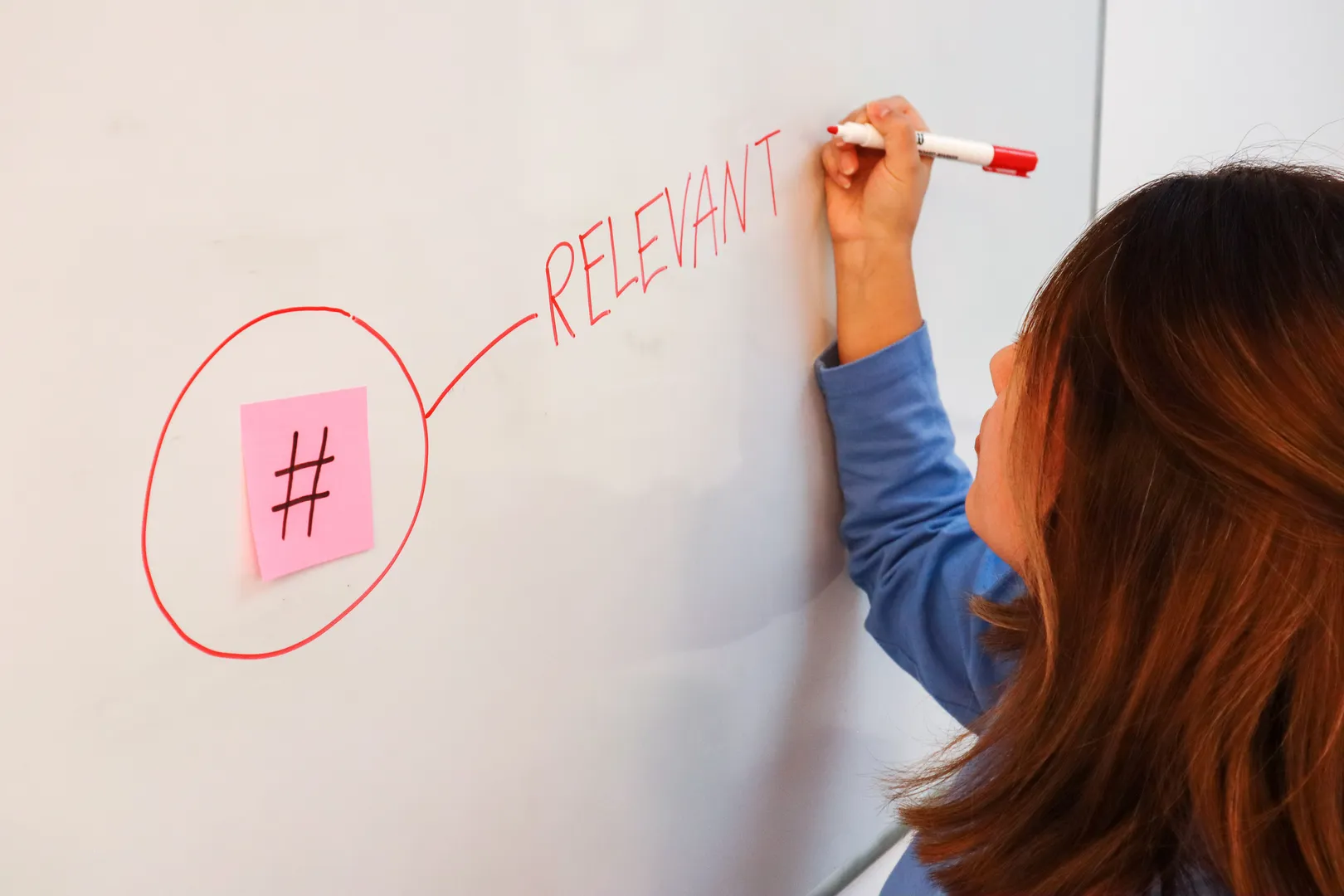
Learn how to use hashtags on TikTok in 2026, including how to find relevant hashtags, improve discoverability, reach the right audience, and build a stronger TikTok SEO strategy.
8 Best TikTok Analytics Tools for Creators in 2026
TikTok's native analytics show you basic stats — views, likes, follower counts — but they don't tell you why a video performed, what your competitors are doing differently, or what's trending in your niche before it peaks. If you're serious about growing on TikTok, you need a dedicated analytics ...
Put this into practice with Virlo
Turn what you just read into real research. These are the tools creators, agencies, and brands use to find what's working on short-form video.
Content Research Agent
Run your short-form research on autopilot — outliers, creators, and sounds across TikTok, Reels, and Shorts.
Tracking Center
Monitor breakout creators, videos, and competitors with daily snapshots and deep AI analysis.
Free Data
Explore free viral hooks, trending niches, breakout products, and more — no account required.
Get The Signal
Join creators, marketers, and agencies getting weekly trend breakdowns and social listening insights delivered free.
Subscribe to the Newsletter
Stop Guessing. Start Knowing.
Join thousands of digital entrepreneurs using data to take the guesswork out of capitalizing on trends.