Smart Marketer's Guide for Facebook Algorithm
Facebook still reaches more than 3 billion people a month, but a large follower count no longer guarantees reach. Meta now ranks Feed, Reels, and ads through separate systems. Here is how to use Facebook algorithm to grow on Meta network

Himanshu Bisht
Professional Blog Writer
Himanshu Bisht is a digital community and content expert. With the strategies he shares, companies and creators have generated over 10 million dollars in combined sales. His views have been featured in the magazines like Forbes and Authority Magazine. Himanshu writes expert articles for creators on Virlo AI.
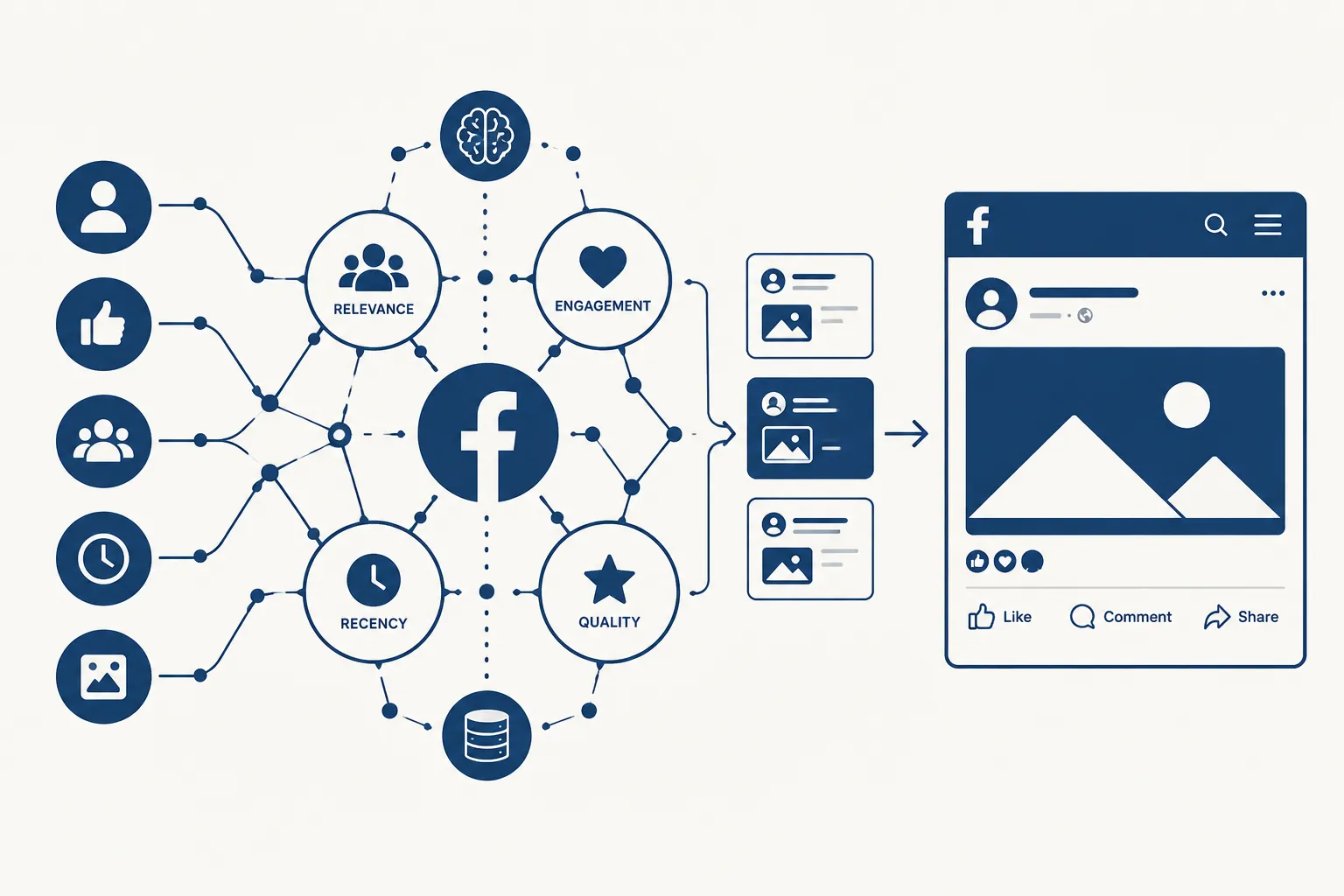
Facebook is still the largest social network in the world, with more than 3 billion people using it every month. That audience makes it one of the few places where a local shop, a creator, and a global brand can all reach buyers, often without paying for distribution.
Lately, if you manage a Page, you have probably watched your reach shrink as the Facebook algorithm changed. Posts that once reached a healthy share of your followers now reach a small slice of them. Meanwhile, a Reel from an account nobody has heard of can land on thousands of screens overnight.
But ranking on Facebook has moved away from the follower-first model many Pages were built on. Meta has rebuilt it around recommendations, original work, and fresh video, so a large follower count no longer guarantees reach the way it once did.
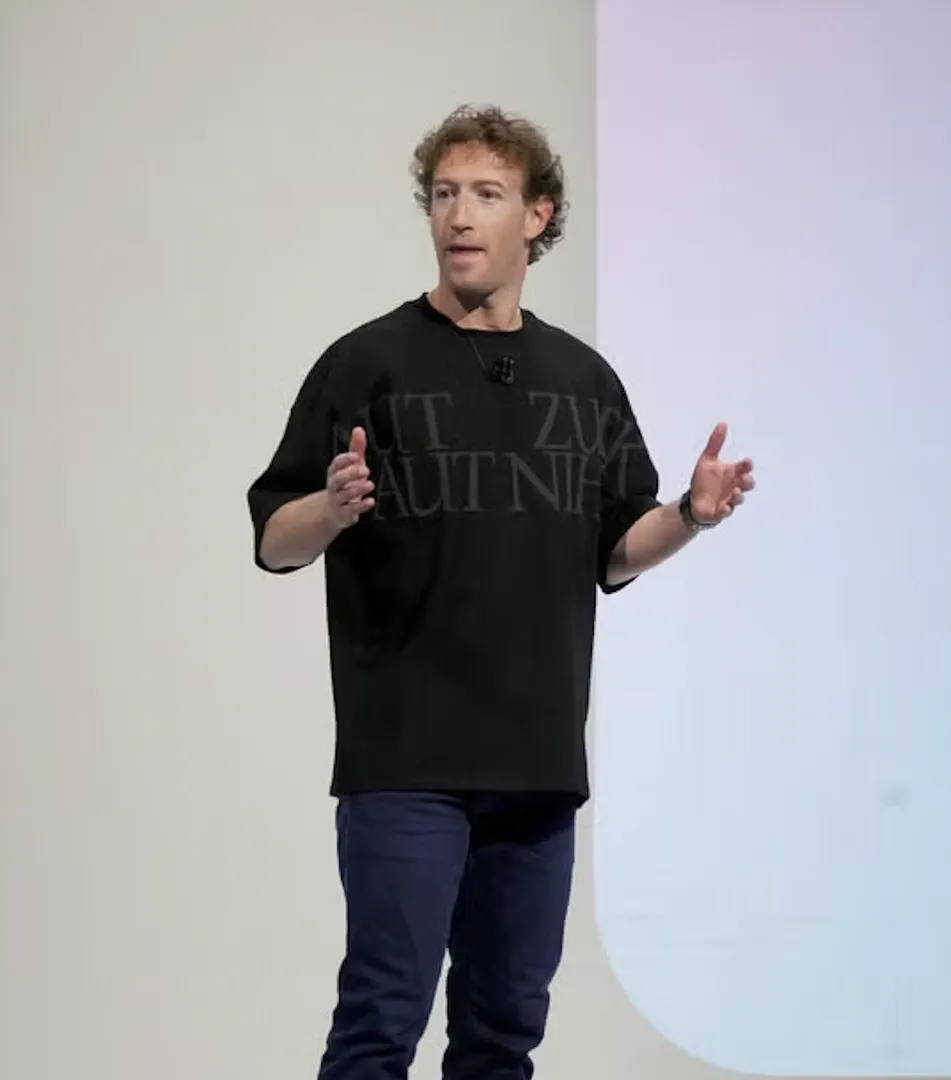
Meta has also become far more open about how the system works. It now publishes the signals Feed uses and the rules that decide what counts as original. For example, Facebook recently revealed that video now drives a growing share of that attention. Meta reports that time spent watching video on Facebook grew more than 20% year over year in the US. Every video on the platform now runs as a Reel.
Groups, Marketplace, and the Feed still carry the habits people have always come for, from neighborhood recommendations to secondhand sales.
With those rules in view, a drop in reach often traces back to something specific you can change.
TL;DR: The Facebook algorithm is a set of machine learning systems that predict which posts, Reels, and ads each person will find most valuable. Feed ranks content from friends, Pages, and Groups by predicted interactions. Reels mixes in video from accounts people do not follow, with a strong preference for fresh, original work. Since March 2026, Meta deprioritizes unoriginal content and can stop recommending accounts that keep posting it. Ads win an auction based on bid, estimated action rate, and ad quality. You can reshape your own feed through Feed Preferences, Favorites, Show more and Show less, and the Friends tab.
What the Facebook algorithm is!
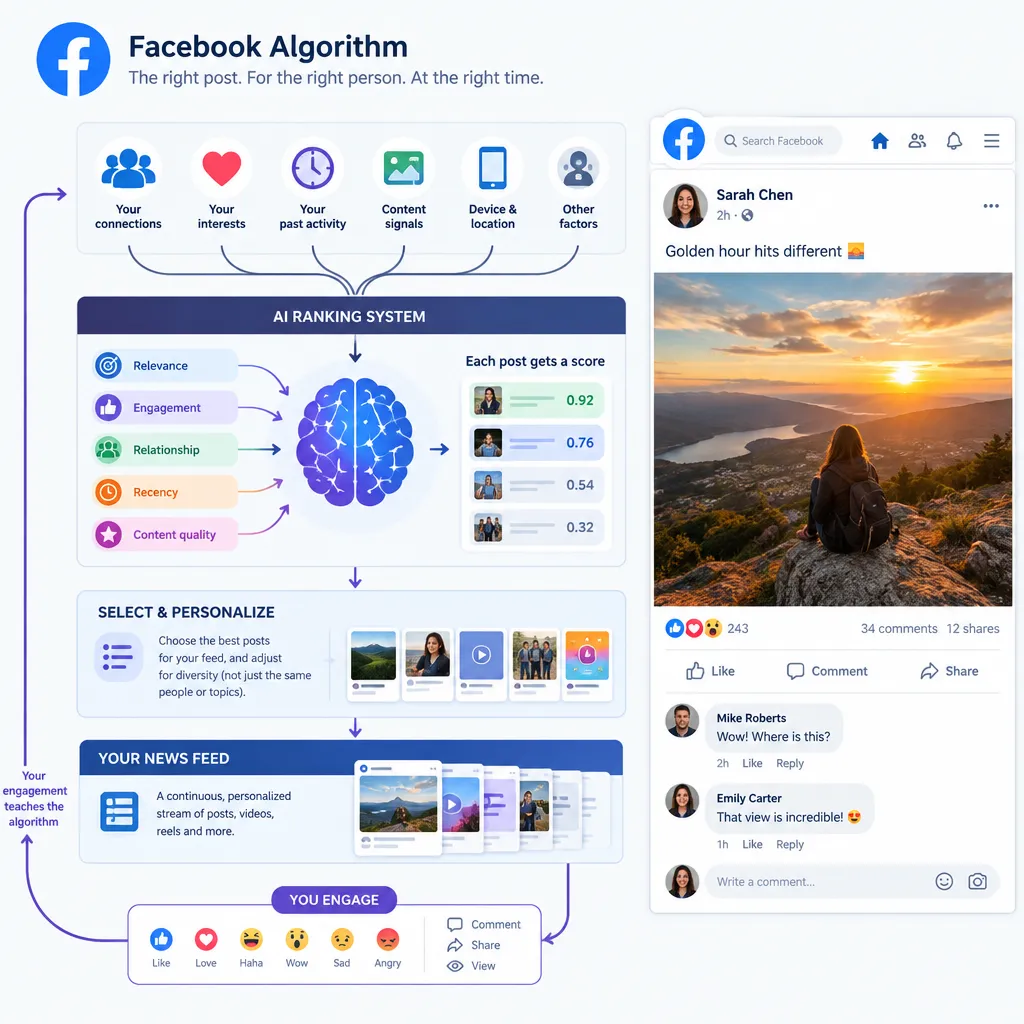
The Facebook algorithm is the set of machine learning systems that decides what appears in your Feed, which Reels play next, and which ads you see. It is really many systems, one for each surface. Meta has published 22 "system cards" describing them across Facebook and Instagram. Instagram's versions weigh signals differently, as our Instagram algorithm guide explains.
Long before those systems, there was EdgeRank. Around 2011, Facebook formalized News Feed ranking around three factors.
Affinity measured how close you were to the person posting. Weight gave comments and shares more value than likes, while time decay pushed older posts further down.
Those three factors were simple enough that marketers built whole strategies around them. Facebook replaced EdgeRank with machine learning within about two years. By 2013, reports described a News Feed model weighing close to 100,000 factors.
The three ideas never fully disappeared, though. Relationships, the kind of interaction, and freshness still shape ranking today, as signals inside much larger prediction models rather than as a formula anyone can calculate.
How the Facebook algorithm ranks your Feed
Every time someone opens Facebook, the Feed works through a funnel that starts with millions of possible items and ends with the handful that appear first.
The first stage, called retrieval, narrows millions of candidate posts and Reels down to a few thousand in under 100 milliseconds. Meta rebuilt that stage in 2026 as a single model called SilverTorch, which it says runs retrieval far more efficiently than its previous setup.
For content from your own network, ranking starts with inventory. Facebook gathers eligible posts from friends, Pages you follow, and Groups you joined, leaving out anything that breaks its Community Standards.
The system then reads signals about each post. These include who shared it, how you have interacted with that person before, and whether it is a photo, video, or link. How many of your friends engaged with it counts too.
Those signals feed predictions about what you will do next. Meta's models estimate things like how likely you are to share a post. Some predictions also draw on what people report in Facebook's surveys.
No single prediction decides the outcome. Meta weights each one and combines them into a relevance score.
A lightweight model first trims the field to roughly 500 posts. A heavier model then scores and orders them before your Feed loads.
In practice, posts tend to rank well when people respond with effort. A comment thread, a share to Messenger, or a few extra seconds of attention all feed predictions that a quick scroll past never touches.
Connected and recommended content on Facebook
The organic posts in your Feed fall into two groups. Connected content comes from friends, Pages, and Groups you chose. Recommended content comes from accounts you have no connection to, picked by separate systems.
Recommendations are how a post reaches people who do not already follow the account behind it. Reels, suggested posts, and suggested Groups all put accounts in front of new audiences.
According to Meta's results, ranking improvements in the fourth quarter of 2025 lifted views of organic feed and video posts on Facebook by 7%.
Meta has also given people ways to see fewer recommendations. In March 2025, it relaunched the Friends tab in the US and Canada as a feed of friends' posts, Reels, Stories, and birthdays, with no recommendations at all.
Facebook has also offered a Feeds tab since 2022, which sorts friends, Groups, Pages, and Favorites in chronological order.
For a Page, this split means followers are no longer a guaranteed audience. Someone who mostly uses the Friends tab, or who has not interacted with the Page in months, may rarely see its posts. The same post can still reach strangers through recommendations if people respond to it quickly.
How the Facebook Reels algorithm works
Video is where Facebook's recommendation push shows most clearly. In June 2025, Meta began sharing every new video on the platform as a Reel, renamed the Video tab to Reels, and dropped the old length limit.
That change folded long and short videos into one format. Longer videos hold their own inside it. Meta says reels over a minute make up about a quarter of reels from creators with more than 10,000 followers, and over half of watch time.
The Facebook Reels algorithm appears to lean heavily on how people watch. Finishing a Reel, rewatching it, saving it, or sending it to a friend all give the system something to learn from.
Freshness carries real weight too. After an October 2025 upgrade, Meta said its recommendations engine surfaces 50% more Reels published the same day. Its fourth-quarter results then showed same-day Reels rising more than 25% from the previous quarter.
For creators, that shortens the window. A Reel's best chance at wide distribution appears to come soon after it goes live. A steady rhythm of new posts gives the system more fresh material to test.
Meta also asks viewers directly what they want. In January 2026, its engineers described a model that shows a random subset of people a short question. It asks how well a video matches their interests, on a scale of one to five.
Those answers train a separate ranking layer that rewards videos people genuinely want to see, rather than videos they simply happened to watch. In a test with more than 10 million users, high-interest ratings rose 5.4% while low ratings fell 6.84%.
Viewers shape the Reels feed in other ways too. Tapping Not Interested on a Reel now changes recommendations directly. Each save also helps Meta refine what someone sees next.
Friend bubbles, added in October 2025, show which Reels someone's friends liked. That gives content with social momentum another way into people's feeds.
If you cross-post Reels, it helps to remember that Instagram ranks the same video on its own systems, so a Reel can perform differently on each app.
How Facebook treats original and reposted content
Meta spent 2025 steering Facebook away from reposted content, then set out the rules in detail in its March 2026 guidelines.
Content you film or produce yourself counts as original. A remix or overlay of someone else's clip can also count. It qualifies when you appear on screen and add something genuinely new, such as fresh information, analysis, or a meaningful change to the story.
Several familiar formats fall on the other side. Watching along, reacting with facial expressions, stitching clips together, or narrating what is already on screen without adding anything all count as unoriginal.
Re-uploads count as unoriginal too, as do minor edits to someone else's post, like adding borders, inserting captions, or changing the playback speed.
Meta deprioritizes unoriginal posts in Feed and Reels. It can also mark accounts that keep posting mostly unoriginal content as non-recommendable and cut their monetization, although creators can appeal those decisions.
Meta says the shift already shows in its data. Views and time spent on original Reels roughly doubled in the second half of 2025 compared with a year earlier. It also removed more than 20 million accounts impersonating large creators during 2025.
If your Page grew on curated clips or compilations, these rules probably explain much of the drop in reach. Repurposing your own material is a different matter. Cutting a long video into short clips, or turning a webinar into Reels, keeps the content yours, and our guide to repurposing video content walks through how.
Creators with original Reels can also use Meta's content protection tool, found in the professional dashboard, which flags copies of their work across Meta's apps.
Facebook is not alone in drawing this line. Other platforms Virlo tracks have moved the same way. YouTube tightened its inauthentic content policy in July 2025. Instagram now removes accounts from recommendations after 10 or more reposts in 30 days.
What else limits reach on Facebook
Originality is not the only filter. Meta also cuts distribution for posting patterns it treats as spam. A few of them can catch well-meaning Pages by accident.
In April 2025, Meta named specific behaviors that would lose reach and monetization. Long captions stuffed with hashtags made the list. So did captions that have nothing to do with the post, such as a dog photo captioned with facts about airplanes.
Accounts that coordinate fake engagement also lose reach. Meta now reduces the visibility of comments it flags as inauthentic as well.
Meta also demotes engagement bait under its distribution guidelines. Posts that ask people to comment a single word, tag friends, or share to enter a draw fall into that group.
Link posts face a newer constraint. Since December 2025, Meta has tested limiting Pages and profiles in professional mode to two link posts a month, unless they pay for Meta Verified.
Meta describes this as a limited test rather than a full rollout. For Pages that depend on sending traffic to a website, it is worth checking whether the test includes your account. Keeping more of the value inside the post itself also helps if links become harder to share.
How the Facebook ad algorithm decides which ads run
Paid posts run on a separate system from organic reach, although both rely on the same kind of predictions.
Every time Facebook has an ad slot to fill, it runs an auction in which the highest bid does not automatically win. Meta calculates a total value for each ad instead. Its formula multiplies the advertiser's bid by the estimated action rate, then adds ad quality.
The estimated action rate is Meta's prediction of how likely a specific person is to take the action you optimize for, such as a purchase or a sign-up. Ad quality reflects how people have responded to the ad, both positively and negatively.
Two of those three inputs depend on how people react. Strong creative therefore tends to win impressions more cheaply than weak creative, even at a lower bid.
Our comparison of Facebook and Instagram ads covers costs and placement choices. For setup, our guide to advertising on Instagram walks through Ads Manager, which runs on the same auction.
Meta's Ad Library shows every active ad a Page runs, which makes it the quickest way to see what competitors keep funding. Ads that stay live for months often signal creative that performs well in the auction. Our guide to the Meta Ad Library explains how to read them.
Virlo's Meta Ads Library feature pulls those ads into the same research as short-form video trends. That makes it easier to see which formats competitors keep paying to run next to the ones taking off organically.
How the Facebook Marketplace algorithm ranks listings
Marketplace uses its own ranking system. Meta publishes less about it than about Feed or Reels, so any account of it relies partly on observation.
Relevance to the buyer's search appears to play a large role. Sellers observe that Marketplace matches listing titles, descriptions, and categories against what someone typed or browsed, which makes plain, specific titles more useful than clever ones.
Distance seems to matter as well, because Marketplace is built around local buying. Listings close to a buyer tend to appear ahead of distant ones, even in categories that allow shipping.
Sellers report that fresh listings, clear photos, complete details, and quick replies to messages all help a listing surface. Meta has not published weights for any of these, so they are best treated as good practice rather than confirmed signals.
Does scheduling posts hurt reach on Facebook?
Planning posts ahead makes the steady rhythm Reels reward much easier to keep. Scheduling itself does not appear to cost a post any reach.
Meta Business Suite includes its own scheduler. Nothing Meta has published describes a penalty for scheduled posts, whether they go out through Meta's tools or a third-party app using its API.
Timing still matters, for a different reason. Publishing when your audience is online gives a post a better chance at the early interactions that feed its predictions.
How to change your Facebook algorithm
The same signals that decide a Page's reach also decide what fills your own Feed. Ranking stays on across most of Facebook, but you can steer what it shows you. Two tabs also step outside recommendations altogether.
Feed Preferences gathers the main controls in one place, reachable from the three-dot menu on a post or from Settings. From there you can add friends and Pages to Favorites so their posts rank higher, and unfollow or snooze accounts you no longer want to see.
Show more and Show less, also in the three-dot menu, tell the Feed which kinds of posts you want. On Reels, Not Interested works the same way. Meta says its recommendations engine now responds to that signal directly.
If you want a break from recommendations entirely, the Friends tab shows only posts from friends. The Feeds tab sorts the people, Groups, and Pages you follow in chronological order.
Your own behavior sends signals too. Every post you linger on, comment on, or share counts, so engaging consistently with the content you want more of can gradually shift your Feed.
What helps a Page or creator grow on Facebook in 2026
Growth on Facebook increasingly depends on whether each post earns its own distribution, rather than on how many people follow the Page.
Original video gets priority. Meta says it is investing in wider distribution for original content. Filming your own material, even simply, gives a post a better starting point than reworking someone else's clip.
Posts that start conversations travel further. Meta treats the likelihood of a share as a ranking factor. A genuine comment thread also tends to tell the Feed more than a like does. Questions that invite a real answer, opinions people want to weigh in on, and posts worth sending to a friend all create those signals.
Groups still reward focus. Group members opted in to a topic. A useful post in the right Group can therefore find more interested readers than it would on a Page whose followers rarely engage.
Running your own Group asks more of you. Engagement in many business Groups appears to have thinned out, with some large Groups seeing only a handful of members respond to a post. Partnering with the admins of established Groups can reach more people, a trade-off covered in this look at whether a Facebook Group still works for business.
Discovery also runs through search. Filling in your Page's name, category, and about section with words people actually search for helps it show up in Facebook search.
Your numbers show which system is working. If your insights break reach down by followers and non-followers, comparing the two post by post shows whether recommendations or your existing audience drove each result.
Frequently asked questions
What is the Facebook algorithm?
The Facebook algorithm is the set of machine learning systems that decides what appears in your Feed, which Reels you see, and which ads run. Each surface has its own system. All of them rank content by predicting what each person will find valuable.
How does the Facebook algorithm work in 2026?
Retrieval first narrows millions of candidates to a few thousand. Feed ranking then reads signals about each post, predicts how you will respond, and orders posts by relevance score. Meta's Transparency Center lists the main signals and predictions it uses.
What is the new Facebook algorithm in 2026?
The biggest recent changes favor original content, fresh Reels, and direct viewer feedback. Meta's March 2026 guidelines deprioritize unoriginal posts, its recommendations surface far more same-day Reels, and a survey-based model now helps rank Reels by genuine interest.
What is EdgeRank? EdgeRank was Facebook's early News Feed formula, built on affinity, weight, and time decay. Facebook replaced it with machine learning around 2013. The same ideas survive as signals inside today's much larger models.
Why did my Facebook reach drop?
Common causes include posting reposted or lightly edited content, spam patterns like hashtag-heavy captions, and fewer early interactions on each post. Some followers may also browse mainly in the Friends tab. Comparing follower and non-follower reach usually shows which of these applies.
Does Facebook penalize reposted content?
Yes. Meta deprioritizes re-uploads, reaction videos that add nothing, and minor edits like borders or speed changes. Accounts that keep posting mostly unoriginal content can become non-recommendable and lose monetization, as Meta explains in its original content update.
How does the Facebook Reels algorithm work?
It appears to recommend Reels based on how people watch, rewatch, save, and share them, with a strong preference for content published the same day. Meta also uses an in-feed survey about viewers' interests, described in its engineering post on the Reels model.
How does the Facebook ad algorithm work?
Each ad slot runs as an auction. Meta multiplies the advertiser's bid by the estimated action rate, then adds ad quality. The highest total value wins, so strong creative can beat a larger bid.
Does scheduling posts on Facebook hurt reach?
Meta has not published any penalty for scheduled posts. Meta Business Suite even includes its own scheduler. Timing still matters because early interactions feed ranking, so scheduling for when your audience is online works in your favor.
How do I reset or change my Facebook algorithm?
You can steer it through Feed Preferences, Favorites, Show more and Show less, and Not Interested on Reels. The Friends tab removes recommendations entirely, while the Feeds tab shows the accounts you follow in chronological order.
Why am I seeing posts from people I don't follow on Facebook?
Facebook mixes recommended content into Feed and Reels based on what its systems predict you will enjoy from your past activity. The Friends tab shows only your friends' posts. Show less and Not Interested also reduce similar recommendations over time.
How do I see Facebook posts in chronological order?
The Feeds tab shows posts from the friends, Groups, Pages, and Favorites you follow in chronological order, without ranking.
How can I get more reach on Facebook?
Original Reels, posts that start real conversations, and a consistent posting rhythm give the algorithm the most to work with. Avoiding reposted clips, hashtag-stuffed captions, and engagement bait keeps your content eligible for recommendations.
Does Facebook limit link posts?
Since December 2025, Meta has tested limiting Pages and professional-mode profiles to two link posts a month unless they subscribe to Meta Verified. Meta describes it as a limited test rather than a full rollout.
How does the Facebook Marketplace algorithm work?
Marketplace appears to rank listings mainly on relevance to the buyer's search and distance from the buyer. Clear titles, good photos, fresh listings, and fast replies appear to help, although Meta has not published how much each one counts.
How often should a Facebook Page post?
Meta publishes no ideal number. A steady rhythm you can sustain works better than bursts, because Reels favor fresh content and consistent posting keeps giving the system new material to test.
Where to start
Working out which part of the Facebook algorithm your posts are struggling with makes a better first step than simply posting more.
The best place is reviewing your recent posts. Reviewing recent posts against Meta's originality rules is a good place to begin, since reposted or lightly edited content now loses distribution on its own. Captions stuffed with hashtags, or posts leaning on engagement bait, are worth checking at the same time.
After that, the follower and non-follower comparison shows whether the work ahead is winning back your existing audience or earning more recommendations. Reels built from your own footage help with both.
Because Meta now publishes its originality rules and much of its ranking logic, you can check your own posts against the same standard the system uses.
See What's Trending Right Now
- Social listening for TikTok, Reels & Shorts
- Spot viral trends before they peak
- Turn insights into ads, scripts & briefs
The Signal Newsletter
Weekly trend breakdowns, creator insights, and social listening tips — straight to your inbox.
Subscribe FreeSee Virlo in action
See What's Trending Right Now
- Social listening for TikTok, Reels & Shorts
- Spot viral trends before they peak
- Turn insights into ads, scripts & briefs
The Signal Newsletter
Weekly trend breakdowns, creator insights, and social listening tips — straight to your inbox.
Subscribe FreeRelated Articles

What's Trending on Instagram in September 2026
Last updated: September 21, 2026. This week on Instagram Reels, the fall audio shelf is fully stocked and the winning formats are built on contrast. Olivia Dean's "Reason to Stay" takes the top spot in this week's ranked audio chart while Earth, Wind & Fire's "September" crosses two million Reels...
How to Use TikTok to Grow Your Business
Learn how to use TikTok to grow your business with educational content, product demonstrations, customer stories, TikTok SEO, creator partnerships, paid ads, and short-form content intelligence.
20+ Hottest TikTok Trends You Must Try
Discover the hottest TikTok trends you need to try! Stay ahead with viral challenges, dance moves, and must-know hacks.
Put this into practice with Virlo
Turn what you just read into real research. These are the tools creators, agencies, and brands use to find what's working on short-form video.
Content Research Agent
Run your short-form research on autopilot — outliers, creators, and sounds across TikTok, Reels, and Shorts.
Tracking Center
Monitor breakout creators, videos, and competitors with daily snapshots and deep AI analysis.
Free Data
Explore free viral hooks, trending niches, breakout products, and more — no account required.
Get The Signal
Join creators, marketers, and agencies getting weekly trend breakdowns and social listening insights delivered free.
Subscribe to the Newsletter
Stop Guessing. Start Knowing.
Join thousands of digital entrepreneurs using data to take the guesswork out of capitalizing on trends.